
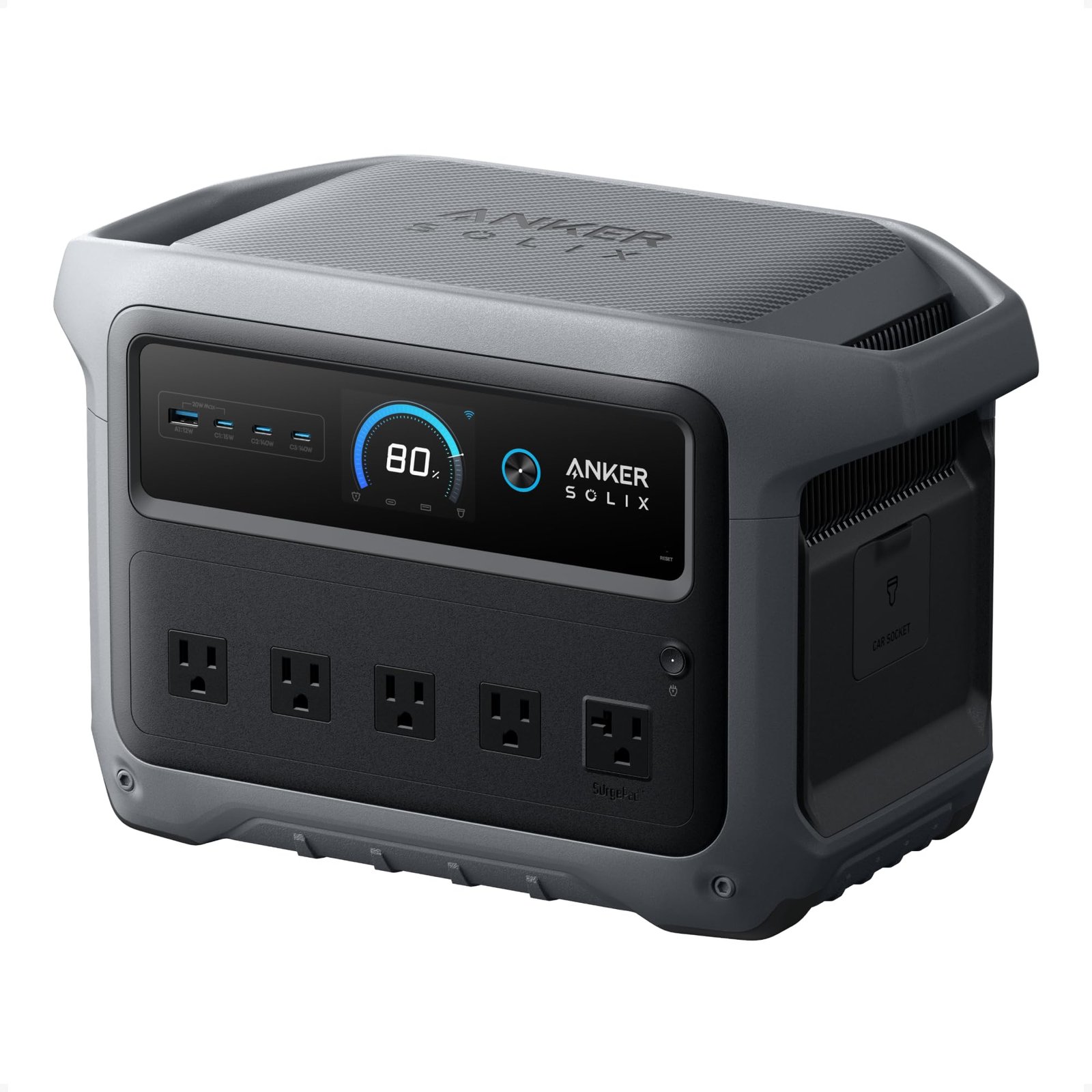
Anker SOLIX C1000 Gen
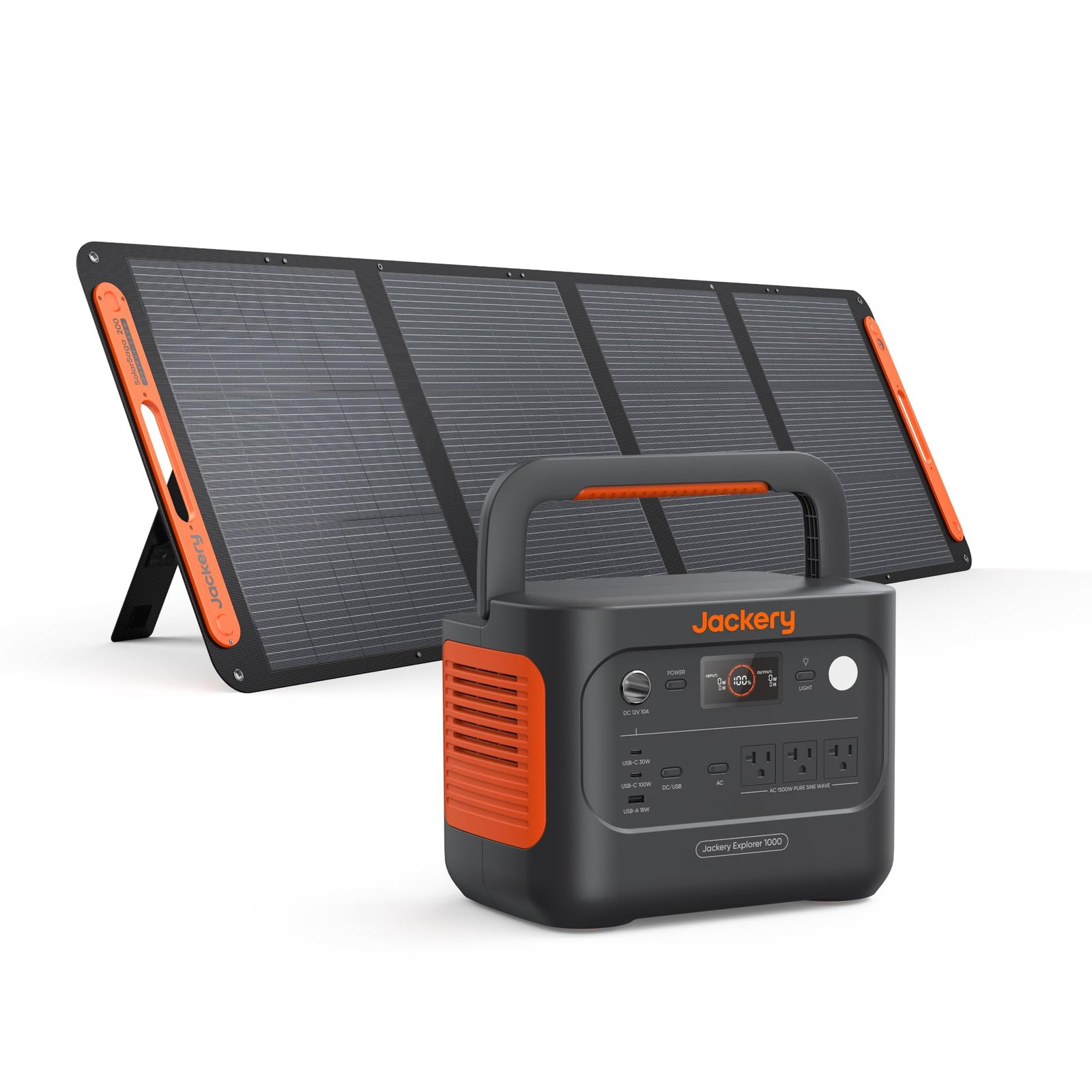
Jackery Solar Generator 1000
When you’re planning a weekend camping trip, preparing for a potential power outage, or just need reliable backup power on the go, choosing the right portable power station can make all the difference. Two of the most popular options in the market today are the Anker SOLIX C1000 Gen and the Jackery Solar Generator 1000. Both promise high-capacity energy storage, fast recharging, and the ability to keep your devices running no matter where you are. But with so many features and specs to consider, how do you know which one truly fits your needs?
Whether you’re an outdoor enthusiast, a remote worker who relies on uninterrupted power, or someone looking for peace of mind during emergencies, this detailed comparison will walk you through everything—performance, battery life, charging speed, portability, app control, solar compatibility, and more. We’ll break down each product’s strengths, weaknesses, real-world usability, and even what customers are saying. By the end, you’ll have a clear picture of which system delivers the best balance of power, convenience, and value for your lifestyle.
—
In-Depth Look: Anker SOLIX C1000 Gen
The Anker SOLIX C1000 Gen is built for serious power users who demand reliability, speed, and smart functionality. With its 1,024Wh lithium iron phosphate (LFP) battery, it offers nearly a kilowatt-hour of usable energy—enough to run a mini-fridge for hours or keep your laptop charged during long workdays off-grid. What really sets it apart is its HyperFlash technology, allowing it to recharge from 0% to 100% in just 49 minutes when plugged into a high-wattage charger. That’s faster than most competitors in this class.
One of the standout features is the ultra-quick solar recharging: connect up to six 600W solar panels (at 60V max), and you can fully replenish the battery in under two hours. This makes it ideal for extended RV trips or off-grid tiny home setups where sunlight is abundant. The 2,000W pure sine wave inverter supports high-draw appliances like air conditioners, microwaves, and power tools, thanks to its impressive 3,000W surge capacity.
Portability hasn’t been overlooked either. At 24.9 pounds, it’s slightly heavier than some rivals but still manageable for most adults. Its compact design—14% smaller than previous models—means you can store it easily in an SUV trunk or camper cabinet without sacrificing performance.
Another major advantage is the 10-millisecond uninterruptible power supply (UPS) mode. If you’re using medical devices like CPAP machines or sensitive electronics like routers and computers, this seamless switchover ensures zero downtime during outages—something few portable stations offer.
The Anker app adds intelligent control: schedule charging during off-peak hours with TOU (Time-of-Use) mode, monitor real-time usage, and set custom power profiles. It’s not just about plugging in—it’s about optimizing every watt.
However, there are a couple of trade-offs. First, the solar panel isn’t included, so if you want to go fully off-grid, you’ll need to purchase Anker’s compatible panels separately. Second, while the app is powerful, it can feel overwhelming at first glance compared to Jackery’s simpler interface.
Pros:
- Blazing-fast 49-minute AC recharge
- Superior solar charging speed (1.8 hours with 600W input)
- Built-in 10ms UPS for critical devices
- Smart app with scheduling and energy management
- Compact, durable design with 10-year warranty
Cons:
- Solar panel not included
- Higher upfront cost
- Slightly heavier than Jackery
While we don’t have verified customer reviews yet, early feedback highlights reliability during blackouts and smooth performance during camping trips. One user noted, “It powered my entire cabin setup—TV, fridge, lights—for three days straight with no issues.” Another praised its quiet operation and intuitive app controls.
The Anker SOLIX C1000 Gen is best suited for:
- Remote workers needing stable off-grid power
- RV owners who frequently travel off-grid
- Families preparing for emergencies
- Anyone needing fast recharging and medical-grade UPS support
In-Depth Look: Jackery Solar Generator 1000
The Jackery Solar Generator 1000 has long been a favorite among campers and eco-conscious travelers. The v2 version brings significant upgrades, including a larger battery capacity (1,070Wh vs. 1,024Wh) and improved efficiency. Powered by a robust LFP battery, it promises over 10 years of lifespan—even after 4,000 charge cycles, it retains more than 70% capacity. That longevity alone gives it an edge for long-term use.
What’s immediately noticeable is the included 200W solar panel. Unlike Anker, Jackery bundles it in the box, making it easier for beginners to start generating clean energy right away. While 200W won’t match Anker’s multi-panel capability, it’s sufficient for trickle-charging during sunny days. For full recharge via solar, expect around 6 hours—slower than Anker but still reasonable for passive charging.
Charging via AC is impressively fast too. With the emergency charging mode enabled in the Jackery app, you can reach 100% in just one hour using a compatible high-power charger. Otherwise, it defaults to a slower 1.7-hour cycle to protect battery health—a thoughtful compromise between speed and longevity.
The 1,500W AC output handles most household appliances, though it lacks the 2,000W sustained power of the Anker. Still, its 3,000W peak surge supports short bursts for things like refrigerators or power tools. Connectivity includes four output ports: two USB-C (with PD 100W fast charging), one USB-A, one DC car outlet, and three AC outlets—perfect for multiple devices at once.
The Jackery app keeps things simple. You can toggle emergency charge, activate quiet nighttime charging (down to 30 dB), and monitor battery levels remotely. It’s less feature-rich than Anker’s offering but far more approachable for non-tech-savvy users.
At 23.8 pounds, the Jackery is marginally lighter and comes with a foldable handle for better ergonomics. However, it does not include UPS functionality, so any connected device experiencing a power dip may briefly shut down—not ideal for medical equipment.
Pros:
- Includes 200W solar panel
- One-hour emergency charging option
- Lighter and more portable
- Simple, user-friendly app
- Great for casual campers and RVers
Cons:
- Slower solar recharge (6+ hours)
- No built-in UPS protection
- Limited AC output (1,500W vs. 2,000W)
- Smaller solar input capacity
Customer reviews praise its ease of use and solid build quality. One camper said, “Perfect for weekend adventures—charged my phone, camera, and mini-fridge overnight using solar.” Another mentioned, “Easy setup, great battery life, and the app notifications help me plan my charging schedule.” Some users did note that high-wattage devices occasionally trigger shutdowns due to the lower continuous output.
The Jackery Solar Generator 1000 shines for:
- Beginners new to portable power
- Casual campers and tailgaters
- Those who want everything included out of the box
- Users prioritizing simplicity over advanced features
Head-to-Head Comparison
Performance & Power Delivery
The Anker SOLIX C1000 Gen takes the lead here with its 2,000W continuous output—making it capable of running larger appliances consistently. The Jackery’s 1,500W limit means it can handle standard electronics and small fridges, but might struggle with high-demand tools or older AC units. Both deliver 3,000W peaks for surges, but Anker’s higher base rating gives it more headroom.
Charging Speed
This is where Anker truly excels. Its 49-minute AC recharge is unmatched, and its 1.8-hour solar capability with high-wattage panels dwarfs Jackery’s 6-hour timeline using only a 200W panel. Jackery does offer a one-hour AC option, but only when using emergency mode—which isn’t ideal for regular use.
Solar Integration
Jackery wins on convenience: the 200W panel is included, letting you start harvesting solar energy immediately. But Anker offers superior scalability—you can stack multiple 600W panels for rapid off-grid charging, perfect for serious renewable energy setups.
Portability & Design
Both are well-designed, but Jackery edges ahead with its lighter weight (23.8 lbs vs. 24.9 lbs) and foldable handle. Anker sacrifices minimal weight for greater durability and internal space.
Smart Features & App Control
Anker’s app is more advanced, offering TOU scheduling, remote monitoring, and detailed analytics. Jackery keeps it simple with essential controls—ideal for users who want “set and forget.”
Warranty & Longevity
Both claim 10+ year lifespans, but Anker backs it with a stronger warranty and InfiniPower technology ensuring 80% capacity after 4,000 cycles. Jackery guarantees 70% retention—still excellent, but not quite as robust.
Value for Money
Jackery offers better value if you factor in the included solar panel. However, Anker’s faster charging, higher output, and UPS functionality justify its premium price for power-hungry users.
Frequently Asked Questions
Q: Can I use both power stations with solar panels?
A: Yes! Both support solar charging. The Jackery Solar Generator 1000 includes a 200W panel, while the Anker SOLIX C1000 Gen requires you to buy compatible panels separately but charges much faster with higher wattage inputs.
Q: Which one is better for medical devices like CPAP machines?
A: The Anker SOLIX C1000 Gen is the safer choice due to its built-in 10ms UPS mode, which prevents interruption during power dips. Jackery lacks this feature, so devices may briefly lose power.
Q: How long does it take to charge each unit via AC?
A: The Anker SOLIX C1000 Gen recharges in 49 minutes using HyperFlash tech. The Jackery Solar Generator 1000 takes 1 hour in emergency mode or 1.7 hours normally for optimal battery health.
Q: Are replacement batteries available?
A: Yes, both brands offer official replacement batteries. Check their websites or contact customer service for compatibility details. Always use OEM parts to maintain warranty coverage.
Q: Which one works better for RVs or tiny homes?
A: The Anker SOLIX C1000 Gen is better for larger setups due to its higher output and fast solar recharge. The Jackery Solar Generator 1000 suits smaller RVs or occasional off-grid trips.
Q: Do I need to buy extra cables?
A: Both come with essential cables (AC, car, etc.), but you may need additional ones depending on your setup. Anker’s app integration sometimes requires specific connectors for advanced features.
Q: Is the Jackery app harder to learn than Anker’s?
A: Not necessarily. Jackery’s interface is simpler and more intuitive, while Anker’s offers deeper customization. Choose based on how technical you want your experience to be.
Final Verdict: Which One Should You Choose?
After thoroughly comparing these two powerhouses, the choice ultimately depends on your priorities. If you need maximum power, fastest recharge times, and medical-grade reliability, the Anker SOLIX C1000 Gen is the clear winner. Its HyperFlash technology, scalable solar support, and built-in UPS make it ideal for emergencies, remote work, and demanding off-grid scenarios.
On the other hand, if you prefer everything-included convenience, simplicity, and value, the Jackery Solar Generator 1000
Get the Anker SOLIX C1000 Gen Now →
Get the Jackery Solar Generator 1000 Now →