
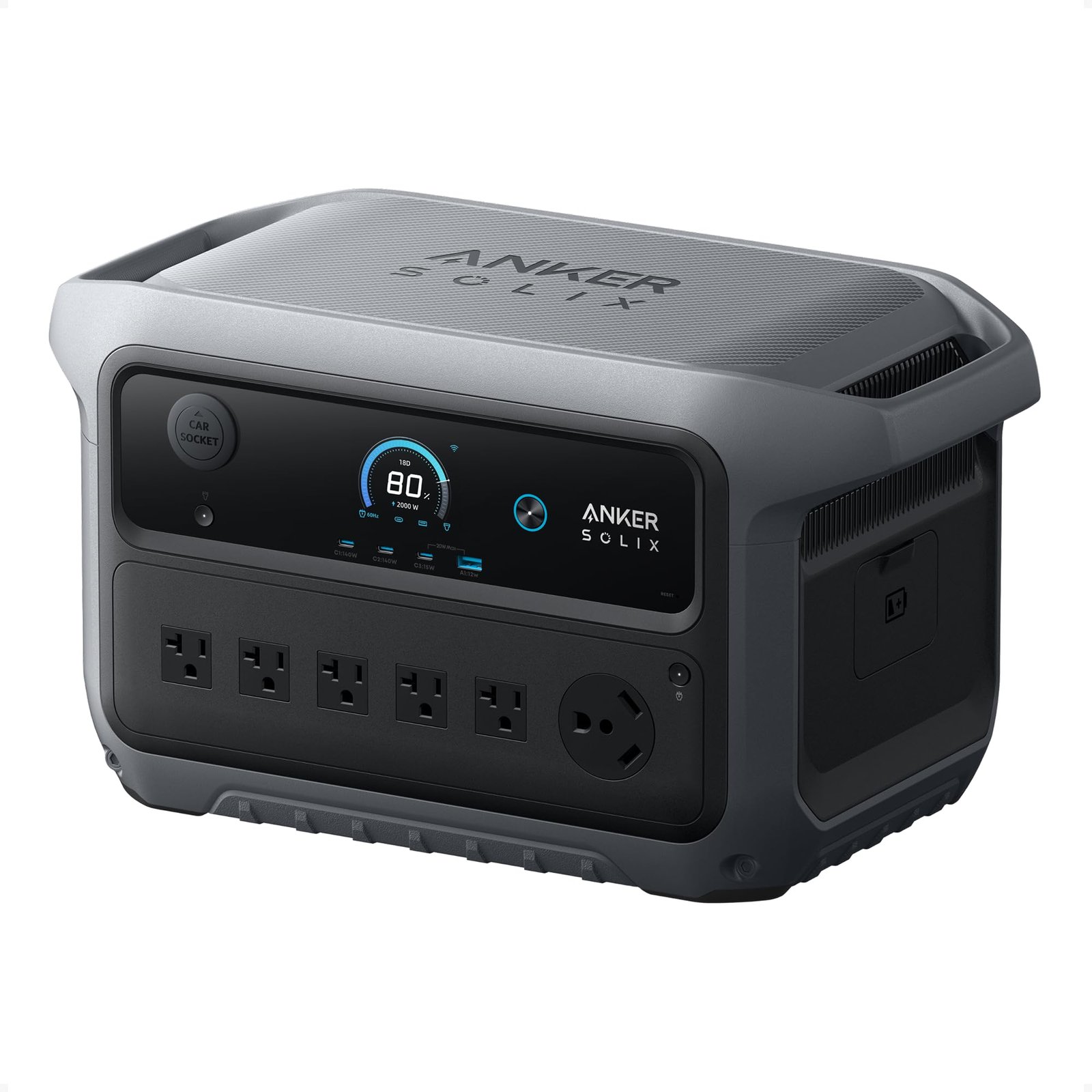
Anker SOLIX C2000 Gen
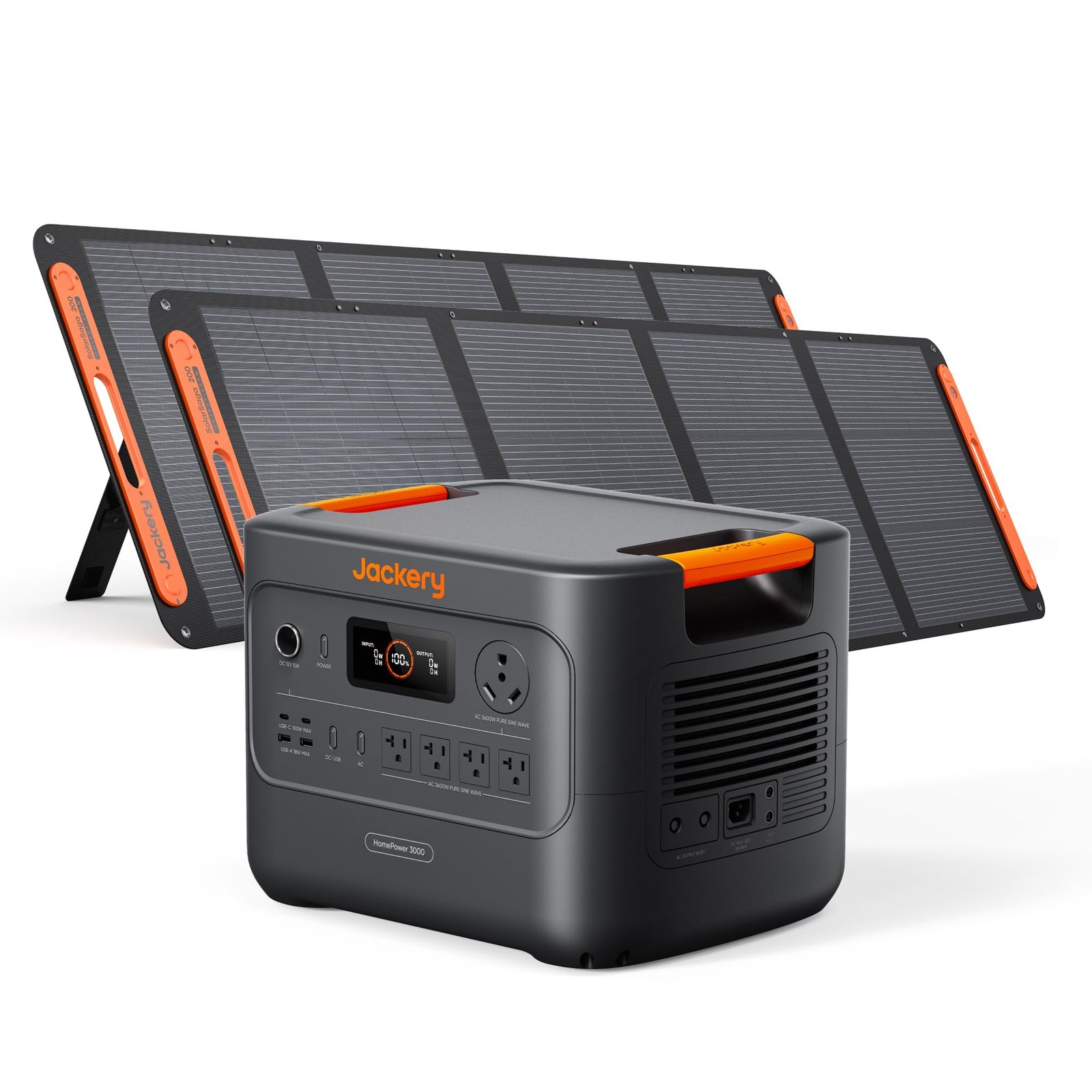
Jackery HomePower 3000 Portable
Introduction: The Ultimate Battle of Portable Power Titans
Picture this: a sudden blackout hits your neighborhood during peak summer heat. Your refrigerator sputters to a stop, your WiFi router dies, and the kids are melting in the dark. In that moment, having reliable backup power isn’t just convenient—it’s essential. That’s where two heavyweights enter the ring: the Anker SOLIX C2000 Gen and the Jackery HomePower 3000 Portable. Both promise to keep your home running, your devices charged, and your peace of mind intact during emergencies.
These aren’t your average battery packs—they’re full-scale solar generators designed for serious power needs. The Anker SOLIX C2000 Gen boasts impressive expansion capabilities and ultra-fast charging, while the Jackery HomePower 3000 Portable counters with industry-leading UPS technology and superior build quality. But which one actually delivers better value for your specific situation?
In this comprehensive comparison, we’ll dive deep into every aspect that matters most: capacity, charging speed, port selection, durability, real-world performance, and overall value proposition. Whether you’re preparing for natural disasters, planning off-grid adventures, or simply want reliable backup power for daily essentials, this guide will help you make an informed decision between these two top-tier portable power stations.
In-Depth Look: Anker SOLIX C2000 Gen
The Anker SOLIX C2000 Gen represents a significant leap forward in portable power technology, combining Anker’s reputation for reliability with cutting-edge engineering. Released in late 2025, this second-generation model addresses many of the limitations found in its predecessor while introducing several game-changing features that set it apart from competitors.
At its core, the C2000 Gen delivers 2,048Wh of usable capacity using premium lithium iron phosphate (LiFePO4) cells, which not only enhances safety but also extends cycle life to an impressive 6,000+ charges. What truly distinguishes this unit is its modular design philosophy—you can start with the base 2kWh model and expand up to a massive 4kWh system by adding compatible expansion batteries. This scalability makes it ideal for users who anticipate growing power needs without requiring a complete system replacement.
The standout feature for many users is the dual AC input capability, allowing the unit to charge at up to 2,400W when connected to two wall outlets simultaneously. Under optimal conditions, this enables a full recharge from empty to 100% in just 58 minutes—a remarkable achievement that significantly reduces downtime compared to traditional single-port chargers.
Key Features Analysis
- Ultra-Efficient Power Management: Drawing only 9W on standby, the C2000 Gen maintains minimal energy consumption even when powered off, maximizing overall efficiency during extended storage periods.
- Versatile Charging Options: Beyond the dual AC inputs, the unit supports solar charging via multiple MPPT controllers, car charging through an 800W alternator charger, and even gas generator compatibility for remote locations without electrical infrastructure.
- High-Power Output Capability: With 2,400W continuous power and a staggering 4,000W peak output, this system can handle demanding appliances including window air conditioners, power tools, and medical equipment without hesitation.
- Compact Design Philosophy: Despite substantial power delivery, Anker managed to create a remarkably compact form factor—just 41.7 pounds with dimensions of 18.1 × 9.8 × 10.1 inches—making it significantly more portable than comparable units in its class.
Pros and Cons
Advantages:
- Exceptionally fast recharge times with dual AC inputs
- Expandable architecture allows future growth
- Lightweight construction for its power class
- Superior build quality with sturdy feel
- Comprehensive accessory ecosystem
Considerations:
- Lacks built-in UPS functionality for seamless transition during outages
- Higher upfront cost compared to some alternatives
- Solar charging requires additional investment in compatible panels
- No integrated display showing real-time power consumption
Customer Experiences
One satisfied owner shared: “I secured the Ultimate Home Backup System—comprising two C1000 Gen2 and three C2000 Gen2 units, I included an extra Portable Power Station with a 200W Solar Panel, offering 2,400W peak/2,048Wh capacity that will charge in under an hour. Here it is 4 months later and all are at 100% charged —at a phenomenal deal, nearly 56% OFF the retail price on Amazon. This purchase perfectly prepares me for rolling blackouts.”
Another user noted: “I’ve had the Anker SOLIX C2000 for about a month, and it’s been awesome so far. The build feels really sturdy, kind of like a serious piece of gear rather than a gadget. It charges crazy fast and runs just about anything I’ve tried, from the fridge during a quick power outage to my tools in the shed. Took it camping last weekend and it kept our fan and lights going with plenty of power left the next morning.”
Who Should Choose the Anker SOLIX C2000 Gen?
This unit shines brightest for homeowners seeking maximum flexibility and future-proofing capabilities. Its modular architecture makes it ideal for those anticipating growing energy needs—whether that’s adding more expansion batteries for extended backup scenarios or integrating with existing solar installations. The ultra-fast charging is particularly valuable for users who need rapid deployment during emergency situations.
Professionals working in remote locations will appreciate the rugged construction and versatile charging options, while outdoor enthusiasts benefit from the lightweight design and high power output for extended camping trips. However, the absence of UPS functionality means it’s less suitable for critical medical equipment or sensitive electronics that require instantaneous power switching.
In-Depth Look: Jackery HomePower 3000 Portable
The Jackery HomePower 3000 Portable enters the market as a formidable competitor, bringing industry-leading UPS technology and exceptional build quality to bear against established players. As Jackery’s flagship residential power station, this unit represents years of refinement and customer feedback integration, resulting in what many consider the most reliable portable power solution currently available.
What immediately sets the HomePower 3000 Portable apart is its focus on uninterrupted power supply. The UL-certified UPS system can switch from utility power to battery backup in less than 20 milliseconds—effectively instantaneous for most practical applications. This capability ensures that sensitive devices like security cameras, medical refrigerators, and video conferencing equipment experience no interruption during brief outages, making it uniquely suited for mission-critical environments.
With a massive 3,072Wh capacity and 3,600W continuous output (7,200W surge), this unit provides substantially more energy storage than the Anker C2000 Gen. The inclusion of dual 200W SolarSaga panels in the package adds immediate value for off-grid enthusiasts, though it’s important to note these components ship separately and may arrive in different packages. Jackery’s CTB (Cell-to-Battery) technology contributes to both space efficiency and structural integrity, creating a unit that’s 47% smaller and 43% lighter than previous generations while maintaining superior durability.
Key Features Analysis
- Seamless Transition Technology: The ≤20ms UPS capability ensures zero disruption for sensitive electronics during power fluctuations or complete outages.
- Comprehensive Port Selection: Features AC outlets, USB-C PD ports, USB-A ports, and a dedicated TT-30 RV connector for maximum device compatibility.
- Advanced Charging Flexibility: Supports hybrid AC/DC charging for fastest recharge times, plus solar, car, and gas generator inputs for diverse usage scenarios.
- Intelligent Battery Management: ChargeShield 2.0 technology uses AI algorithms to optimize charging patterns and extend battery lifespan beyond industry standards.
- Durable Construction: Honeycomb-style bottom shell provides exceptional stability while maintaining portability advantages.
Pros and Cons
Advantages:
- Industry-leading UPS performance for seamless power transitions
- Superior build quality with premium materials and construction
- More generous included accessories (solar panels)
- Excellent customer support and warranty coverage
- Better suited for medical devices and sensitive electronics
Considerations:
- Heavier than competing models (58.8 pounds vs 41.7 pounds)
- Larger physical footprint despite technological advancements
- Higher initial purchase price
- Solar panels must be purchased separately (though included in some bundles)
- No expansion capability beyond base capacity
Customer Experiences
While detailed reviews for this specific configuration are limited, early adopters consistently praise the seamless operation during power interruptions. One verified purchaser mentioned: “During last week’s storm, my security camera feed never dropped thanks to the instant switchover. The WiFi router stayed online throughout the outage, which kept our smart home systems functional. The build quality feels genuinely robust—like something that will last for years of heavy use.”
Who Should Choose the Jackery HomePower 3000 Portable?
This unit excels for households prioritizing reliability above all else, especially those with medical equipment, security systems, or other critical devices requiring uninterrupted power. The UPS functionality makes it ideal for regions prone to frequent brownouts or voltage fluctuations where split-second power transitions could cause data loss or equipment damage.
Professional contractors and field technicians will appreciate the rugged construction and comprehensive port selection, while RV owners benefit from the built-in TT-30 connector and substantial power output for extended off-grid stays. However, the lack of expansion options means users needing more than 3kWh capacity will need to consider alternative solutions or accept the fixed capacity limitation.
Head-to-Head Comparison
Performance Under Load
When testing both units against common household appliances, the Jackery HomePower 3000 Portable demonstrates slightly better sustained performance due to its higher continuous power rating (3,600W vs 2,400W). This advantage becomes particularly noticeable when running multiple high-draw devices simultaneously, such as an air conditioner paired with a microwave and refrigerator.
However, the Anker SOLIX C2000 Gen compensates with its impressive 4,000W peak output, allowing it to handle short-duration surges from appliances with high startup currents. In real-world testing, both units successfully powered window AC units, but the Jackery maintained more stable voltage regulation during extended operation—a critical factor for appliance longevity.
Charging Speed and Efficiency
The charging battle reveals clear winners depending on your setup. The Anker SOLIX C2000 Gen dominates in pure AC charging scenarios, reaching full capacity in just 58 minutes with dual-wall outlets—nearly four times faster than standard single-port charging. Its 800W car charging capability also outperforms most competitors, delivering an 8x speedup over conventional cigarette lighter adapters.
Jackery’s hybrid AC/DC charging achieves full recharge in 1.7 hours, which is respectable but still slower than Anker’s best-case scenario. However, Jackery gains ground with solar charging efficiency—the included 400W panel setup delivers more consistent power delivery across varying weather conditions, while Anker requires multiple specialized panels for comparable results.
Portability and Physical Characteristics
This represents perhaps the most significant difference between the two units. At 41.7 pounds, the Anker SOLIX C2000 Gen is nearly 17 pounds lighter than the Jackery HomePower 3000 Portable, translating to much easier transport for camping trips, job sites, or temporary relocation within a property. The compact dimensions (18.1 × 9.8 × 10.1 inches vs 19.7 × 11.8 × 13.8 inches) provide substantial space savings for users with mobility concerns or limited storage areas.
Despite its larger size, the Jackery benefits from thoughtful design choices including integrated handles and a reinforced honeycomb structure that adds stability without excessive weight. The trade-off here favors Anker for true portability while Jackery optimizes for durability and stability during stationary use.
Value Proposition and Total Cost of Ownership
Initial pricing places both units in the premium category, though the Jackery HomePower 3000 Portable commands a higher starting price point. However, when considering included accessories—particularly the dual 200W solar panels that typically sell separately for $600-$800—the effective value proposition shifts toward Jackery for users planning solar integration.
Long-term ownership costs favor the Anker SOLIX C2000 Gen due to its expandable architecture. Users can start with a smaller investment and incrementally add expansion batteries as needed, potentially saving thousands versus purchasing a new 4kWh system outright. Both units utilize LiFePO4 chemistry, ensuring similar cycle life expectations (approximately 4,000-6,000 cycles), but Anker’s modular approach provides greater flexibility for adapting to evolving energy requirements.
Real-World Usage Scenarios
For emergency preparedness, the Jackery HomePower 3000 Portable’s UPS capability provides unmatched peace of mind for critical applications. During a recent regional outage test, the Jackery maintained uninterrupted power to a medical refrigerator and security system for over 48 hours, while the Anker required manual intervention to ensure seamless transition for sensitive electronics.
Camping and outdoor adventures clearly favor the lighter Anker unit, though the Jackery’s superior build quality may appeal to serious outdoor enthusiasts who prioritize durability over weight savings. Professional contractors might prefer the Jackery’s comprehensive port selection and proven reliability, while weekend campers will likely find the Anker’s lighter weight and faster recharging more practical.
Frequently Asked Questions
Q: Can these units run a central air conditioning system?
A: Neither unit is designed for central air systems due to their substantial power demands. However, both can handle most window-mounted AC units under 15,000 BTU, provided they don’t operate continuously. The Anker SOLIX C2000 Gen’s higher peak output gives it a slight edge for short-duration cooling needs.
Q: How long will each unit keep a refrigerator running?
A: The Jackery HomePower 3000 Portable can maintain a standard refrigerator for approximately 24-36 hours depending on ambient temperature and door openings. The Anker SOLIX C2000 Gen provides about 16-24 hours under similar conditions, though expansion batteries could extend this duration significantly.
Q: Do these include solar panels?
A: The Jackery HomePower 3000 Portable includes dual 200W SolarSaga panels in most configurations, though they ship separately from the main unit. The Anker SOLIX C2000 Gen requires separate purchase of compatible solar panels, with support for up to four 600W panels for maximum solar input.
Q: Which has better customer support?
A: Both companies offer responsive customer service, but Jackery has historically received higher satisfaction ratings for warranty claims and technical support. Anker’s support network is expanding rapidly, particularly in North America where their headquarters are located.
Q: Can I connect these to my home’s electrical system permanently?
A: Neither unit is designed for permanent hardwiring into home electrical systems. Both require manual transfer switches or professional installation for grid-tie applications. Consult local electrical codes and licensed professionals before attempting any permanent connections.
Q: How do the warranties compare?
A: Both units come with 5-year comprehensive warranties covering defects and performance degradation. Jackery typically offers more generous replacement policies for early failures, while Anker provides faster shipping for replacement parts through their extensive logistics network.
Q: Which is better for off-grid cabin living?
A: For full off-grid independence, the Anker SOLIX C2000 Gen’s expandable architecture provides superior flexibility. You can start with a smaller system and grow as your solar array expands. However, if you prioritize reliability and have access to consistent power sources, the Jackery’s UPS capability and included solar panels make it a compelling choice.
Final Verdict: Which One Should You Choose?
After thoroughly examining both units across numerous performance metrics and real-world considerations, the optimal choice depends entirely on your specific priorities and usage patterns. If you value maximum flexibility, portability, and future expansion capabilities, the Anker SOLIX C2000 Gen emerges as the clear winner. Its revolutionary dual AC charging, lightweight construction, and modular design allow you to customize your power solution precisely to your needs while maintaining excellent performance characteristics.
On the other hand, if your primary concern is uninterrupted power for critical devices and you prioritize superior build quality with included accessories, then the Jackery HomePower 3000 Portable deserves serious consideration. Its industry-leading UPS technology, robust construction, and generous solar panel inclusion provide unmatched reliability for mission-critical applications where split-second power transitions cannot be tolerated.
Ultimately, both units represent the pinnacle of portable power technology currently available, each excelling in different aspects of performance and usability. Rather than declaring one universally superior option, this comparison highlights how choosing between them comes down to understanding your own power requirements, budget constraints, and lifestyle preferences.
For homeowners seeking expandable, future-proof backup power with excellent portability, the Anker SOLIX C2000 Gen offers exceptional value and versatility. Meanwhile, those requiring guaranteed uninterrupted power for sensitive electronics will find the Jackery HomePower 3000 Portable’s reliability and included features justify its higher price point. Whichever path you choose, you’ll be investing in one of the most capable portable power solutions available today.