
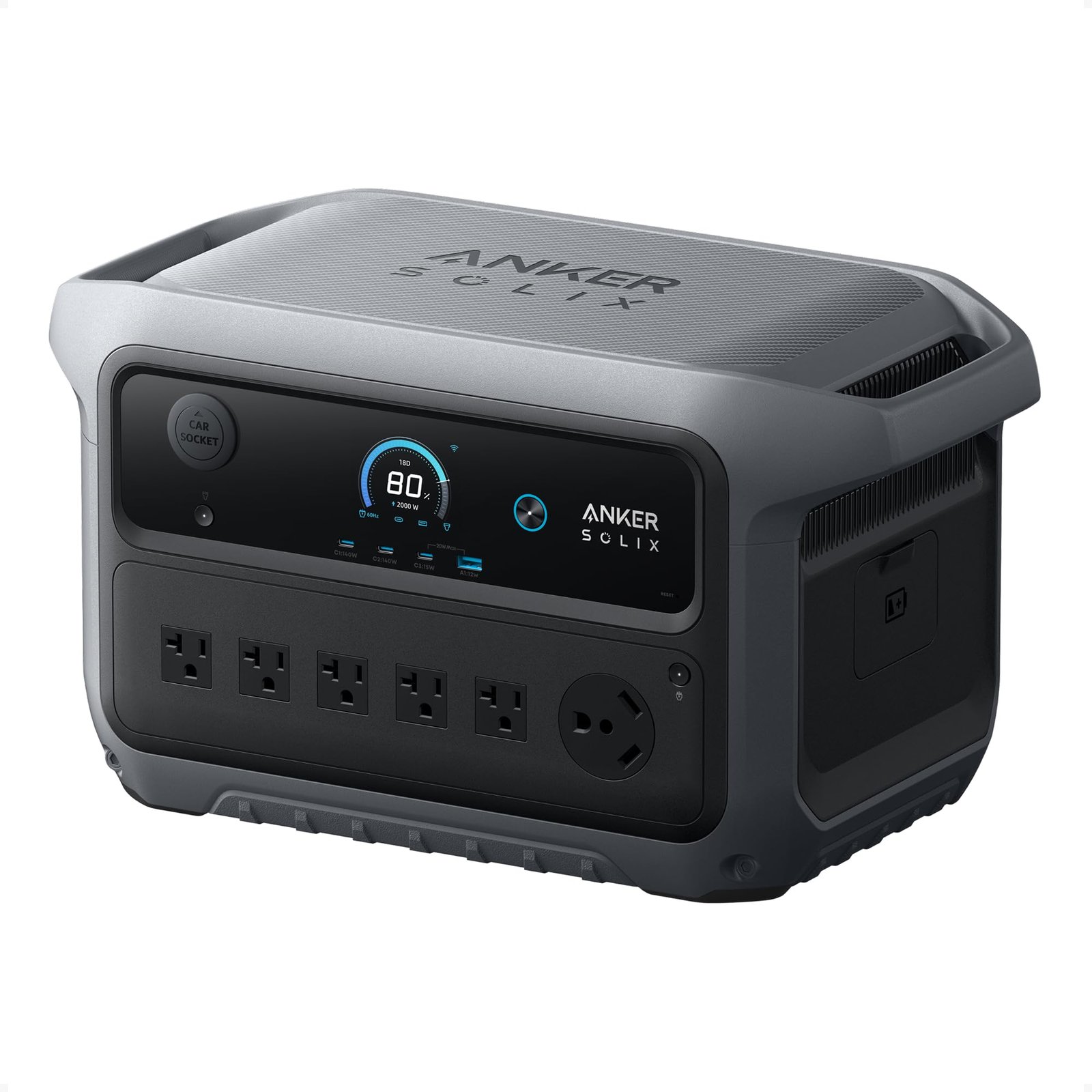
Anker SOLIX C2000 Gen
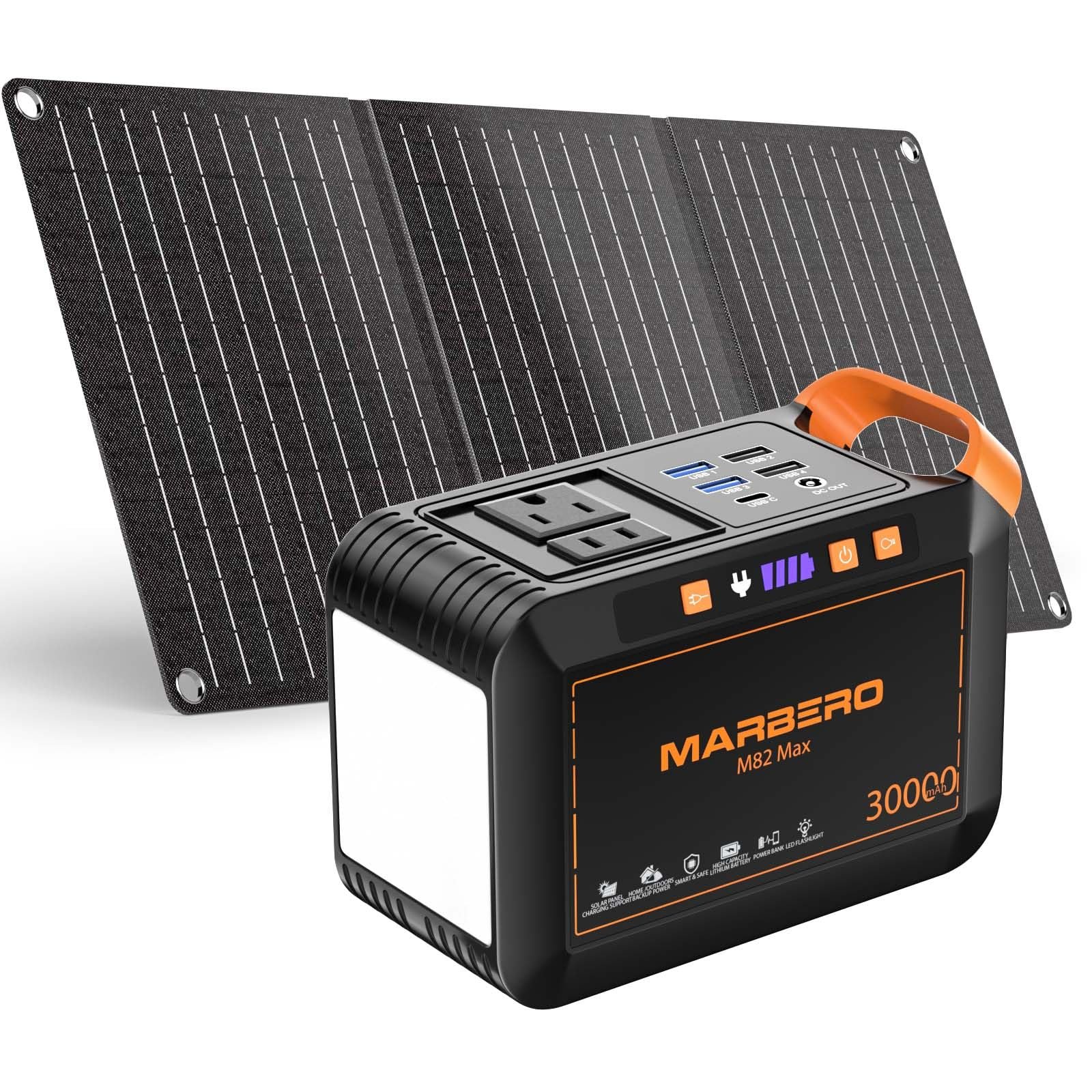
MARBERO Solar Generator 111Wh
Finding reliable power on the go has become more important than ever. Whether you’re camping in remote locations, preparing for emergencies, or just need backup during unexpected outages, portable power stations offer a solution. But with so many options available, choosing the right one can be overwhelming. Today, we’re comparing two popular models: the Anker SOLIX C2000 Gen and the MARBERO Solar Generator 111Wh. These products represent very different approaches to portable power—one is a high-capacity, expandable powerhouse designed for serious energy needs, while the other is a compact, budget-friendly option ideal for basic charging and small appliances. Understanding their differences will help you make an informed decision based on your specific power requirements.
This comparison matters because both products serve similar purposes but cater to entirely different user profiles. The Anker SOLIX C2000 Gen targets users who need substantial power for extended periods, multiple devices, or even whole-home backup scenarios. Meanwhile, the MARBERO model appeals to casual campers, occasional travelers, or those needing emergency backup for essential electronics without breaking the bank. By examining everything from battery capacity and output power to portability and value proposition, you’ll gain clarity on which system aligns best with your lifestyle and energy needs.
In this comprehensive review, we’ll explore each product’s features, performance capabilities, real-world applications, and customer feedback. You’ll learn about their strengths and limitations, compare them head-to-head across key metrics, and discover which one truly offers better value for money depending on your situation. Whether you’re a frequent camper, an outdoor enthusiast, someone preparing for power outages, or simply looking for reliable backup power, this detailed analysis will equip you with the knowledge needed to choose wisely between these two compelling options.
In-Depth Look: Anker SOLIX C2000 Gen
The Anker SOLIX C2000 Gen represents the pinnacle of portable power technology—a premium solution engineered for serious energy demands. At its core lies an impressive 2,048Wh lithium-ion battery that can be expanded up to 4kWh when paired with compatible expansion batteries. This massive capacity means you could run a dual-door refrigerator continuously for up to 32 hours on a single charge, or even extend that runtime to 64 hours with expansion. What really sets this unit apart is its exceptional efficiency; it draws only 9W in standby mode, making it incredibly economical to keep charged and ready for use.
Power delivery is equally impressive with 2,400W of continuous output and a staggering 4,000W peak surge capability. This allows simultaneous operation of multiple high-draw appliances including window air conditioners, power tools, refrigerators, and various kitchen equipment—something most portable power stations can’t handle. The recharging system is equally sophisticated, offering six different methods: standard AC wall outlet (full charge in 58 minutes), car charging (complete in just 3 hours thanks to 800W alternator charging), solar panels, generator input, UPS mode, and even pass-through charging. The compact yet robust design weighs 41.7 pounds but measures only 18.1 × 9.8 × 10.1 inches, representing a 25% reduction in size and weight compared to previous generations.
What makes the Anker SOLIX C2000 Gen particularly appealing is its versatility and future-proofing capabilities. The expandable battery system lets you start with what you need now and add capacity as your requirements grow. Built-in smart features monitor temperature, voltage, and current while providing real-time status updates through an intuitive interface. Safety is paramount with comprehensive protection against over-voltage, over-current, short circuits, and extreme temperatures. While the upfront cost is significant, the combination of raw power, expandability, and reliability positions this as a long-term investment rather than a disposable gadget.
Pros: Exceptional power output, highly efficient operation, fast recharge times, expandable capacity, robust build quality, versatile charging options
Cons: Premium price point, relatively heavy for portability, requires separate solar panels for solar charging
One satisfied customer shared: “I secured the Ultimate Home Backup System—comprising two C1000 Gen2 and three C2000 Gen2 units, I included an extra Portable Power Station with a 200W Solar Panel, offering 2,400W peak/2,048Wh capacity that will charge in under an hour. Here it is 4 months later and all are at 100% charged —at a phenomenal deal, nearly 56% OFF the retail price on Amazon. This purchase perfectly prepares me for rolling blackouts.” Another reviewer noted: “Great, powers everything I need with a reasonable footprint and capacity. Have had good luck with several of the C1000G2 and this C2000G2.”
The Anker SOLIX C2000 Gen is best suited for homeowners seeking reliable backup power during extended outages, RV owners needing substantial energy for off-grid adventures, contractors requiring dependable power for job sites, or anyone who regularly operates multiple high-consumption appliances simultaneously. Its expandable nature also makes it ideal for those planning to scale their energy needs over time.
In-Depth Look: MARBERO Solar Generator 111Wh
The MARBERO Solar Generator 111Wh offers an incredibly accessible entry point into the world of portable power. Weighing only 2.3 pounds and measuring a compact 6.5 × 3.2 × 4.6 inches, this lightweight power station is designed specifically for mobility and convenience. Despite its modest 111Wh capacity (equivalent to 30,000mAh), it delivers surprisingly capable performance for basic electronics and small appliances. The included 30W foldable solar panel provides genuine off-grid capability, featuring advanced solar arrays with 21.5-23.5% conversion efficiency and built-in smart chips that optimize charging while preventing overcharging and overloads.
Output versatility is another strong suit, with four USB-A ports, one USB-C port, two AC outlets supporting 110V/60Hz at 80W continuous (120W peak), and a DC port delivering up to 120W. This configuration easily handles smartphones, tablets, laptops, LED lights, mini fans, and small camping equipment all simultaneously. The integrated LED display clearly shows remaining battery percentage and charging status, adding a layer of transparency rarely found in budget-friendly models. Build quality remains solid despite the low price point, with durable construction that withstands regular transport and outdoor conditions.
Recharging options include direct wall outlet connection, the included cigarette lighter adapter for vehicles, and most importantly—the 30W solar panel. While exact recharge times aren’t specified, typical estimates suggest full charging via solar takes several hours depending on sunlight conditions. The package includes everything needed for immediate use: the power station, solar panel, power adapter, cigarette lighter cable, and user manual. At approximately $150-$200, this represents exceptional value for those needing reliable backup power without the premium price tag.
Pros: Extremely lightweight and portable, comes with solar panel, affordable price point, multiple output options, clear LED display, solid build quality
Cons: Limited capacity for larger appliances, slower recharge times via solar, no expansion capability, lower overall power output
Customers consistently praise the MARBERO for its reliability and convenience: “This portable power station is a must-have for outdoor trips and home backups. It charges my phone, laptop, and camping lights all at once with no issues. The battery holds a charge for weeks when not in use, and it recharges quickly via solar panels or wall outlet.” Another user reported: “We live in a 10 so we use us to charge our phones every single night… Super durable charges up very fast battery life stays long our top quality product.”
The MARBERO Solar Generator 111Wh shines brightest in scenarios where portability trumps raw power requirements. It’s perfect for weekend camping trips, tailgating events, emergency preparedness kits, small cabin setups, or as backup power for essential medical devices. Its affordability makes it accessible to a broader audience while still delivering genuine utility.
Head-to-Head Comparison
Performance & Power Capabilities
When comparing raw performance, the difference between these two systems is dramatic. The Anker SOLIX C2000 Gen dominates with 2,048Wh of usable capacity versus just 111Wh in the MARBERO model—that’s nearly 19 times more energy storage. In terms of power output, the Anker delivers 2,400W continuous with 4,000W peak capability, enabling operation of large appliances like refrigerators, microwaves, and even window air conditioners. Conversely, the MARBERO maxes out at 80W continuous and 120W peak, sufficient only for small electronics and basic lighting. If you need to run multiple high-wattage devices simultaneously, the Anker is unequivocally superior.
Portability & Convenience
Here the balance shifts dramatically toward the MARBERO. At just 2.3 pounds versus 41.7 pounds, the MARBERO is nearly 18 times lighter—making it effortless to carry in a backpack or glove compartment. Its compact dimensions (6.5 × 3.2 × 4.6 inches) easily fit in tight spaces, while the Anker’s larger footprint (18.1 × 9.8 × 10.1 inches) demands more storage space. However, portability shouldn’t come at the expense of functionality; the Anker’s heavier weight reflects its higher-grade components and cooling systems necessary for sustained high-power operations.
Value Proposition
Price-wise, these products serve completely different market segments. The MARBERO retails around $150-$200, offering incredible value for basic power needs. The Anker SOLIX C2000 Gen commands a premium price ($2,000+) due to its industrial-grade construction, massive capacity, and expandability features. While the Anker costs significantly more upfront, its ability to scale with your needs and provide years of reliable service may justify the investment for serious users. For casual consumers or those testing the waters with portable power, the MARBERO delivers outstanding bang-for-buck value.
Solar Integration
Both systems support solar charging but implement it differently. The MARBERO includes a 30W solar panel with the base package, making off-grid charging immediately available. The Anker requires purchasing solar panels separately (typically 200W+ models) and offers faster charging rates when connected. The MARBERO’s solar integration is simpler and more beginner-friendly, while the Anker provides greater flexibility and speed for experienced users with solar infrastructure.
Real-World Applications
Consider your usage patterns: Need to power a refrigerator during a week-long camping trip? Choose the Anker. Want backup power for your phone and laptop during occasional outages? The MARBERO suffices perfectly. Planning for hurricane season or frequent blackouts? Invest in the Anker’s expandable system. Preparing for a weekend getaway? The MARBERO’s lightweight design wins hands down. Matching the right product to your actual needs prevents overspending on unnecessary capacity or settling for inadequate performance.
Frequently Asked Questions
Q: Can I run my refrigerator using either of these power stations?
A: Absolutely—but with major caveats. The Anker SOLIX C2000 Gen can power a dual-door refrigerator for up to 32 hours (or 64 hours with expansion), thanks to its massive 2,048Wh capacity and 2,400W continuous output. The MARBERO Solar Generator 111Wh, however, lacks sufficient capacity and power output for refrigerators. Even a small fridge typically draws 100-200W continuously, quickly draining the MARBERO’s limited 111Wh battery within hours. For refrigerator backup, only the Anker provides viable solutions.
Q: How long does it take to fully recharge each unit?
A: Recharge times vary significantly between models. The Anker SOLIX C2000 Gen achieves full charge in just 58 minutes using AC wall charging, or 3 hours via car charging thanks to its powerful 800W alternator input. Solar charging depends on panel wattage but typically takes 4-8 hours. The MARBERO Solar Generator 111Wh doesn’t specify exact AC recharge times, but similar 111Wh units usually require 3-5 hours via wall outlet. Solar charging varies considerably based on sunlight intensity, taking anywhere from 6-12 hours with its included 30W panel.
Q: Which one is easier to set up and use?
A: Setup complexity favors the MARBERO for beginners. With just three main components—power station, solar panel, and cables—it’s ready to use immediately after unpacking. The Anker requires more initial configuration, especially if adding expansion batteries, and benefits from understanding proper load management for its higher power outputs. Both feature intuitive interfaces and clear indicators, but the MARBERO’s simplicity makes it more approachable for first-time users.
Q: Do these units work during cloudy weather or nighttime?
A: Yes, but with limitations. Neither system relies solely on solar power. The MARBERO Solar Generator 111Wh works perfectly indoors or at night using its included AC adapter—just plug it into any standard outlet. Similarly, the Anker SOLIX C2000 Gen supports multiple charging sources including AC, car, and generator inputs, ensuring operation regardless of weather conditions. Solar panels simply supplement primary charging methods and perform best in direct sunlight.
Q: Can I expand the MARBERO’s capacity later?
A: Unfortunately, no. The MARBERO Solar Generator 111Wh isn’t designed for expansion—its compact size and fixed internal battery prevent adding external modules. In contrast, the Anker SOLIX C2000 Gen explicitly supports expansion batteries that increase total capacity from 2,048Wh up to 4kWh. This modular design lets users start with their current needs and upgrade incrementally as requirements grow, offering unparalleled flexibility for future-proofing your investment.
Q: Are these suitable for medical device backup?
A: Both have applications, but suitability depends on your specific medical devices’ power requirements. The MARBERO Solar Generator 111Wh works well for low-power medical devices like oxygen concentrators (if under 80W continuous), CPAP machines (check specifications first), or insulin coolers. The Anker SOLIX C2000 Gen handles virtually any medical equipment due to its high capacity and stable power delivery. Always consult your device manufacturer’s power requirements before selecting a backup solution.
Final Verdict: Which One Should You Choose?
After thoroughly examining both the Anker SOLIX C2000 Gen and the MARBERO Solar Generator 111Wh, the choice ultimately depends on your specific needs, budget, and intended use cases. These products represent fundamentally different philosophies in portable power: one prioritizes maximum capability and future scalability, while the other emphasizes affordability and essential functionality.
Choose the Anker SOLIX C2000 Gen if you require substantial power for extended durations, operate multiple high-draw appliances simultaneously, plan to expand your system over time, or need reliable backup for critical home functions during prolonged outages. Its industrial-grade construction, massive expandable capacity, and exceptional power output justify the premium price for serious users. This is the ultimate solution for whole-home backup, professional applications, or demanding recreational activities where power reliability is non-negotiable.
Opt for the MARBERO Solar Generator 111Wh if you primarily need backup power for small electronics, occasional camping trips, emergency preparedness for short outages, or simply want an affordable entry into portable power technology. Its lightweight design, included solar panel, and budget-friendly price make it accessible to a much broader audience while still delivering genuine utility for basic charging needs. Perfect for casual campers, urban dwellers needing phone charging during brief outages, or those wanting reliable emergency backup without financial strain.
The key distinction lies in scale: the Anker operates at a professional level with enterprise-grade features, while the MARBERO serves individual consumers with practical, everyday power solutions. Neither is objectively “better”—they excel in different domains. Consider how often you’ll actually use the power station, what devices you need to support, whether you anticipate growing your energy requirements, and how much you’re willing to invest upfront versus long-term value.
For most people, the MARBERO provides sufficient capability for their needs while freeing up funds for other priorities. However, if you regularly operate high-energy appliances, live off-grid, or require uninterrupted power during extended emergencies, the Anker’s unmatched performance and expandability make it worth the significant investment. Whichever path you choose, both systems represent excellent engineering solutions that transform how we access electricity beyond traditional grid connections.