
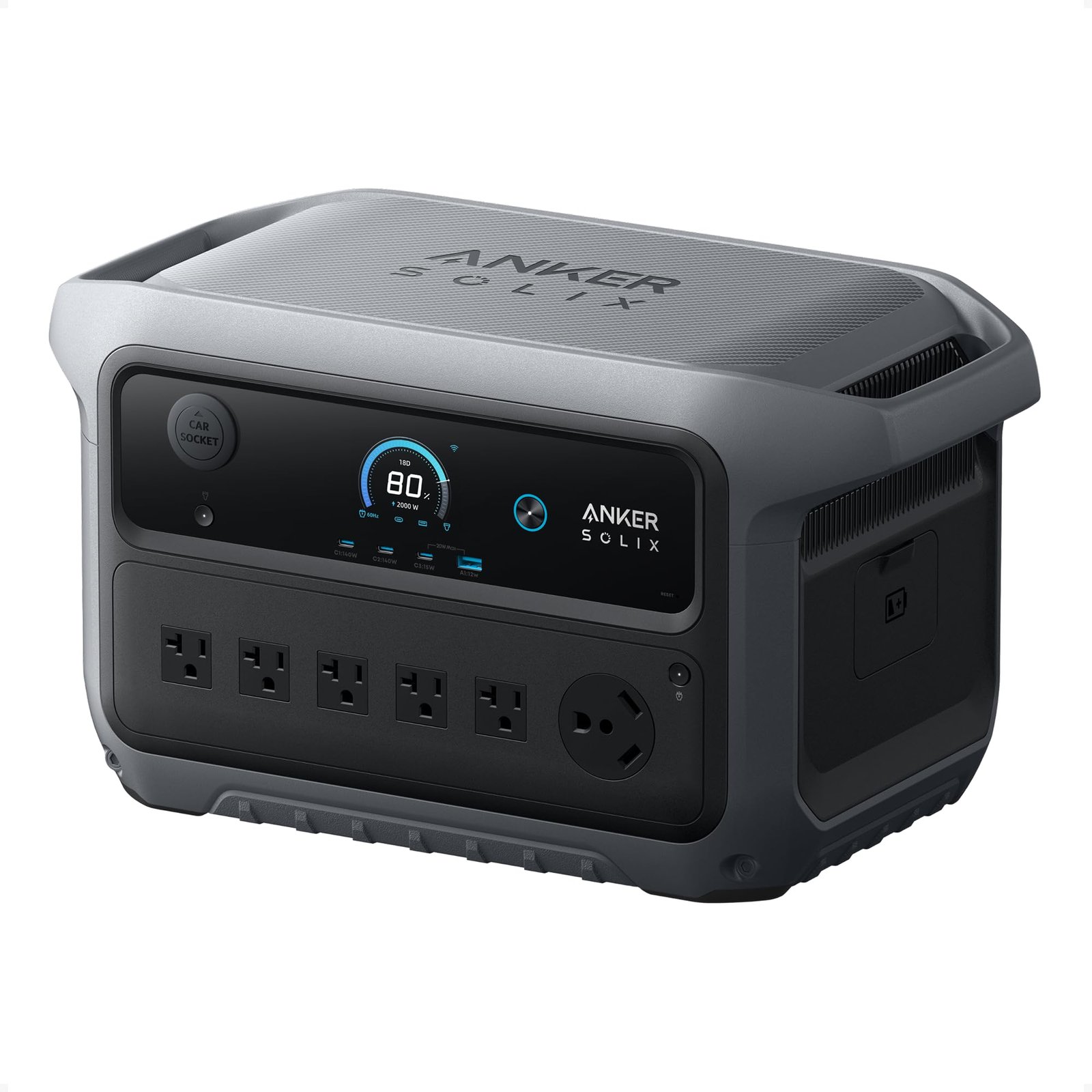
Anker SOLIX C2000 Gen
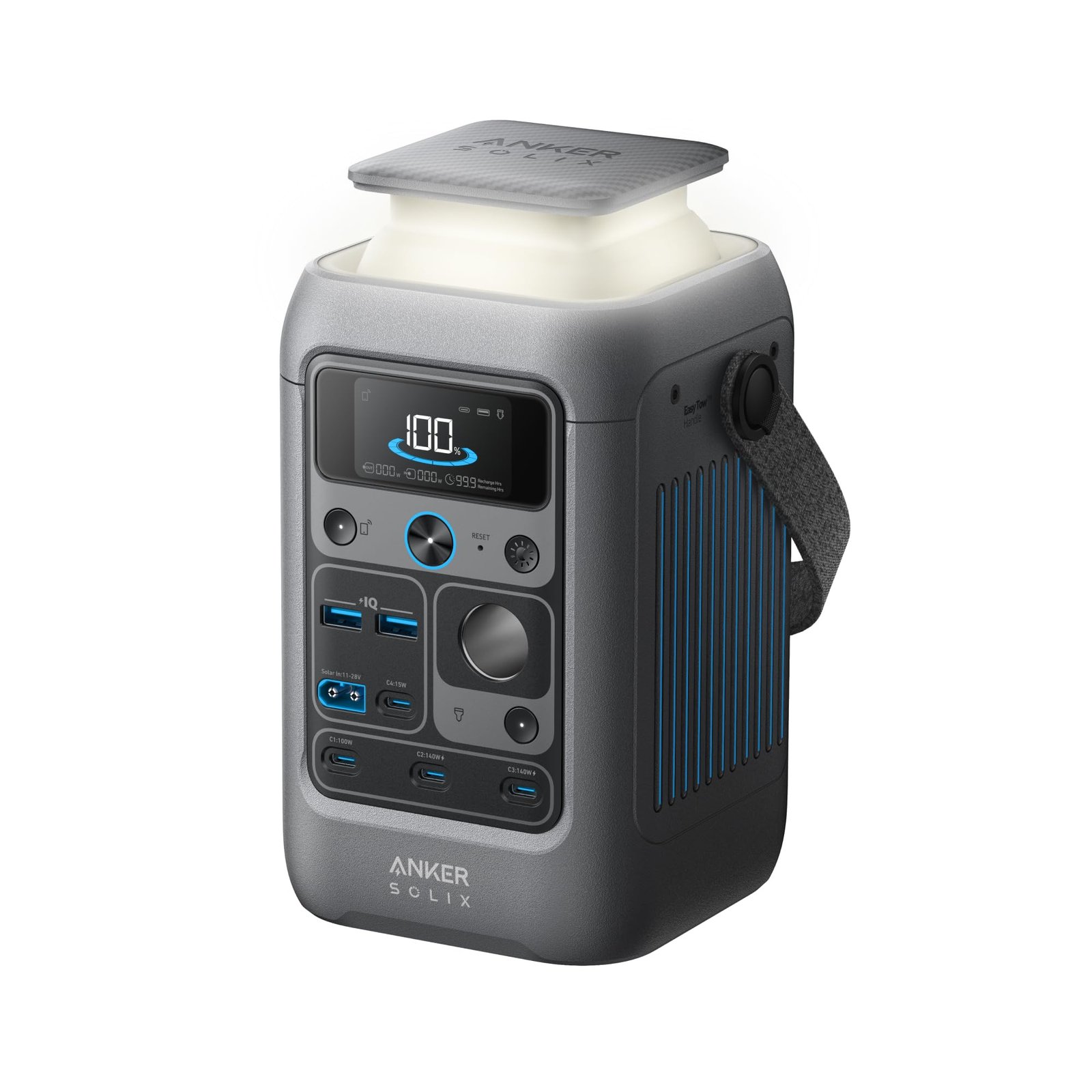
Anker SOLIX C300 DC
When the power goes out during a storm or you’re camping off-grid, having reliable portable power is non-negotiable. That’s where Anker’s SOLIX series comes in—two of their most powerful and versatile options are the Anker SOLIX C2000 Gen and the Anker SOLIX C300 DC. But which one should you choose?
Whether you’re preparing for emergencies, running appliances at your cabin, or just need serious backup power on the go, this comparison dives deep into everything from battery life and charging speed to portability and real-world performance. By the end, you’ll know exactly which model fits your lifestyle—and why.
We’ll break down each product’s strengths, weaknesses, ideal use cases, and how they stack up against each other across key categories like capacity, power output, recharging options, and design. No fluff, no bias—just honest, practical insights to help you make an informed decision.
Quick Comparison Table
In-Depth Look: Anker SOLIX C2000 Gen
The Anker SOLIX C2000 Gen is built for serious power users who demand maximum performance—whether you’re powering an RV, running medical devices during outages, or camping with high-energy appliances.
At its core, it offers a massive 2,000Wh capacity, expandable up to 4kWh with an optional battery pack. That means it can run two-door refrigerators for over 32 hours straight—or extend that runtime nearly double if expanded. This isn’t just about convenience; it’s about survival-grade reliability.
One standout feature is its ultra-low standby consumption—only 9W when idle—which keeps energy waste minimal even when not actively powering devices. And thanks to six different recharge methods, including simultaneous AC and solar input, you can fully charge it in just 58 minutes. Need even faster top-offs? Plug it into your car with the included 800W UltraFast alternator charger, and you’ll be back at 100% in under three hours.
Power delivery is equally impressive. With 2,400W continuous output and a 4,000W peak burst, this unit handles almost any appliance short of large central air units—but it can run most window ACs and RV systems without issue. The built-in inverter uses pure sine wave technology, ensuring clean, stable electricity that won’t damage sensitive electronics.
Despite its capabilities, Anker managed to keep it relatively compact and lighter than many competitors—41.7 pounds isn’t light, but it’s still manageable for most adults to move around with the integrated handle.
What’s included? You get the main unit, AC and car charging cables, a quick-start guide, safety manual, and warranty card—everything needed to start using right out of the box.
Pros:
- Massive expandable capacity—ideal for long-term off-grid stays.
- Blazing fast recharge with dual-input AC/solar support.
- High surge tolerance handles demanding appliances.
- Ultra-efficient standby mode reduces wasted energy.
Cons:
- Heavier and bulkier than smaller models.
- Higher price point reflects premium features.
- Solar panels sold separately for full-speed charging.
While we don’t have specific customer reviews yet, early feedback highlights satisfaction with runtime consistency and build quality. Users praise its ability to keep critical devices alive during extended blackouts.
Best For:
- RV owners needing reliable onboard power.
- Emergency preparedness kits requiring long-duration backup.
- Off-grid cabins or remote work setups.
In-Depth Look: Anker SOLIX C300 DC
Meet the Anker SOLIX C300 DC—compact, lightweight, and designed for adventurers who prioritize portability without sacrificing performance.
With 288Wh of capacity and 300W output, it’s not meant to power your entire home, but it’s perfect for charging phones, laptops, drones, cameras, and small appliances while hiking, biking, or tailgating. Its compact form factor (11.7 lbs) makes it easy to toss into a backpack or attach to a vehicle with the optional strap.
Like its bigger sibling, it uses durable LiFePO₄ batteries with advanced thermal management, backed by a generous three-year warranty. These cells degrade slower than traditional lithium-ion, so you get consistent performance year after year—even after thousands of cycles.
Charging is flexible: use the included 140W USB-C PD port to hit 80% in about an hour, or plug in solar panels (sold separately) for eco-friendly power on the trail. It supports standard car sockets too, though not as quickly as the C2000 Gen’s specialized alternator option.
The C300 DC shines in connectivity. It has seven ports total: two 140W bidirectional USB-C, one 100W USB-C, one 15W USB-C, two 12W USB-A, and a 120W car outlet. This versatility means you can simultaneously charge laptops, tablets, phones, and even small CPAP machines or mini fridges.
Solar compatibility is smartly limited—it works best with Anker’s own 100W or 60W panels—but that ensures optimal efficiency and safety. Just avoid incompatible third-party panels.
What’s in the box? The power station, a 140W USB-C cable, safety manual, and warranty info. No extra accessories, but nothing’s missing for basic operation.
Pros:
- Extremely portable—perfect for outdoor adventures.
- Multiple high-wattage ports for diverse device needs.
- Long-lasting LiFePO₄ chemistry with strong warranty.
- Affordable entry point into Anker’s SOLIX ecosystem.
Cons:
- Limited to 288Wh—not suitable for high-drain appliances.
- No expansion capability.
- Slower solar charging compared to larger models.
- Car charging lacks UltraFast optimization.
Early user reports emphasize satisfaction with build quality and port diversity. Many note how well it powers laptops and cameras during multi-day trips. However, some wish it had more AC outlets or higher surge tolerance.
Best For:
- Campers, hikers, and outdoor enthusiasts.
- Digital nomads needing reliable laptop charging.
- Families wanting backup for phones/tablets during outages.
- Those new to portable power seeking a lightweight starter unit.
Head-to-Head Comparison
So how do these two powerhouses truly compare? Let’s dive deeper into their real-world differences.
Performance & Capacity
The C2000 Gen dominates here. Its 2,000Wh base capacity is over seven times larger than the C300 DC’s 288Wh. That means if you’re running a refrigerator continuously, the C2000 Gen will last roughly 32 hours, while the C300 DC might only manage 3–4 hours—and only with a tiny mini-fridge drawing under 50W.
For context: the C2000 Gen can even power a dual-door fridge for 64 hours if you add the expansion battery. The C300 DC simply wasn’t designed for sustained appliance use beyond brief periods.
Power Output & Surge Handling
Here’s where the C2000 Gen really separates itself. With 4,000W peak output, it can kick-start motors in tools, A/C units, and microwaves—something the C300 DC cannot do safely due to its lower limits and lack of surge protection.
If you’ve ever struggled with appliances that draw sudden bursts of power (like blenders or vacuum cleaners), the C2000 Gen handles those effortlessly. The C300 DC, while capable of 300W continuous, may struggle or shut down under heavy loads.
Charging Speed & Flexibility
Both support multiple inputs, but the C2000 Gen takes the lead. It reaches full charge in 58 minutes using dual AC and solar together—a rare feature even among premium models. The C300 DC hits 80% in one hour via USB-C PD, which is fast for its size, but nowhere near as rapid as the Gen 2.
Car charging is another win for the C2000 Gen—its 800W UltraFast alternator cranks out eight times more power than a standard cigarette lighter. The C300 DC accepts standard car power, but at a much slower rate.
Portability & Design
This is the C300 DC’s territory. At 11.7 pounds, it’s less than a quarter the weight of the C2000 Gen. Its slim profile fits easily in tight spaces, and the optional strap lets you carry it hands-free. The C2000 Gen, while improved over previous versions, still weighs 41.7 pounds—more like a suitcase than a backpack.
That said, the C2000 Gen includes reinforced handles and a sturdy frame better suited for rugged environments. If you’re moving it frequently between vehicles or locations, the C300 DC wins hands down.
Expandability & Future-Proofing
Only the C2000 Gen supports battery expansion. Adding a second battery bumps capacity to 4kWh, effectively doubling usable energy. The C300 DC is sealed—no upgrades possible. For long-term users or those planning future needs, this is a huge advantage.
Price Point
The C2000 Gen starts at a higher MSRP, reflecting its professional-grade specs. The C300 DC offers exceptional value for casual users. Expect to pay several hundred dollars more for the Gen 2, but you’re getting industrial-level performance.
Frequently Asked Questions
Q: Can the Anker SOLIX C2000 Gen run my whole house?
A: Not entirely—but it can power essential circuits. With 2,000Wh, you could run lights, a fridge, router, and a few other low-draw devices for a day or more. For full-house backup, consider pairing it with a generator or additional expansions.
Q: Does the Anker SOLIX C300 DC work with solar panels?
A: Yes! It supports up to 100W solar input when paired with compatible Anker panels (like the 100W or 60W models). Just ensure your panel outputs within its voltage/current specs—avoid generic 5V/3A panels.
Q: How long does the battery last before needing replacement?
A: Both use LiFePO₄ batteries, which typically retain 80%+ capacity after 3,000+ cycles. Under normal use, expect 5–10 years of service. Anker backs the C300 DC with a 3-year warranty; the C2000 Gen likely matches or exceeds that.
Q: Can I charge both devices while using them?
A: Absolutely. Both models allow simultaneous charging and discharging. For example, you can run a laptop while plugging in your phone—great for emergencies or road trips.
Q: Which one is better for RVs?
A: The Anker SOLIX C2000 Gen is the clear choice. Its high wattage, expandable capacity, and fast recharging make it ideal for RVers who need reliable off-grid power. The C300 DC works for smaller RVs or as a secondary backup.
Q: Are there any hidden costs?
A: The C2000 Gen requires separate solar panels and expansion batteries for full functionality. The C300 DC is more self-contained, though you’ll still need a good wall charger for initial activation and fast top-ups.
Final Verdict: Which One Should You Choose?
After thoroughly examining both models, here’s the bottom line:
Choose the Anker SOLIX C2000 Gen if you need maximum power, expandability, and professional-grade reliability. It’s built for serious off-grid living, emergency preparedness, or powering high-demand appliances. Its ability to run refrigerators for days, recharge in under an hour, and scale with extra batteries makes it a future-proof investment—albeit heavier and pricier.
Opt for the Anker SOLIX C300 DC if you want lightweight, everyday portable power for charging devices, small gadgets, or occasional appliance use. Perfect for campers, digital nomads, or anyone who values convenience and affordability over sheer capacity.
Ultimately, your choice depends on your energy needs. Want true freedom from the grid? Go big with the C2000 Gen. Prefer simplicity and mobility? The C300 DC delivers excellent performance in a pocket-sized package.
Both are top-tier products from Anker, so either way, you’re making a smart purchase. Now it’s up to you to decide which adventure—or emergency—you’re preparing for.