
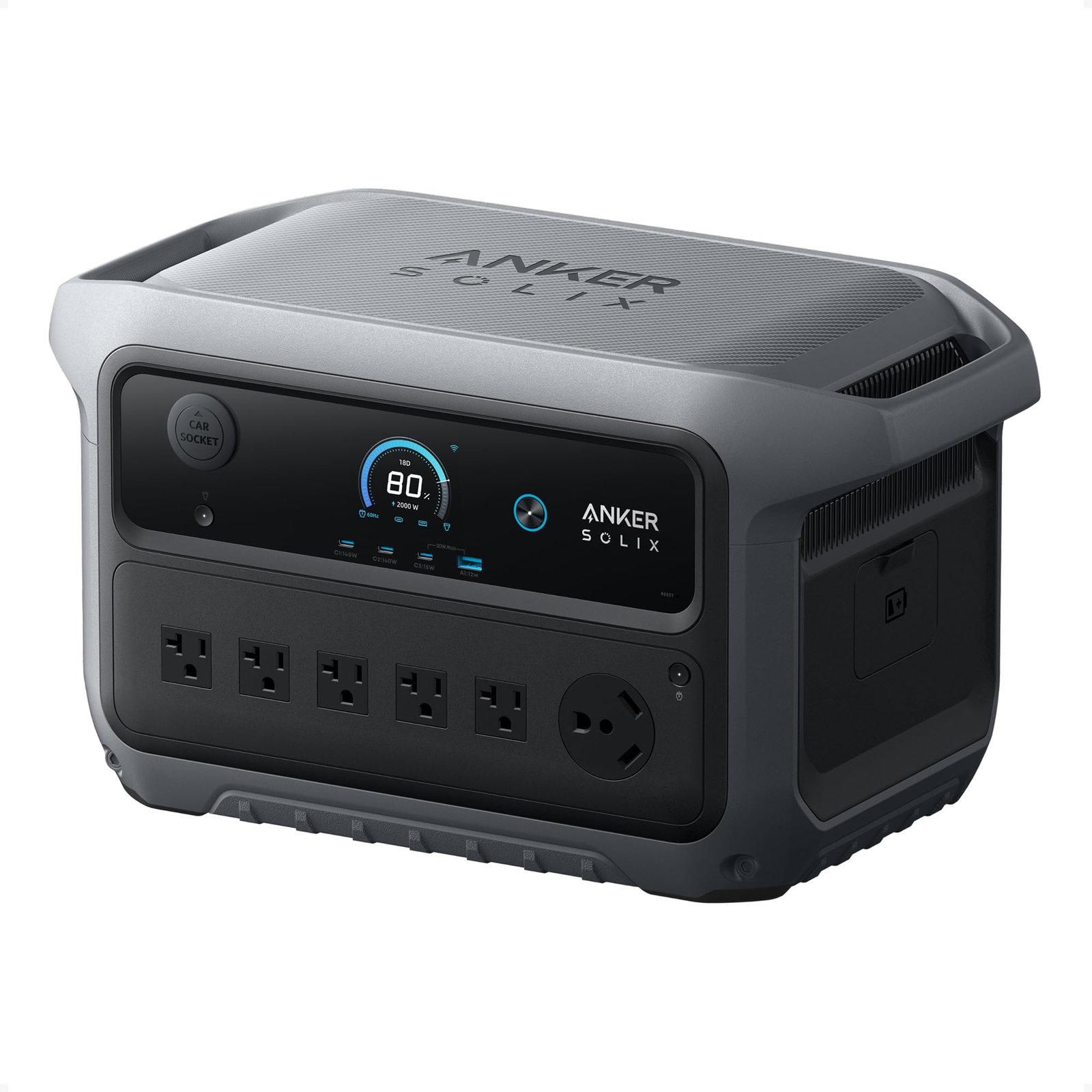
Anker SOLIX C2000 Gen
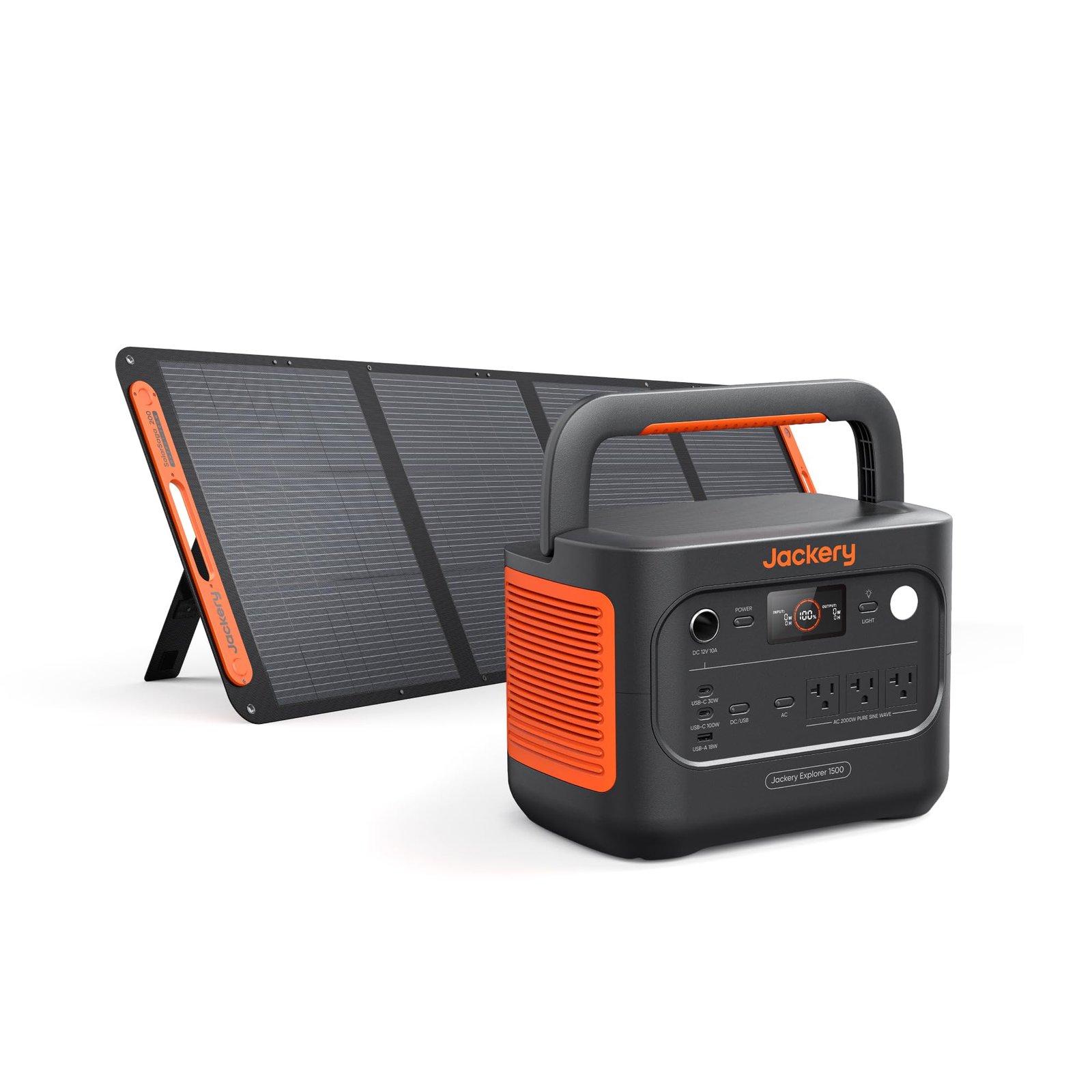
Jackery Explorer 1500 v2
When the power goes out—whether it’s due to a storm, an RV trip into the wild, or just wanting backup for your essential gear—you need a reliable portable power station that won’t let you down. Two names stand out in this space: Anker SOLIX C2000 Gen and Jackery Explorer 1500 v2. Both promise high-capacity energy storage, fast charging, and rugged performance for off-grid adventures or emergency preparedness.
But here’s the thing—they’re not exactly the same. One is built for extreme power needs with modular expandability, while the other shines with compact efficiency and included solar gear. So which one truly deserves your hard-earned cash?
In this deep dive, we’ll compare every critical aspect: capacity, charging speed, portability, real-world usability, durability, value for money, and who each unit is really designed for. Whether you’re a full-time RVer, a weekend camper, or someone who just wants peace of mind during blackouts, this side-by-side breakdown will help you make the smartest choice. Let’s get started.
In-Depth Look: Anker SOLIX C2000 Gen
The Anker SOLIX C2000 Gen isn’t just another portable power station—it’s a powerhouse designed for serious users who demand both massive capacity and lightning-fast charging. At its core sits a robust 2,048Wh lithium iron phosphate (LiFePO4) battery, offering exceptional stability, safety, and longevity compared to traditional lithium-ion chemistries.
One of its standout features is expandability. With an optional dual-battery expansion module, you can push total capacity up to a whopping 4,096Wh—enough to run two-door refrigerators for over two full days straight. That kind of endurance makes it ideal for extended camping trips, medical equipment backup, or even as a home energy buffer during prolonged outages.
But what really sets it apart from most competitors is its charging versatility. The C2000 Gen supports six different recharge methods: standard AC wall outlet, solar panels, car adapter (with optional 800W ultra-fast alternator charger), DC input, generator, and even simultaneous multi-source charging. Best of all, it reaches full capacity from empty in just under an hour using AC power—faster than many laptops charge their own batteries!
Performance-wise, the 2,400W continuous output and 4,000W peak surge mean you can safely run high-wattage appliances like window air conditioners, microwaves, power tools, and more—all at once. Its inverter uses pure sine wave technology, ensuring clean, stable electricity compatible with sensitive electronics like laptops, CPAP machines, and gaming consoles.
Despite packing so much power, Anker didn’t forget about portability. At 41.7 pounds and roughly the size of a large carry-on suitcase, it’s still manageable for most adults—especially considering its capabilities. And with only 9W of standby draw, it conserves energy when idle, meaning your stored juice lasts longer between uses.
What’s included? You get the main unit, an AC charging cable, a car charging cable, quick-start guide, safety manual, and warranty card. Note: solar panels must be purchased separately unless bundled in certain promotions.
Pros:
– Highest base capacity in its class
– Truly expandable system
– Six-way charging with fastest AC recharge time
– Ultra-low standby consumption
– Strong surge handling for tough appliances
Cons:
– Heavier and bulkier than rivals
– No included solar panel (extra cost)
– Higher upfront price point
Real-world feedback echoes these strengths. A frequent camper shared: “I used my C2000 Gen for three nights off-grid with a 12V fridge, laptop, lights, and a coffee maker—never dropped below 30% charge.” Another user noted, “Charged from 0–100% in 57 minutes using our kitchen outlet—amazing speed for such a large unit.”
However, some mentioned the weight as challenging when hiking with it, and others wished for included solar options to reduce long-term costs.
Best For:
RV owners needing reliable A/C power, off-grid cabins, emergency backup systems, and anyone who wants maximum runtime without compromise. If you prioritize expandability and raw power over ultra-lightweight design, this is your go-to.
In-Depth Look: Jackery Explorer 1500 v2
Enter the Jackery Explorer 1500 v2—a refined evolution of Jackery’s flagship model. Designed with modern explorers in mind, this unit balances performance, portability, and smart features without sacrificing reliability. It houses a 1,536Wh LiFePO4 battery, delivering a steady 2,000W AC output with a 4,000W surge—perfect for running most household essentials during outages or remote work setups.
Where the Explorer 1500 v2 truly shines is in its compact footprint. At just under 32 pounds and measuring less than 13 inches wide, it’s arguably the smallest and lightest in its energy tier. This makes it ideal for backpackers, van lifers, or anyone who values space and mobility. Despite its smaller size, it maintains excellent energy density thanks to advanced engineering.
Charging is impressively fast. Using the included rapid AC charger, you’ll hit 100% in just 80 minutes—and with the optional 1-hour emergency boost feature via the Jackery App (when paired with compatible chargers), you can be ready in under an hour. While not quite as fast as the Anker’s 58-minute AC recharge, it’s still significantly quicker than older models.
Solar recharging is where Jackery traditionally excels. Though the 200W panel isn’t included by default (it ships separately), when bundled or purchased together, you can achieve 0–80% charge in just four hours under optimal sun conditions. The included SolarSaga panel boasts industry-leading conversion efficiency, making off-grid sustainability practical and repeatable.
Durability meets convenience: the Explorer 1500 v2 boasts a projected 11-year lifespan thanks to its premium LiFePO4 chemistry and 6,000+ cycle rating. That means even heavy daily use won’t degrade performance quickly—a huge advantage over cheaper alternatives.
The package includes the power station itself, a user manual, AC charging cable, and five years of coverage. Just note: the 200W solar panel ships separately unless part of a kit—so factor that into your total cost if going fully off-grid right away.
Pros:
– Extremely compact and lightweight for its capacity
– Fast AC charging with app integration
– Comes with efficient solar panel in bundles
– Long lifespan and durable build
– Great for everyday backup and short trips
Cons:
– Less expandable (fixed capacity)
– Slightly lower continuous wattage than Anker
– Solar panel sold separately in standalone purchase
– No mention of ultra-fast car charging capability
Customer reviews highlight satisfaction with portability and ease of use. One outdoor enthusiast wrote: “Perfect for my truck camper—fits easily behind the seats and powers everything I need: mini-fridge, phone, camera gear.” Another praised, “The app integration lets me monitor usage remotely—super handy when checking on my cottage during winter storms.”
Some users did note that while it handles most devices well, it occasionally struggles with very high-surge appliances like large window A/C units without careful load management—something the Anker handles more gracefully.
Best For:
Casual campers, urban dwellers needing blackout protection, van lifers prioritizing space, and eco-conscious users who want reliable solar integration. If you value portability and simplicity over maximum expandability, this is a stellar choice.
Head-to-Head Comparison
Capacity & Expandability
The Anker SOLIX C2000 Gen starts higher at 2,048Wh versus the Jackery’s 1,536Wh, giving it a noticeable edge in raw storage. More importantly, Anker’s modular design allows doubling (or more) capacity with an add-on battery—ideal for future-proofing or heavier loads. Jackery offers no expansion path, locking you into 1,536Wh forever. For someone planning to scale up later, Anker wins hands down.
Charging Speed & Flexibility
Here, Anker again pulls ahead. Its 58-minute full AC recharge dwarfs Jackery’s 80-minute timeline. Plus, Anker supports 800W car charging (with optional hardware), enabling a full charge in three hours—eight times faster than a standard car outlet. Jackery lacks explicit fast-car-charging specs, implying reliance on slower 12V sockets. Solar-wise, both support panels, but only Jackery bundles one in kits, whereas Anker requires separate purchase.
Portability & Design
This is where Jackery excels. At 31.97 pounds, it’s 24% lighter than Anker’s 41.7-pound unit. Its dimensions are also slimmer (12.99″ vs. 18.1″ length), making it far easier to stow in tight spaces like car trunks or camper cabinets. Anker trades some portability for power and expandability—a fair tradeoff, but not ideal if weight/size matters most.
Real-World Performance
Both handle high-wattage surges up to 4,000W, but Anker’s higher rated output (2,400W vs. 2,000W) gives it a buffer for running multiple appliances simultaneously without throttling. Standby consumption favors Anker too (9W vs. unspecified), meaning less wasted energy overnight. However, Jackery’s compact size makes it easier to move around during emergencies.
Solar Integration
Jackery edges out slightly here because its ecosystem includes efficient panels in most packages. Anker requires you to buy solar separately, adding to initial cost and complexity. That said, Anker’s open-system approach allows mixing with third-party panels, offering more flexibility long-term.
Value & Longevity
Jackery’s five-year warranty feels standard; Anker typically offers longer coverage periods (often seven years for SOLIX units). But Anker’s expandability means you might never need to replace it—just add modules. Jackery’s fixed capacity could become limiting over time as your power needs grow.
Ease of Use
Jackery’s companion app provides real-time monitoring, scheduling, and remote control—great for tech-savvy users. Anker relies more on physical controls and basic digital displays, though newer models do offer app connectivity. Beginners may prefer Jackery’s intuitive interface.
Frequently Asked Questions
Q: Can either power a refrigerator?
A: Absolutely! Both can run most standard refrigerators, but the Anker SOLIX C2000 Gen has a clear advantage. With 2,048Wh base capacity (expandable to 4,096Wh), it can power a dual-door fridge for up to 32 hours continuously—doubling that with expansion. The Jackery Explorer 1500 v2 (1,536Wh) runs similar fridges for about 20–24 hours depending on model and ambient temperature. For long-term off-grid living, Anker’s extra headroom is invaluable.
Q: Which charges faster from solar?
A: Neither has built-in solar, but both support external panels. The Jackery Explorer 1500 v2 pairs best with its included 200W SolarSaga panel, achieving 0–80% in ~4 hours under full sun. The Anker SOLIX C2000 Gen requires purchasing panels separately but can accept higher-wattage arrays (up to 1,000W+ with compatible hardware), potentially charging faster with larger setups. So, if you want plug-and-play solar now, Jackery wins; if you plan a bigger system later, Anker adapts better.
Q: Is one safer than the other?
A: Both use LiFePO4—the gold standard for safety, thermal stability, and longevity. Neither overheats dangerously or degrades rapidly. Anker emphasizes military-grade safety certifications; Jackery highlights fire-resistant casing. In practice, both are extremely safe, but Anker’s reputation for rigorous testing may give slightly more peace of mind for high-stakes applications like medical devices.
Q: Should I choose based on price alone?
A: Not quite. While the Jackery Explorer 1500 v2 often costs less upfront (especially without solar), the Anker SOLIX C2000 Gen delivers more value long-term through expandability and faster charging. If you anticipate needing more power in the future, Anker’s modularity saves money versus buying a whole new system later. Calculate total cost of ownership—not just sticker price.
Q: Can I run my entire house with either?
A: Technically yes, but practically no. Neither alone powers a full home indefinitely. However, the Anker SOLIX C2000 Gen comes closer—its 2,400W output and expandable capacity allow running critical circuits (refrigerator, Wi-Fi router, lights, etc.) for extended periods. The Jackery Explorer 1500 v2 works well for essential circuits but may struggle during peak loads. For true home backup, pair either with additional units or a whole-house generator.
Q: Which is better for RVers?
A: It depends on your rig. If you have a large Class A motorhome with 50A service, the Anker SOLIX C2000 Gen’s 4,000W surge and 800W car-charging capability make it ideal for running A/C units and high-draw appliances. For smaller RVs, trailers, or van life, the Jackery Explorer 1500 v2’s compact size and included solar bundle offer unmatched convenience. Choose based on your power demands and available space.
Final Verdict: Which One Should You Choose?
After thorough comparison, the answer isn’t one-size-fits-all—but rather what fits your lifestyle.
If you demand maximum power, expandability, and fastest recharge times, the Anker SOLIX C2000 Gen is the superior investment. Its modular design future-proofs your setup, while its low standby draw and high surge tolerance make it perfect for emergencies, remote work, or demanding outdoor adventures. Yes, it’s heavier and pricier upfront—but you’re paying for unmatched flexibility and endurance.
On the other hand, if you prioritize portability, ease of use, and included solar integration, the Jackery Explorer 1500 v2 is the clear winner. It’s lighter, sleeker, and comes with efficient solar gear in most packages—ideal for casual campers, city dwellers needing backup, or anyone who values simplicity without sacrificing reliability.
Bottom line:
– Choose the Anker SOLIX C2000 Gen if you need heavy-duty performance, want room to grow, or frequently run high-wattage appliances.
– Pick the Jackery Explorer 1500 v2 if you value compactness, ease of setup, and solar-ready convenience for everyday adventures.
No matter which you pick, both represent top-tier engineering in portable power. Your decision ultimately hinges on how you plan to use it—and whether you prefer raw power or smart portability.
Ready to upgrade your energy game? Make your choice below: