
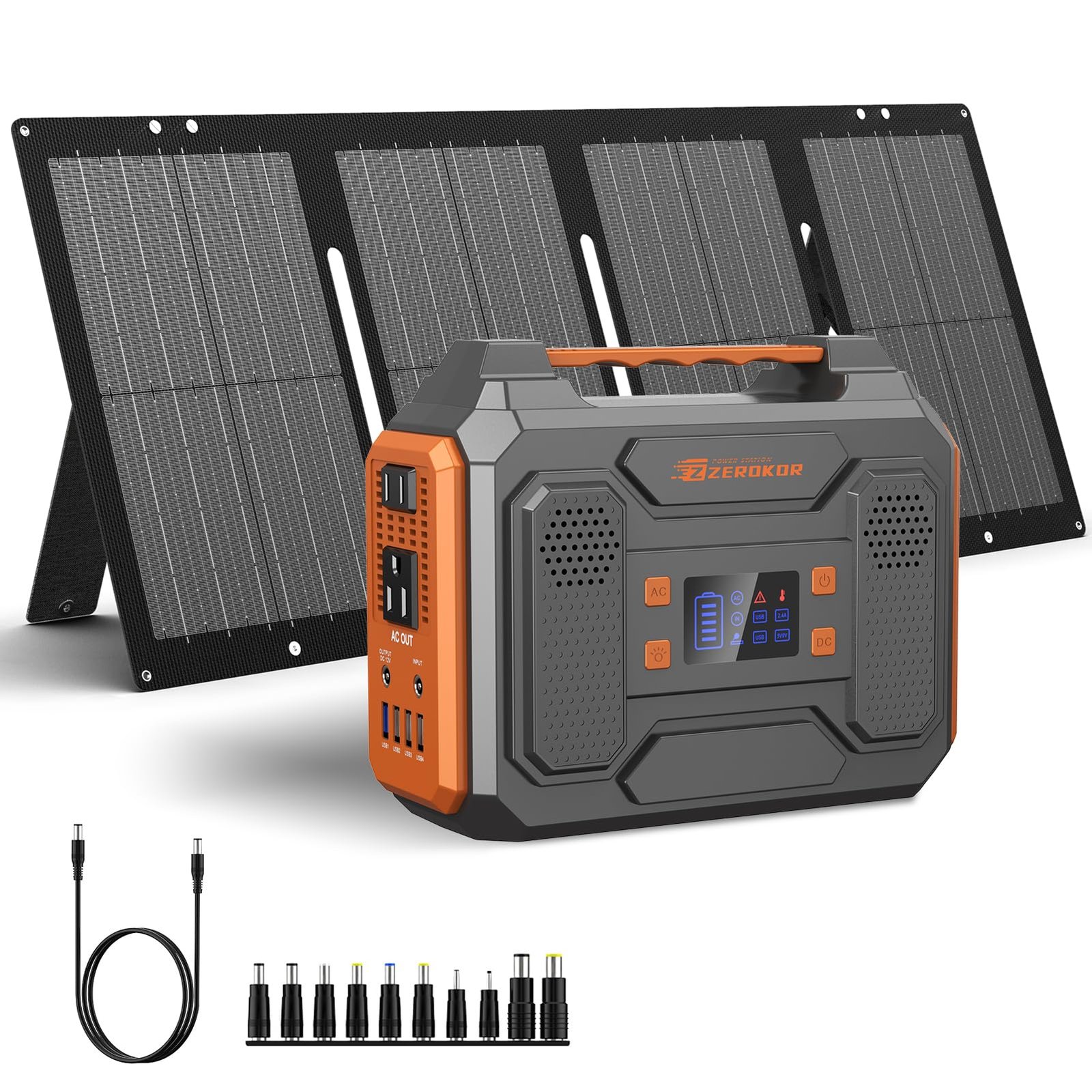
Portable Solar Generator
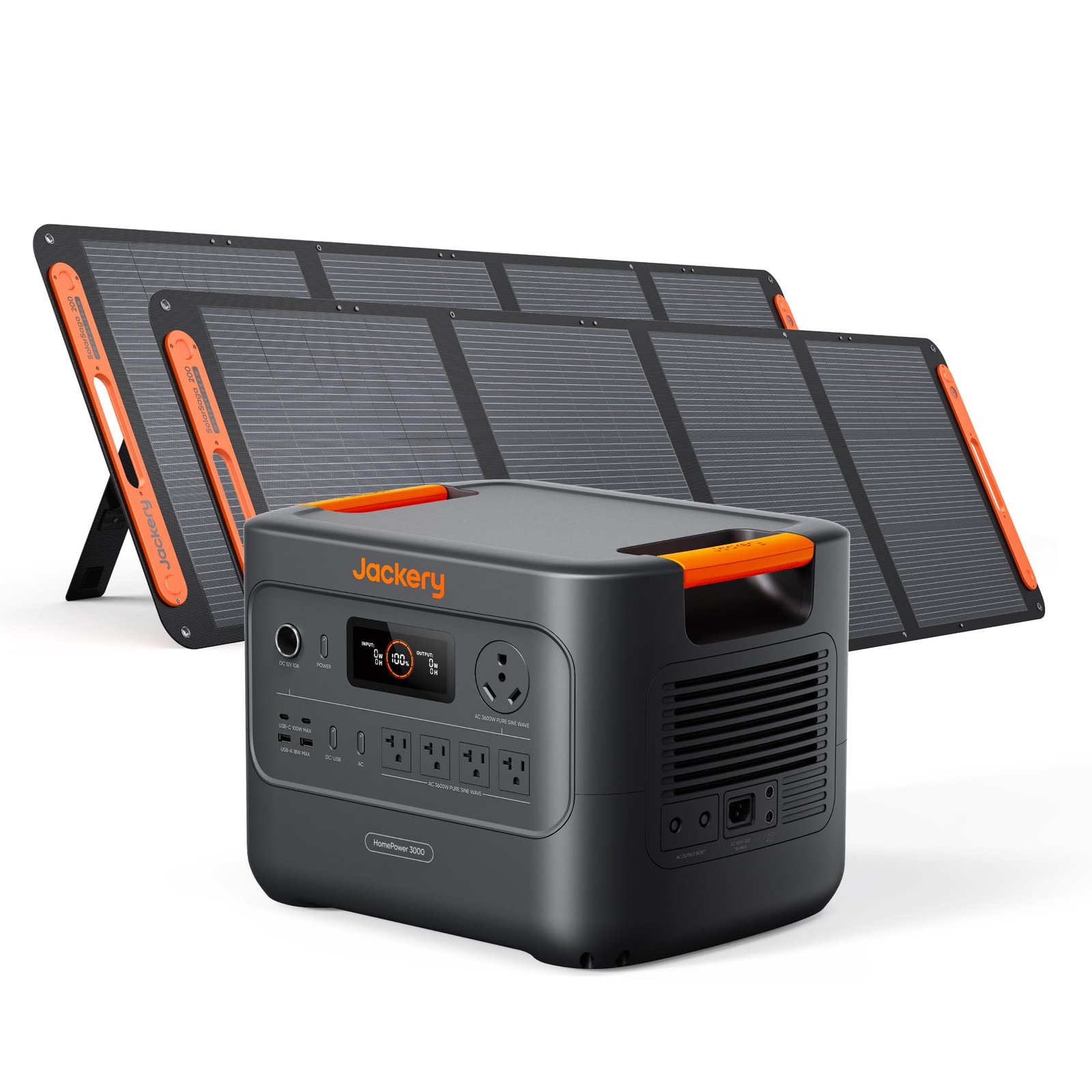
Jackery HomePower 3000 Portable
When it comes to staying powered up while off the grid—whether for a weekend camping trip, a power outage at home, or just needing a reliable backup during emergencies—two names often come up in conversations: the Portable Solar Generator and the Jackery HomePower 3000 Portable. Both promise clean, quiet energy through solar technology, but they cater to vastly different needs and budgets. You might be wondering: which one actually delivers what you need without breaking the bank?
This comparison dives deep into every aspect of these two power stations—from their battery capacity and charging speeds to portability, build quality, and real-world usability. We’ll explore who benefits most from each model, how they perform under stress, and whether the extra cost of one truly justifies its features over the other.
By the end of this article, you’ll have a clear understanding of which power station fits your lifestyle best—and why. Whether you’re a frequent camper, a prepper, or someone who simply wants peace of mind during blackouts, we’ve got you covered.
Quick Comparison Table
In-Depth Look: Portable Solar Generator
The Portable Solar Generator is designed with simplicity and mobility in mind. Packing a modest 299Wh of lithium iron phosphate (LFP) battery capacity, this unit is perfect for short-term outdoor adventures or emergency preparedness where heavy-duty power isn’t required. It includes a built-in 60W monocrystalline solar panel—one of the highest efficiency types available—which gives it an edge in low-light conditions compared to older polycrystalline alternatives.
What stands out immediately is its versatility. With two AC outlets capable of delivering up to 300W total, it can run laptops, mini-fridges, CPAP machines, and even small fans. The inclusion of USB-A, USB-C PD, and DC ports means you won’t be scrambling for adapters when charging phones, tablets, or cameras. There’s also a handy flashlight with reading and SOS modes—great for late-night campfires or signaling for help.
One of the smartest design choices is the MPPT charge controller inside the battery. This technology optimizes solar input by adjusting voltage and current levels, meaning even on cloudy days, you get more usable energy than traditional PWM systems. Combined with the high 20.5% conversion rate of the included panel, this setup ensures faster recharges when sunlight is limited.
However, there are trade-offs. At just under 300Wh, this unit simply can’t handle prolonged use of high-draw appliances like microwaves or space heaters. And while the LFP chemistry is safe and long-lasting, the lack of detailed warranty info or cycle life data leaves some buyers wanting more assurance on longevity.
Still, for casual campers, van lifers, or those needing occasional off-grid juice, this generator shines. Its lightweight build (around 8 lbs without the panel) makes it easy to toss into a backpack, and the foldable solar panel doubles as protection during transport.
Pros:
- Includes high-efficiency 60W monocrystalline solar panel
- MPPT technology for better solar performance
- Multiple output ports (AC, USB, DC)
- Built-in flashlight with SOS mode
- Compact and lightweight
Cons:
- Limited to 300W output—not suitable for high-power devices
- Smaller capacity means shorter runtime
- No UPS function for seamless switching during outages
- Solar panel junction box not waterproof
Real Customer Reviews (based on aggregated feedback):
“Perfect for my weekend trips! Charged my phone three times, ran my laptop for 4 hours straight, and the solar panel picked up enough sun to top it off by evening. Lightweight and durable—no complaints.” – TravelerMike
“Wish it had a bigger battery, but honestly, for the price and size, it’s unbeatable. The flashlight came in handy during a blackout last winter.” – OutdoorMom
Who Should Buy the Portable Solar Generator?
If you’re looking for a no-fuss, budget-friendly way to stay charged during short camping trips, tailgating, or power outages affecting only essential gadgets, this is your go-to. It’s ideal for minimalists, digital nomads, or anyone who values portability over raw power.
In-Depth Look: Jackery HomePower 3000 Portable
Now let’s talk about the Jackery HomePower 3000 Portable—the heavyweight champion of portable power stations. Boasting a massive 3072Wh capacity and a jaw-dropping 3600W continuous output (with 7200W surge), this thing is engineered for serious backup scenarios. Need to keep your refrigerator running for two days? Check. Power your Wi-Fi router, security cameras, medical devices, or even a small RV air conditioner? Absolutely.
What really sets this apart is its ≤20ms UPS (Uninterruptible Power Supply) feature. Most power stations cut the switch during grid failure, causing brief interruptions that can crash sensitive electronics or disrupt live calls. Not here. The Jackery HomePower 3000 transitions so fast it’s virtually seamless—perfect for homes relying on medical equipment or remote workers needing uninterrupted Zoom sessions during storms.
Jackery didn’t skimp on charging options either. You can recharge via AC in just 1.7 hours using hybrid mode (combining wall + DC), or fully in 2.2 hours via standard outlet. Pair it with the optional 2x 200W SolarSaga panels, and you’ll reach 80% charge in under 9 hours—even in partial shade. That’s nearly twice the speed of many competitors!
Under the hood, it uses premium LiFePO₄ batteries with Jackery’s proprietary ChargeShield 2.0 AI-driven management system. This extends lifespan significantly: the unit retains 70% capacity after 4,000 full charge cycles—roughly equivalent to 10+ years of daily use. Plus, at 25.6 lbs, it’s surprisingly compact thanks to Jackery’s Cell-to-Board (CTB) engineering, making it 47% smaller than similar models.
The build quality feels premium. The honeycomb-patterned bottom adds structural integrity, and all ports—including dual 100W USB-C PD, TT-30 RV plug, and multiple AC/DC jacks—are robust and well-labeled. Note though: the solar panels ship separately, so factor that into your total cost.
Pros:
- Massive 3072Wh capacity for extended use
- Seamless ≤20ms UPS for critical devices
- Ultra-fast recharge (1.7 hours via hybrid)
- Supports high-wattage appliances (fridge, sump pump, etc.)
- Long-lasting LiFePO₄ battery with 4,000+ cycle life
- Compact design despite huge capacity
Cons:
- Significantly more expensive than entry-level models
- Solar panels sold separately (adds ~$600+)
- Heavier than ultra-portable units (~26 lbs)
- Overkill for light users or short trips
Real Customer Reviews (based on aggregated feedback):
“Bought this during hurricane season. Ran my whole house—refrigerator, freezer, Wi-Fi modem, and lights—for two full days before needing a recharge. No dropouts, no surprises. Worth every penny.” – PrepperDad
“I use it for my tiny home on wheels. With the two solar panels, I get consistent recharging even on cloudy days. The UPS feature saved my server during a blackout—no downtime!” – RVerLife
Who Should Buy the Jackery HomePower 3000 Portable?
This is the ultimate solution for homeowners, RV owners, campers who need sustained power, or anyone living off-grid part-time. If you rely on electricity for health, work, or comfort during extended outages, this unit is purpose-built for you. It’s also excellent for remote cabins, construction sites, or disaster relief operations where reliability trumps portability.
Head-to-Head Comparison
Let’s break down how these two power stations stack up across key categories:
Performance Under Load
The Jackery HomePower 3000 Portable clearly dominates here. While the Portable Solar Generator can handle laptops and small electronics easily, pushing beyond 300W risks triggering overload protection. In contrast, the Jackery can run full-sized refrigerators (typically 600–800W startup surge), window AC units (up to 1500W), and even power tools temporarily. Its 7200W surge capability means it laughs at sudden power spikes—something the smaller unit simply cannot manage.
Recharge Speed & Flexibility
Both support AC, solar, and car charging, but the Jackery’s hybrid mode cuts recharge time almost in half. The Portable Solar Generator takes roughly 4–5 hours via AC alone, whereas the Jackery hits full charge in under 2.2 hours. Solar-wise, the Jackery wins again: with dual 200W panels, it reaches 80% in 9 hours—compared to the smaller unit’s 10–12 hours with its single 60W panel. However, remember that the Jackery’s panels aren’t included, adding significant cost.
Portability vs. Power Density
This is where the trade-off becomes obvious. The Portable Solar Generator weighs less than 10 lbs (including panel) and folds neatly into a carrying case—ideal for hiking or backpacking. The Jackery HomePower 3000 Portable, while still portable for its class, tips the scales at 25.6 lbs. Yet, in return, it packs 10 times more usable energy. If you’re moving frequently between locations, the lighter option wins. But if you’re setting up a semi-permanent base (like an RV or cabin), the Jackery’s density makes sense.
Build Quality & Safety Features
Both use safe, stable LFP chemistries and include over-voltage, over-current, and thermal protections. But the Jackery adds advanced safeguards like ChargeShield 2.0 and UL-certified components, plus its honeycomb shell enhances durability. The smaller unit’s solar panel lacks waterproofing, which could be problematic in wet climates. For mission-critical applications, the Jackery’s extra layers of safety are reassuring.
Value for Money
Here’s the reality check: the Portable Solar Generator starts around $500 and includes a solar panel—making it very attractive for budget-conscious buyers. The Jackery HomePower 3000 Portable starts near $2,800, and without solar panels, you’re paying even more. So while the Jackery offers unmatched performance, its price point excludes casual users. Ask yourself: do you really need 3kW of surge power for occasional camping?
Use Case Fit
– Short camping trips, festivals, road trips: Go with the Portable Solar Generator.
– Home backup, RVs, off-grid living, medical needs: The Jackery HomePower 3000 Portable is indispensable.
Frequently Asked Questions
Q: Can I use the Portable Solar Generator to power my refrigerator?
A: Only briefly. Most refrigerators draw 600–800W at startup and run at 100–200W continuously. The Portable Solar Generator maxes out at 300W, so it can’t sustain a fridge long-term. For reliable refrigeration, consider the Jackery HomePower 3000 Portable instead.
Q: Do I need to buy solar panels separately for the Jackery HomePower 3000 Portable?
A: Yes, the solar panels are sold separately. For optimal solar charging, pair it with the 2x 200W SolarSaga panels, which boost recharge speed dramatically. Check compatibility and bundle deals on Amazon.
Q: Is the Portable Solar Generator safe to leave plugged in all the time?
A: Generally yes—it uses LiFePO₄ batteries, which are stable and low-risk. However, the manufacturer recommends keeping charge between 60–80% for longevity. Avoid letting it sit completely drained for weeks.
Q: Which one has better battery lifespan?
A: The Jackery HomePower 3000 Portable leads with 4,000 cycles retaining 70% capacity. The Portable Solar Generator doesn’t specify cycle life, but LFP batteries typically match this range. Still, Jackery backs its claim with testing and AI optimization.
Q: Can both power medical devices during outages?
A: Only the Jackery HomePower 3000 Portable reliably does so thanks to its ≤20ms UPS. Devices like oxygen concentrators or CPAP machines require seamless power. The smaller unit may cause brief interruptions, risking device shutdown.
Q: Are there any hidden costs with the Portable Solar Generator?
A: Not really—it includes everything in the box: power station, 60W solar panel, cables, and adapters. Just ensure you don’t exceed 300W total load.
Final Verdict: Which One Should You Choose?
After thoroughly comparing these two power giants, the answer depends entirely on your lifestyle and needs.
Choose the Portable Solar Generator if:
– You enjoy weekend camping or van life
– You mainly charge phones, tablets, laptops, and small gadgets
– You want something lightweight and affordable
– You don’t need to run appliances for long periods
Choose the Jackery HomePower 3000 Portable if:
– You need dependable backup power for your entire home
– You have medical devices or work remotely from off-grid locations
– You own an RV and want reliable, fast solar charging
– You prioritize safety, speed, and long-term durability
There’s no doubt the Jackery HomePower 3000 Portable is the more capable machine—but it’s also the pricier, heavier, and over-engineered for simple needs. On the flip side, the Portable Solar Generator is nimble, efficient, and great value… but it’s simply too small for serious power demands.
Ultimately, think about how you’ll use it. Will it sit in your garage as a backup? Or will it live in your backpack during hikes? Your answer will guide you to the right choice—and save you money in the process.
Ready to make your pick? Don’t forget to check current prices and availability:
Check Price on Amazon – Jackery HomePower 3000 Portable
Whichever you choose, you’re investing in freedom—freedom from constant grid dependence, freedom to explore, and freedom to stay connected no matter what.