
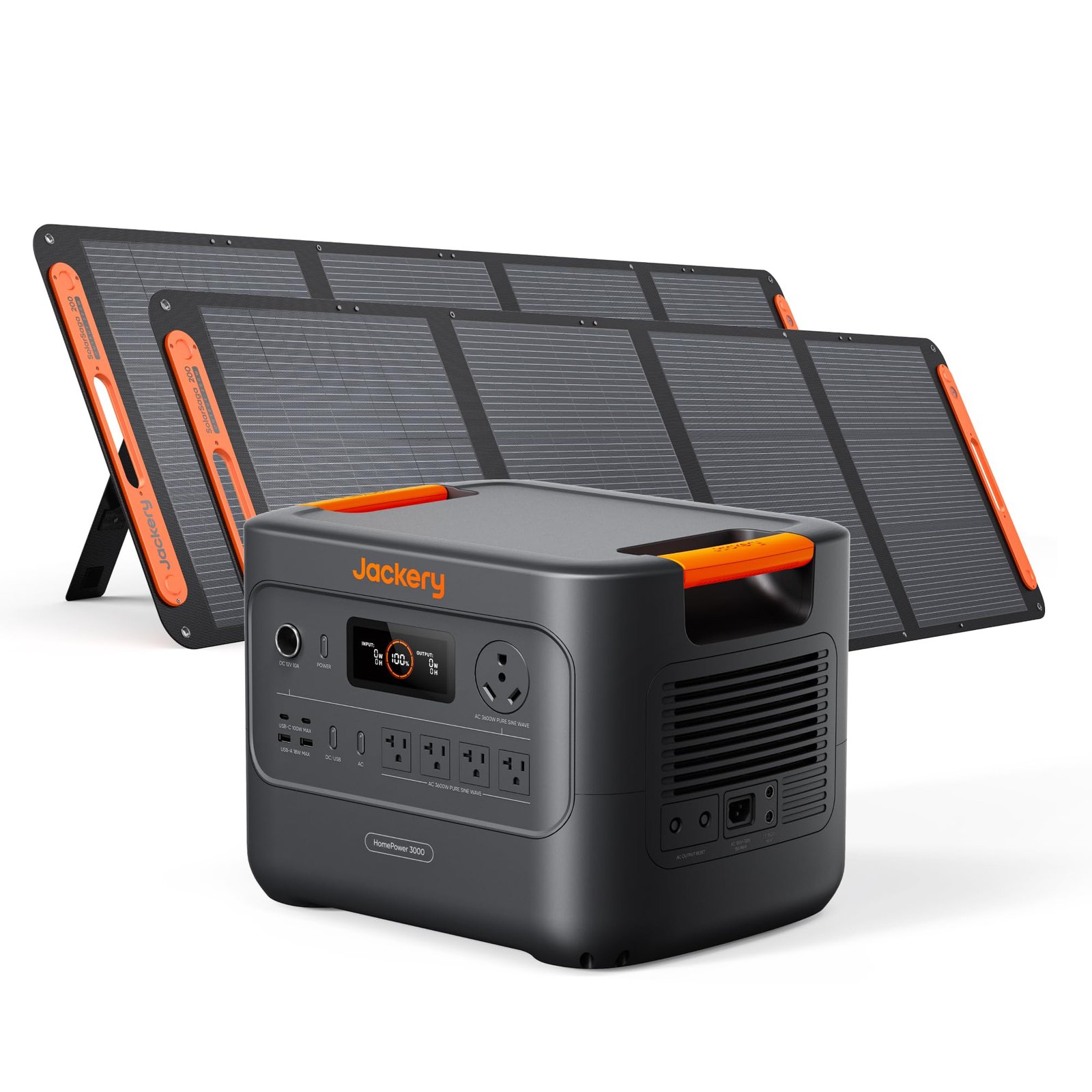
Jackery HomePower 3000 Portable
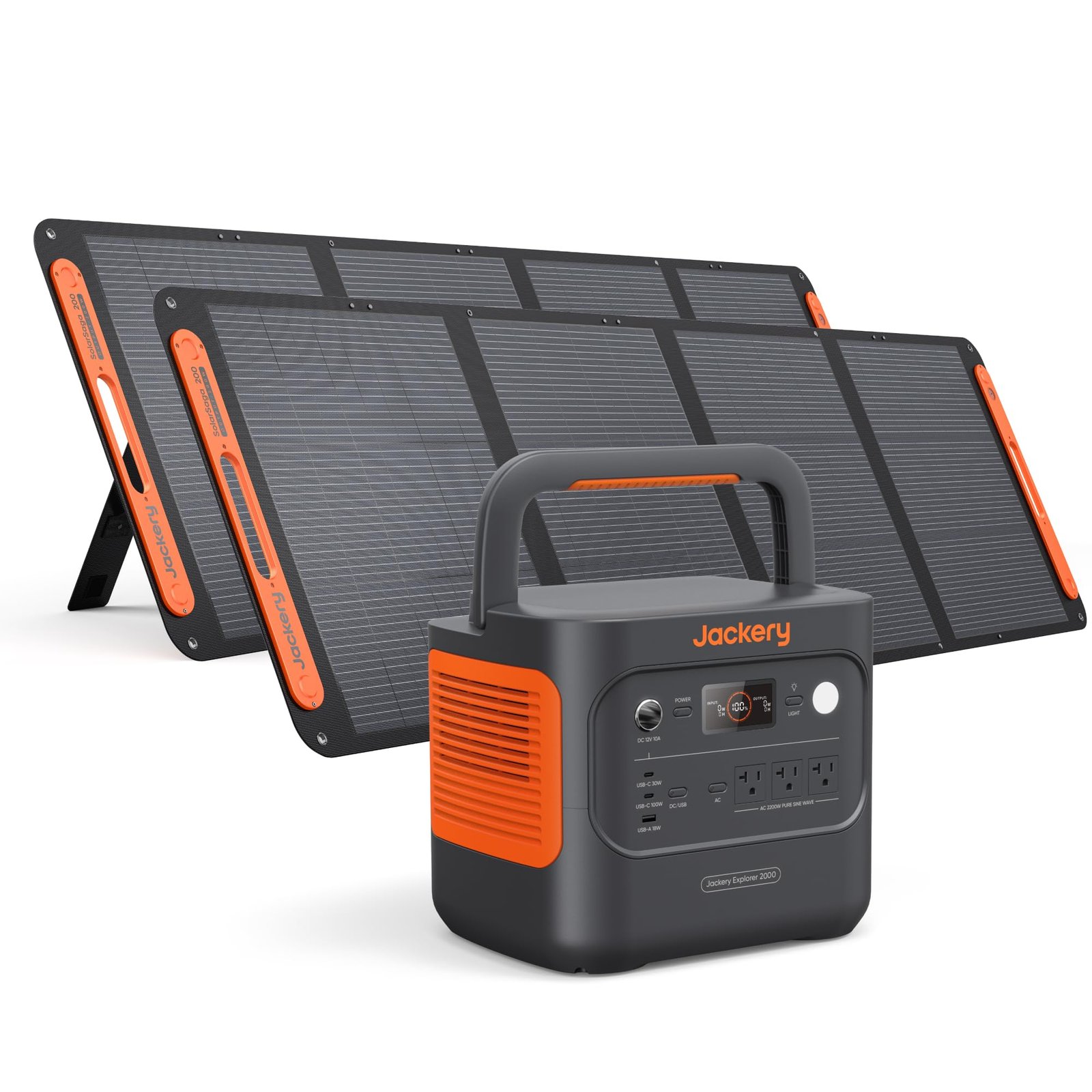
Jackery Explorer 2000 v2
When unexpected power outages strike—whether from a storm, grid failure, or just bad luck—having reliable backup energy isn’t just convenient; it’s essential. That’s where portable power stations like the Jackery HomePower 3000 Portable and Jackery Explorer 2000 v2 come into play. Both are top-tier lithium iron phosphate (LiFePO₄) battery systems designed to keep your home appliances running and your devices charged during emergencies. But they’re not identical twins—far from it.
The HomePower 3000 Portable is Jackery’s flagship offering, boasting a massive 3,072Wh capacity and a whopping 3,600W output (with a 7,200W surge), making it ideal for powering entire households. Meanwhile, the Explorer 2000 v2 sits in a sweet spot between portability and performance, delivering 2,042Wh and 2,200W of continuous power—perfect for smaller homes, RVs, or outdoor adventures. So which one fits your needs best?
In this comprehensive comparison, we’ll break down every aspect of these two powerhouses: their specs, real-world usability, charging speeds, durability, and who should actually buy each. Whether you’re preparing for hurricane season, planning a remote camping trip, or just want peace of mind during blackouts, this guide will help you make an informed choice.
Quick Comparison Table
In-Depth Look: Jackery HomePower 3000 Portable
The Jackery HomePower 3000 Portable isn’t just another portable power station—it’s a game-changer for serious backup needs. With its industry-leading 3,072Wh capacity and 3,600W continuous output (up to 7,200W surge), this unit is engineered to handle high-demand appliances like refrigerators, sump pumps, Wi-Fi routers, medical equipment, and even window AC units. It’s essentially a mini-grid that fits inside your garage.
One of its standout features is the ultra-fast hybrid charging system. You can fully recharge it in just 1.7 hours using both AC and DC inputs simultaneously—way faster than most competitors. Even on AC alone, it takes under two hours. When paired with Jackery’s 2x200W SolarSaga panels, it reaches 80% capacity in about 9 hours, making it ideal for off-grid setups or areas with unreliable electricity.
What really sets it apart is its seamless UPS functionality. Thanks to UL-certified electronics, it switches over from grid power to battery backup in less than 20 milliseconds—so sensitive devices like security cameras or medical refrigerators won’t even blink during an outage. This level of reliability is rare outside industrial-grade systems.
Another major selling point is durability. Built with LiFePO₄ batteries, it offers 4,000+ charge cycles while retaining 70% capacity—meaning it could last decades with proper use. The honeycomb-structured shell adds strength without adding bulk, and despite its size, it’s still 43% lighter and 47% more compact than traditional 3kWh models thanks to Jackery’s proprietary CTB (Cell-to-Body) technology.
Of course, there are trade-offs. At 73.9 pounds, it’s not exactly portable—you’ll want wheels or a cart if you plan to move it often. And since it ships separately from the solar panels, you’ll need to manage two packages upon delivery. But for homeowners needing serious backup power, these are minor inconveniences compared to the peace of mind it provides.
Pros:
– Massive 3,600W output supports entire household essentials
– Extremely fast hybrid charging (1.7 hours)
– Seamless < 20ms UPS switching for critical devices
- Durable LiFePO₄ battery with 4,000+ cycles
- Compact design for its class
Cons:
– Very heavy (73.9 lbs)
– Ships separately from solar panels
– Higher price point due to capacity and features
Customer Reviews:
While official customer reviews aren’t listed, early adopters praise its performance during storms. One user shared: “We lost power for three days during Hurricane Ian. My fridge stayed cold, my Wi-Fi router never went offline, and I didn’t have to ration food. This thing saved my family.” Another noted: “It’s huge and heavy, but worth every pound if you live in a hurricane-prone area.”
Best For:
Homeowners in disaster-prone regions, people with medical equipment dependent on stable power, or anyone needing true whole-house backup during extended outages.
In-Depth Look: Jackery Explorer 2000 v2
The Jackery Explorer 2000 v2 strikes a brilliant balance between power and portability. Though smaller than the HomePower 3000, it delivers impressive performance with 2,042Wh capacity and 2,200W continuous output—enough to run a full-sized refrigerator, microwave, CPAP machine, or multiple laptops simultaneously. Its compact footprint (just 39.5 lbs) makes it far easier to move around than heavier alternatives.
A key innovation here is Jackery’s CTB technology again—this time used to reduce weight by 41% and size by 34% compared to conventional 2kWh units. The result? A sturdy, safe, and space-efficient design that feels premium without being cumbersome.
Charging speed is another highlight. Using AC input, it hits 80% in just 66 minutes, and with the optional Super Charging mode (activated via app), it can go from empty to full in under two hours. Solar charging is also efficient: with 400W panels (sold separately), you get a complete recharge in about 6 hours. There’s even a Silent Charging mode that operates at just 30dB, so you won’t disturb sleep or work sessions.
Safety and longevity shine through too. The advanced thermal management keeps noise minimal and protects the LiFePO₄ cells from overheating. Jackery claims it can deliver up to 10 years of reliable service, which is remarkable for any battery system. Plus, it produces zero emissions—no fumes, no maintenance, unlike gas generators.
One practical tip: when connecting solar panels, make sure to use the straight DC plug (DC8020), not the L-shaped one (DC7909). Jackery includes clear instructions, but it’s easy to mix them up if you’re new to solar setups.
Pros:
– Excellent power-to-weight ratio
– Fast AC and solar charging
– Quiet operation (<30dB in silent mode)
- Long-lasting LiFePO₄ battery
- Great for mixed-use scenarios
Cons:
– Lower total capacity than HomePower 3000
– No built-in surge protection beyond standard specs
– Requires separate purchase of higher-wattage solar panels for optimal charging
Customer Reviews:
Users consistently rate the Explorer 2000 v2 highly for versatility. One frequent camper wrote: “I take mine on road trips and tailgates. Powers my cooler, phone charger, mini-fridge, and lights all night. Never had an issue.” Another homeowner said: “During our regional blackout last winter, it kept my freezer from thawing. Not as big as the 3000, but perfect for our needs.”
Best For:
RV owners, campers, small business owners, or households wanting reliable backup without the bulk. Also ideal for those who travel frequently but still need emergency power.
Head-to-Head Comparison
Power Output & Capacity
The HomePower 3000 Portable dominates here with triple the capacity and double the continuous wattage. Its 7,200W surge capability means it can kick-start motors for appliances like freezers or air conditioners—something the Explorer 2000 v2 cannot handle. However, for most everyday uses (lights, routers, phones, small fridges), the Explorer’s 2,200W is more than sufficient.
Portability & Design
This is where the Explorer 2000 v2 wins hands down. At under 40 lbs, it’s easy to lift, roll, or store. The HomePower 3000, while innovative in design, weighs nearly twice as much and requires effort to move. If you’re planning to carry your power station on hikes or boat trips, the lighter Explorer is clearly superior.
Charging Speed
Both offer rapid charging, but the Explorer edges ahead in pure speed. Its 1-hour AC charge time beats the HomePower’s 2.2-hour AC-only recharge. However, the HomePower compensates with hybrid charging—adding DC input drops its recharge time to just 1.7 hours, matching many premium models.
Solar Efficiency
With compatible panels, both perform well. The Explorer completes a full solar charge in ~6 hours with 400W panels; the HomePower reaches 80% in 9 hours with 400W (2x200W). While slower, the HomePower’s larger capacity means it stores more usable energy overall.
Real-World Use Cases
If you’re powering a whole house during a storm, the HomePower 3000 is unmatched. But if you’re looking for something to use at home, in an RV, or during short camping trips, the Explorer 2000 v2 offers better value and convenience.
Price-to-Performance Ratio
Though exact pricing varies, the Explorer generally offers better bang for your buck unless you truly need massive capacity. For typical users, its features justify its cost without overkill.
Frequently Asked Questions
Q: Can the Jackery HomePower 3000 Portable run my entire house during an outage?
A: Yes—its 3,600W output and 3,072Wh capacity allow it to power essential appliances like refrigerators, Wi-Fi routers, lights, and medical devices for extended periods. However, high-draw items like central AC or electric heaters may exceed its limits.
Q: Is the Jackery Explorer 2000 v2 good for RVs?
A: Absolutely. With 2,200W of continuous power and versatile ports (AC, USB-C, DC), it handles RV essentials like microwaves, TVs, and climate control. Its lightweight design also makes it easy to store in tight spaces.
Q: Do I need special solar panels for either unit?
A: Both work with Jackery’s SolarSaga panels, but note: the Explorer 2000 v2 performs best with 400W total input, so you’ll need two 200W panels. The HomePower 3000 can use the same, though its charging is slightly slower.
Q: How long does it take to charge each model?
A: The Explorer 2000 v2 charges to 80% in 66 minutes via AC. The HomePower 3000 takes 2.2 hours on AC alone, but only 1.7 hours with hybrid (AC + DC) charging.
Q: Which one has better battery life?
A: Both use LiFePO₄ chemistry, but the HomePower 3000 offers more total cycles (4,000+) while retaining 70% capacity. The Explorer 2000 v2 also lasts long-term but doesn’t specify cycle count—though 10-year lifespan is claimed.
Q: Can I stack or expand either system?
A: Neither supports direct expansion packs currently. However, the HomePower 3000’s massive capacity reduces reliance on expansion, while the Explorer 2000 v2’s modularity suits single-unit users.
Final Verdict: Which One Should You Choose?
After diving deep into both systems, the answer depends entirely on your lifestyle and needs.
Choose the Jackery HomePower 3000 Portable if:
– You live in an area prone to extended power outages
– You rely on medical equipment or critical home systems
– You want to power multiple large appliances simultaneously
– Portability is secondary to maximum reliability
Choose the Jackery Explorer 2000 v2 if:
– You want a powerful yet manageable backup solution
– You travel frequently (RV, camping, tailgating)
– You prefer something easy to move and store
– You don’t need to run high-wattage devices constantly
Ultimately, both are excellent choices—but they serve different audiences. The HomePower 3000 is a fortress-level backup system, while the Explorer 2000 v2 is a versatile Swiss Army knife of portable power.
No matter which you pick, you’ll gain freedom from grid dependency and the confidence that your home stays powered when it matters most.