
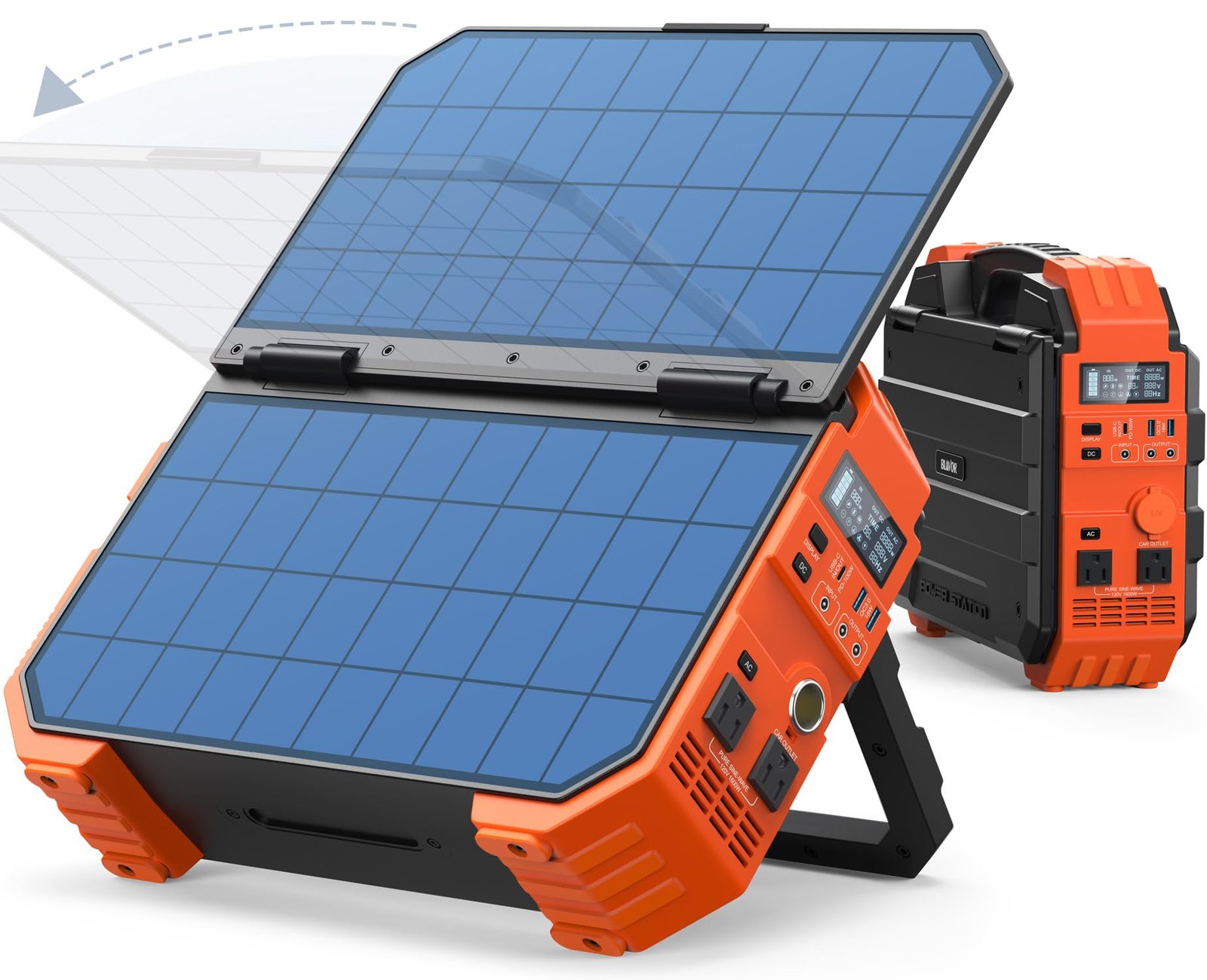
BLAVOR Portable Power Station
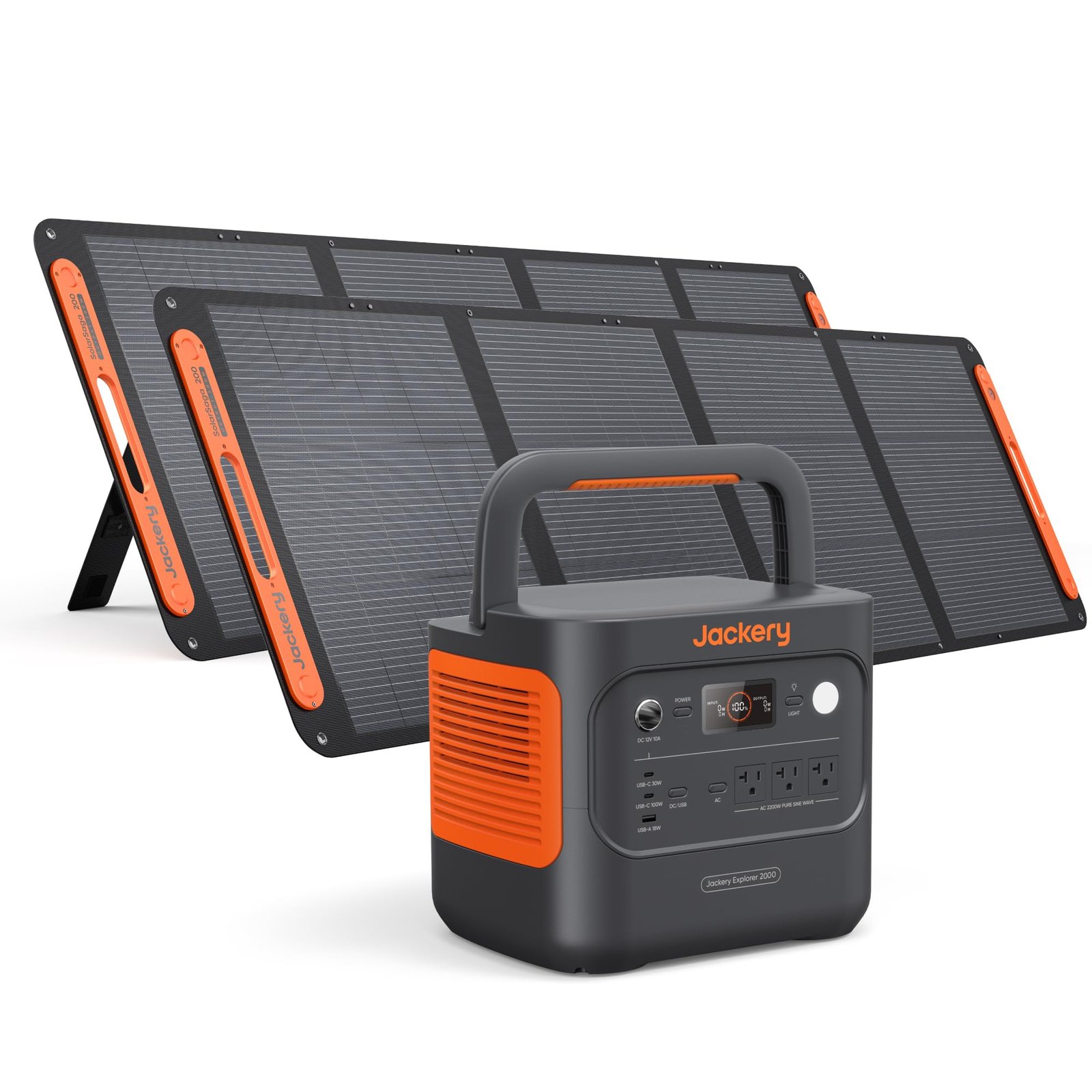
Jackery Explorer 2000 v2
Portable Power Station Showdown: Blavor vs Jackery
Imagine this: you’re camping in the middle of nowhere, your phone is about to die, and you need to run a CPAP machine through the night. Or worse—you’re caught in a blackout during a storm, and your refrigerator is shutting down while you desperately try to keep food from spoiling. These aren’t just hypotheticals; they’re real moments where reliable backup power can make all the difference. That’s why portable power stations like the BLAVOR Portable Power Station and the Jackery Explorer 2000 v2 have become lifesavers for campers, RVers, off-grid enthusiasts, and even city dwellers preparing for emergencies.
Both of these devices promise clean, quiet, and renewable energy on demand, but they take very different approaches to delivering it. The BLAVOR comes with a built-in solar panel, emphasizing self-sufficiency and ease of setup, while Jackery’s offering focuses on compact design, fast charging, and seamless integration with external solar systems. But which one truly delivers what matters most?
In this deep dive, we’ll compare every aspect—from battery life and charging speed to portability, safety features, and real-world usability—so you can make an informed decision based on your lifestyle and needs. Whether you’re powering your home during outages or fueling adventures far from civilization, this guide will help you choose the right portable power companion.
Charging time assumes full sunlight and optimal conditions; actual results may vary.
In-Depth Look: BLAVOR Portable Power Station
The BLAVOR Portable Power Station stands out immediately not just because of its specs, but because of its unique selling proposition: a built-in, foldable 40W solar panel. This isn’t just a gimmick—it’s a game-changer for anyone who values true independence from the grid. Whether you’re glamping in national parks or prepping for hurricane season, having solar power literally at your fingertips means you don’t need to carry extra equipment or hunt for outlets.
This model boasts a generous 1024Wh capacity, which translates to roughly 16 hours of runtime for a standard 60W laptop or several full charges for smartphones and tablets. With 1600W continuous output (and a whopping 3200W surge), it can handle everything from mini-fridges to coffee makers and even small microwaves. That kind of versatility makes it ideal for both emergency backup and outdoor adventures.
What really sets the BLAVOR apart is its use of LiFePO4 (Lithium Iron Phosphate) technology, known for superior safety, thermal stability, and longevity compared to traditional lithium-ion batteries. According to the manufacturer, this unit can endure over 3,500 charge cycles while retaining more than 80% of its original capacity—meaning it could theoretically last over a decade if charged daily. Plus, its integrated Battery Management System (BMS) protects against overheating, short circuits, and overloads, giving users peace of mind.
Another thoughtful touch is the inclusion of four distinct charging methods: wall outlet, car socket, built-in solar panel, or external solar panels. You’re never locked into one method—this flexibility ensures you always have options, whether you’re at home, on the road, or off the grid entirely. The LCD display provides real-time feedback on input/output power and remaining battery life, so there are no guesswork surprises.
On the downside, while the built-in solar panel is convenient, it’s also limiting. At only 40W, it would take nearly a full day of direct sunlight to fully recharge the unit—something that becomes impractical during cloudy weather or winter months. And although the device includes ten adapter heads (great for universal compatibility), some users might wish for additional high-current ports for running larger appliances longer.
Overall, the BLAVOR shines when simplicity, self-reliance, and immediate solar readiness are top priorities. It’s especially appealing to eco-conscious adventurers who want a plug-and-play solution without sacrificing performance.
In-Depth Look: Jackery Explorer 2000 v2
If raw capacity and cutting-edge engineering matter most, then the Jackery Explorer 2000 v2 is hard to beat. Boasting double the energy storage of its BLAVOR counterpart—at 2042Wh—it’s designed to power entire households during extended outages or support serious off-grid operations for days at a time. Its 2200W AC output easily handles refrigerators, CPAP machines, space heaters, and multiple electronics simultaneously.
Jackery has clearly prioritized innovation here. The Explorer 2000 v2 uses something called CTB (Cell-to-Body) technology, originally developed for electric vehicles. This allows them to pack more power into a smaller, lighter chassis—making it 41% lighter and 34% more compact than other 2kWh units on the market. Despite weighing in at nearly 40 pounds, many reviewers find it surprisingly easy to move around thanks to sturdy handles and balanced weight distribution.
One of the biggest advantages of the Jackery system is its lightning-fast charging capability. Using AC charging, you can reach 80% capacity in just over an hour! There’s even an optional “Emergency Super Charging” mode (activated via app) that pushes full charge times down to under 100 minutes. While solar charging takes longer (~6 hours with bundled 400W panels), that’s still significantly faster than most competitors. And if noise is a concern, the Silent Charging mode operates at a whisper-quiet 30dB—perfect for bedrooms or campsites.
Safety and durability go hand in hand with Jackery’s reputation. The unit features advanced temperature control systems, robust LiFePO4 cells rated for up to 10 years of use, and UL1778 certification as an uninterruptible power supply. That means seamless transitions during grid failures—your devices won’t even flicker. It’s also completely silent and emits zero fumes, making it safe for indoor use without ventilation concerns.
However, there’s one notable trade-off: unlike the BLAVOR, the Explorer 2000 v2 doesn’t include any solar panels in the base package. You must purchase them separately, and even then, proper connection requires swapping out specific plugs (DC7909 vs DC8020). Some customers report initial confusion or shipping delays between components. Additionally, while the app offers useful monitoring features, it’s not essential—the physical controls are intuitive enough for most users.
Real-world feedback highlights reliability during storms and power disruptions. One customer wrote: “Runs the Refrigerator, TV and charges cell phones/tablets. Reliable no noise option. Solar panels seem to charge it surprisingly fast.” Another noted how critical the unit was during icy weather warnings: “These 2 devices plus the other 2 I have will keep me safe & warm.”
For those needing maximum power, fastest recharge, and enterprise-grade build quality, the Jackery Explorer 2000 v2 delivers exceptional value—especially when paired with Jackery’s own solar ecosystem.
Head-to-Head Comparison
Performance & Power Delivery
When it comes to sheer power delivery, the Jackery Explorer 2000 v2 dominates with 2200W output versus BLAVOR’s 1600W. That extra 600W may sound small, but it’s enough to run high-wattage appliances like window AC units or powerful blenders—things the BLAVOR struggles with due to surge limitations. Both support 3200W peak loads, but Jackery’s sustained performance edge gives it the nod for demanding scenarios.
Charging Speed & Flexibility
Here’s where Jackery pulls ahead dramatically. Full AC recharge happens in under two hours, whereas BLAVOR takes nearly ten. Solar-wise, Jackery wins again—its bundled 400W panels fully replenish the battery in six hours under ideal conditions. BLAVOR’s single 40W panel would require over 24 hours for a full charge. That said, BLAVOR’s built-in panel eliminates setup complexity, which matters if you’re traveling light.
Portability & Design
Despite being heavier, the Jackery’s CTB engineering makes it surprisingly compact and stable. The BLAVOR feels bulkier partly because of its integrated solar array, though its foldable stand adds convenience. Both feature sturdy handles and non-slip bases, but Jackery’s weight is better distributed, reducing strain during transport.
Safety & Longevity
Both use top-tier LiFePO4 chemistry, but Jackery touts a certified 10-year lifespan with rigorous UL testing. BLAVOR claims comparable cycle life (3500+ cycles), but lacks third-party certifications. In practice, both are exceptionally safe—but Jackery’s reputation for military-grade reliability gives it a slight edge among professionals.
Value Proposition
At current price points, Jackery offers more bang per buck if you factor in faster charging, higher capacity, and included accessories (like the app and emergency modes). However, BLAVOR wins for instant solar readiness and lower upfront cost if you already own or plan to buy separate panels. For budget-conscious buyers wanting “set it and forget it” solar capability, BLAVOR remains compelling.
Frequently Asked Questions
Q: Can the BLAVOR Portable Power Station run my refrigerator?
A: Yes, but only briefly. A typical mini-fridge uses 60–100W continuously, so the 1024Wh battery could power it for roughly 10–16 hours depending on efficiency. For longer outages, consider the Jackery Explorer 2000 v2, which has twice the capacity and handles sustained loads better.
Q: Do I need to buy solar panels separately for the Jackery Explorer 2000 v2?
A: Unfortunately, yes. Unlike the BLAVOR, Jackery sells its solar generators separately. You can get compatible panels from Jackery or third parties, but be sure to match connectors correctly (DC8020 straight plug required).
Q: Which one is quieter?
A: Neither produces audible noise during normal operation since both are battery-powered and fanless. However, Jackery’s Silent Charging mode runs at just 30dB, making it ideal for bedrooms or quiet environments.
Q: Is either waterproof?
A: Neither is rated IP67 or similar. Both should be protected from rain and moisture. Always store indoors or under cover during inclement weather.
Q: Can I charge my laptop while running other devices?
A: Absolutely. Both units support simultaneous multi-device charging via their various ports. The BLAVOR has eight outlets total, while Jackery offers three AC ports plus USB-C PD. Just avoid exceeding total wattage limits.
Q: How long does each battery last under typical use?
A: With moderate usage (charging phones, laptops, LED lights), expect 2–3 days of runtime from the BLAVOR and 4–5 days from the Jackery. Heavy appliance use reduces these numbers significantly—always account for efficiency losses.
Q: Are replacement parts available long-term?
A: Jackery maintains extensive support networks and spare part availability globally. BLAVOR’s newer entry status means less proven track record, though warranty terms appear standard (typically 2 years).
Final Verdict: Which One Should You Choose?
After thoroughly evaluating every facet of these two powerhouses, it’s clear they serve overlapping but distinct audiences. If you prioritize immediate solar independence, ease of setup, and lower initial investment, the BLAVOR Portable Power Station is your best bet. Its built-in panel, rugged LiFePO4 core, and versatile charging options make it perfect for casual campers, RV travelers, and emergency preppers who value simplicity.
On the other hand, if you demand maximum power, ultra-fast recharge, and future-proof scalability, the Jackery Explorer 2000 v2 is unmatched. Its compact-yet-massive 2kWh battery, industry-leading charging speeds, and robust construction position it as the gold standard for serious off-gridders, small businesses, and homeowners seeking dependable outage protection.
Ultimately, your choice hinges on lifestyle and priorities. Need something you can deploy instantly with solar? Go with BLAVOR. Want the highest-capacity, fastest-charging portable station money can buy? Jackery wins hands down.
No matter which you pick, you’re investing in peace of mind—knowing that clean, quiet, reliable power is always within reach. Ready to secure yours today?
Disclosure: As an Amazon Associate, I earn from qualifying purchases. Prices and availability subject to change.