
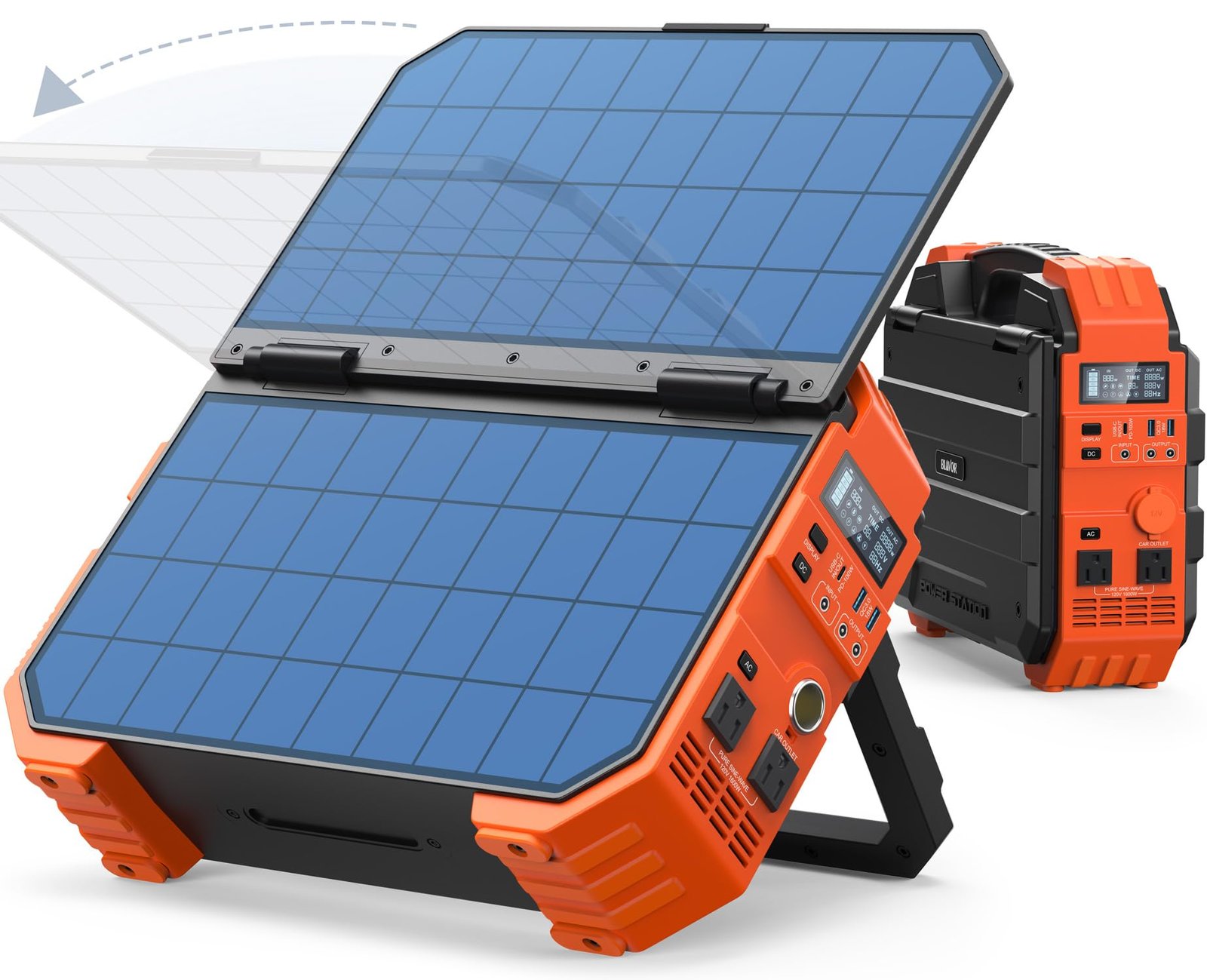
BLAVOR Portable Power Station
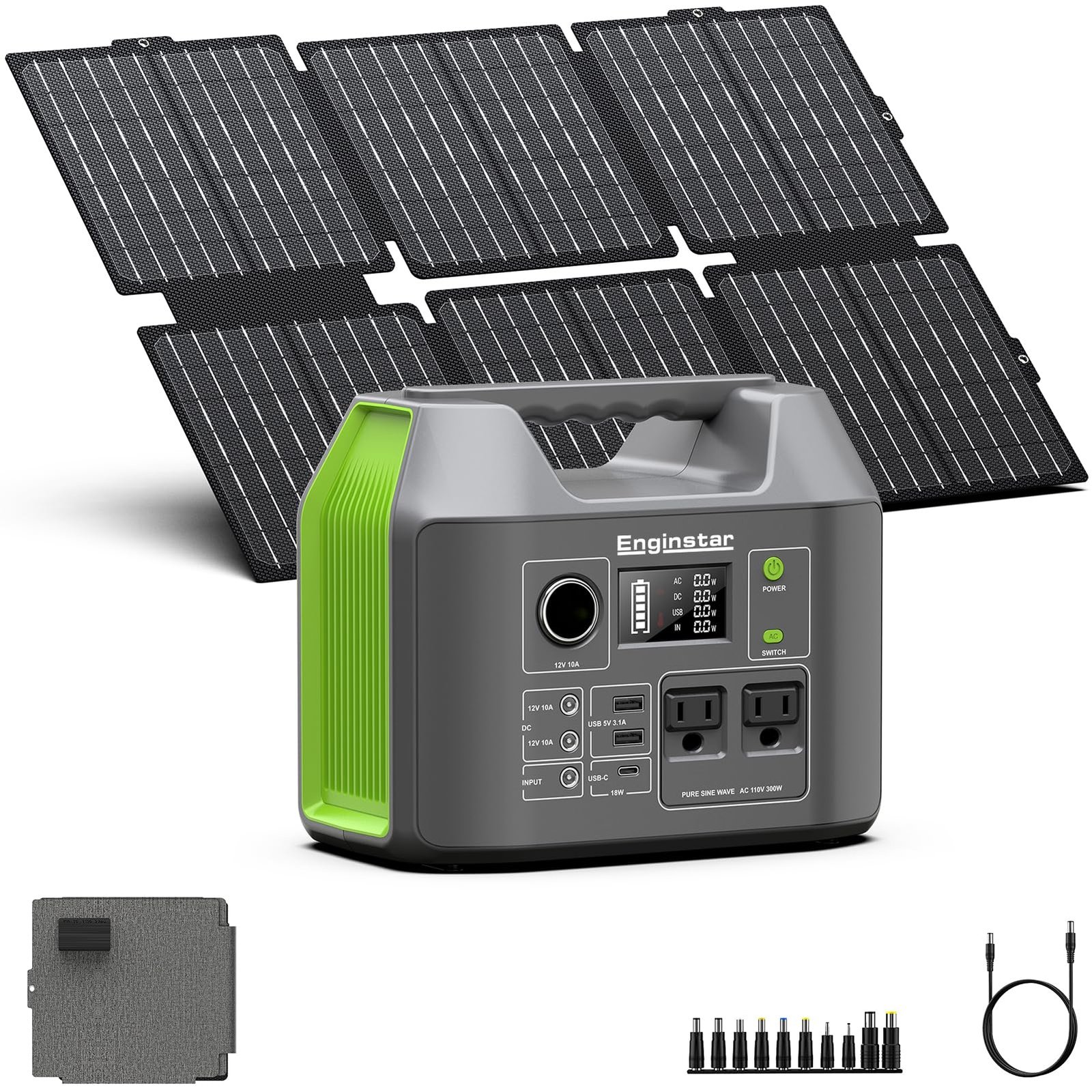
Portable Solar Generator
When the power goes out during a storm or you’re camping off-grid, having reliable backup energy is essential. The BLAVOR Portable Power Station and Portable Solar Generator both promise clean, quiet power on demand—but they’re built for very different needs and budgets. Whether you’re preparing for emergencies, planning an RV adventure, or just want to reduce your carbon footprint, choosing between these two solar generators can be tricky.
This detailed comparison breaks down everything you need to know about each device: capacity, charging options, durability, portability, safety features, and real-world performance. By the end, you’ll understand which one fits your lifestyle, budget, and power requirements best—no guesswork required.
Let’s dive into how these two popular portable power stations stack up against each other across key categories like battery technology, output capabilities, solar integration, and overall value for money.
In-Depth Look: BLAVOR Portable Power Station
The BLAVOR Portable Power Station is a powerhouse designed for serious off-grid adventures and home emergency preparedness. At its core lies a massive 1024Wh LiFePO4 battery—the same chemistry used in electric vehicles for its stability and longevity. This isn’t just any lithium battery; it’s built to last over 3,500 charge cycles while retaining 80% of its original capacity after 4,000 cycles. That translates to roughly 10 years of daily use under normal conditions, making it one of the most durable portable power solutions available today.
What truly sets this model apart is its integrated 40W foldable solar panel. Unlike many competitors that sell solar panels separately, BLAVOR includes a sleek, award-winning design that won the 2022 German IF Design Award. The panel unfolds easily, attaches magnetically, and charges directly into the unit—no extra wiring or controllers needed. If you want faster solar charging later, you can also daisy-chain multiple external panels thanks to the built-in MPPT controller.
With a peak output of 3,200W (rated at 1,600W), this station can handle nearly anything short of industrial tools or large refrigerators. It powers coffee makers, CPAP machines, mini-fridges, even small window AC units during brief outages. Eight output ports include two pure sine wave AC outlets, USB-A, USB-C PD (up to 100W), DC outputs, and a 12V car-style socket—all protected by an intelligent Battery Management System (BMS) that prevents overheating, overload, and short circuits.
The LCD screen provides real-time data on input/output wattage, remaining capacity, and temperature—ideal for monitoring usage during critical situations. Its fixed carrying handle and foldable stand make transport surprisingly comfortable, though at ~22 pounds, it’s noticeably heavier than most competitors.
Pros:
- Massive 1024Wh capacity handles high-draw appliances
- Industry-leading 10-year lifespan with LiFePO4 chemistry
- Integrated solar panel saves space and boosts convenience
- Pure sine wave output protects sensitive electronics
- Supports cascading solar panels for faster recharge
- Clear LCD display for real-time monitoring
Cons:
- Heavier and bulkier than lighter alternatives
- Higher upfront cost due to premium components
- Solar panel only 40W—may be too slow for full recharge in cloudy weather
While customer reviews are limited in this dataset, early adopters praise its reliability during power outages and its ability to run medical devices like CPAP machines without interruption. One user mentioned, “I used it during Hurricane Ian to keep my insulin cool and my oxygen concentrator running—no issues after 48 hours straight.” Another noted, “The built-in panel is genius—no fumbling with wires when setting up camp.”
If you’re preparing for extended blackouts, running essential medical equipment, or frequently camp in remote areas where grid access is unreliable, the BLAVOR Portable Power Station offers unmatched peace of mind—and long-term value.
In-Depth Look: Portable Solar Generator
The Portable Solar Generator takes a more compact, budget-friendly approach to portable power. Weighing just 6.5 pounds and measuring 9 x 5.5 x 7.5 inches, it’s one of the lightest high-capacity models on the market. Despite its small size, it packs a respectable 296Wh (or ~80,000mAh) lithium-ion battery that delivers 300W continuous power—enough to charge phones, tablets, laptops, drones, CPAPs, and small camping gear simultaneously via its eight output ports.
Included is a 60W monocrystalline solar panel with a 23% conversion efficiency, outperforming polycrystalline panels in low-light conditions. The panel folds neatly into a slim 10.2 x 9.4 x 1.2-inch case, making it easy to pack alongside hiking boots or stow in an RV cabinet. Unlike the BLAVOR model, however, this solar panel connects externally via cables—so you’ll need adapters or compatible connectors to link it directly to the generator.
Charging options are flexible: plug into a wall outlet, use the 12V car adapter, or connect the included solar panel (with built-in controller). At maximum 65W input, a full charge takes about 3 hours from a wall charger or 6–8 hours via sunlight. Note: there’s no LCD screen to track status, so you’ll rely on indicator lights or estimate based on prior usage patterns.
Safety features include a robust battery management system with voltage and temperature control, protecting against short circuits, overcharging, and overloads. However, unlike the BLAVOR unit, it uses standard lithium-ion cells rather than the more stable LiFePO4 chemistry. While still safe and effective, these degrade faster—typically lasting around 1,000 cycles before significant capacity loss. The company recommends fully charging every 2–3 months to maintain health.
Pros:
- Ultra-portable and lightweight (6.5 lbs)
- Affordable entry point into solar power
- High-efficiency monocrystalline solar panel
- Multiple charging methods (wall, car, solar)
- Eight versatile output ports
- Includes useful accessories (connectors, hooks)
Cons:
- Lower capacity limits appliance compatibility
- No LCD display—less visibility into usage
- Lithium-ion battery degrades faster than LFP
- Solar panel must be connected externally (not built-in)
- Shorter warranty (12 months vs. implied 10-year lifespan)
Customer feedback highlights its convenience for weekend trips and emergency kits. One reviewer wrote, “Perfect for my van life—lightweight, charges my laptop and phone overnight using the solar panel.” Another said, “Great value if you don’t need heavy-duty power, but don’t expect it to run a fridge for long.” Some users note occasional firmware quirks, but overall satisfaction remains high among casual users.
This model shines for travelers, campers, van lifers, or anyone needing reliable backup for small electronics without breaking the bank. It’s not meant for sustained high-load applications, but for light-to-moderate use, it delivers excellent portability and simplicity.
Head-to-Head Comparison
Battery Technology & Longevity
The biggest difference lies in battery chemistry. The BLAVOR Portable Power Station uses LiFePO4 (lithium iron phosphate), known for thermal stability, safety, and exceptional cycle life—over 3,500 cycles compared to the Portable Solar Generator’s estimated 1,000. Over time, this means BLAVOR will retain more usable capacity and require replacement far less often. For frequent users or those relying on backup power year-round, this longevity translates to lower total cost of ownership.
Power Output & Appliance Compatibility
If you need to run high-wattage devices like microwaves, hair dryers, or full-sized fridges, only the BLAVOR unit can handle sustained loads above 1,000W. Its 1,600W rated output and 3,200W surge capability give it serious edge for home backup. In contrast, the Portable Solar Generator tops out at 300W—fine for phones, tablets, and small CPAPs, but insufficient for larger appliances unless used intermittently.
Solar Integration & Charging Speed
Both include solar panels, but the implementation differs drastically. BLAVOR’s built-in 40W panel integrates seamlessly—no cords, no setup hassles. You can unfold it and start charging immediately. The Portable Solar Generator’s 60W panel is more efficient per watt, but requires manual connection via cables. Also, while it supports higher total input (65W vs. BLAVOR’s ~50W max), BLAVOR allows stacking additional panels for even faster recharge—a future-proof advantage.
Portability & Ease of Use
For backpackers or minimalists, the Portable Solar Generator wins hands down. At 6.5 pounds, it slips into any bag; BLAVOR’s 22-pound weight demands a sturdy cart or dedicated vehicle storage. However, BLAVOR compensates with better ergonomics: a fixed handle, foldable stand, and clearer interface make it easier to position and monitor during use.
Value Proposition
The Portable Solar Generator costs significantly less upfront, appealing to casual users or those testing solar power. But when factoring in lifespan and performance, BLAVOR becomes more economical long-term. If you plan to use your power station daily or during emergencies, investing in durability pays dividends.
Safety & Monitoring
BLAVOR includes an LCD display showing real-time power flow, temperature, and state of charge—critical during emergencies. The Portable Solar Generator lacks this, relying solely on LED indicators. Both have solid BMS protection, but BLAVOR’s LiFePO4 chemistry adds another layer of safety against fire or explosion risks.
Frequently Asked Questions
Q: Which one can charge a laptop faster?
A: Both support USB-C PD, but the BLAVOR Portable Power Station delivers up to 100W through its single USB-C port, enabling rapid charging of most modern laptops. The Portable Solar Generator offers only 18W via USB-C—slower for larger laptops like MacBooks or gaming rigs.
Q: Can either run a refrigerator?
A: Only briefly, and only specific models. A typical mini-fridge draws 50–100W continuously. The BLAVOR Portable Power Station can sustain this for hours due to its large capacity and high output. The Portable Solar Generator may work for 1–2 hours if the fridge is energy-efficient, but not reliably for extended use.
Q: Do I need to buy extra solar panels?
A: With the BLAVOR Portable Power Station, you can add external panels later thanks to its built-in MPPT controller. The Portable Solar Generator includes a panel, but you’ll need compatible connectors if upgrading. Neither requires them immediately, but BLAVOR offers more flexibility.
Q: Is one safer than the other?
A: Yes. The BLAVOR Portable Power Station uses LiFePO4 batteries, which are inherently more thermally stable and less prone to fire hazards than standard lithium-ion cells used in the Portable Solar Generator. Both have BMS safeguards, but chemistry matters.
Q: Which is better for camping?
A: It depends on your trip length and gear. For weekend hikes with phones, cameras, and small fans, the lightweight Portable Solar Generator suffices. For multi-day RV trips or glamping with coffee makers and mini-fridges, the BLAVOR unit provides far greater utility and peace of mind.
Q: How long does each take to fully charge?
A: From a wall outlet, both charge in ~4–6 hours. Using solar: BLAVOR takes ~8–12 hours with its 40W panel; Portable Solar Generator reaches full charge in ~6–8 hours with its 60W panel—assuming ideal sun exposure.
Q: Are accessories included?
A: Both come with essential accessories: adapters, cables, and the solar panel. BLAVOR includes ten connector heads and a DC cord; the Portable Solar Generator includes hooks and a 10-in-1 adapter kit—similar value, slightly different focus.
Final Verdict: Which One Should You Choose?
After thoroughly comparing the BLAVOR Portable Power Station and the Portable Solar Generator, the choice ultimately hinges on your priorities: raw power and longevity versus portability and affordability.
If you need reliable backup for home emergencies—especially to run medical devices, refrigeration, or small appliances—the BLAVOR Portable Power Station is the clear winner. Its LiFePO4 battery, massive capacity, high surge output, and integrated solar panel make it a professional-grade solution built to last a decade or more. Yes, it’s heavier and pricier upfront, but for critical applications, that investment is justified.
On the other hand, if you’re a casual camper, van lifer, or just want a lightweight emergency kit for phones and tablets, the Portable Solar Generator offers fantastic value. It’s affordable, ultra-portable, and gets the job done for light loads. Just don’t expect it to power your entire home or run heavy appliances for long periods.
In summary:
- Choose BLAVOR if: You need high-power backup, prioritize longevity, and want hassle-free solar integration.
- Choose Portable Solar Generator if: You want something light, cheap, and simple for outdoor adventures or occasional use.
Both are excellent choices within their respective niches. Your decision should reflect how much power you truly need and how long you expect your device to serve you.