
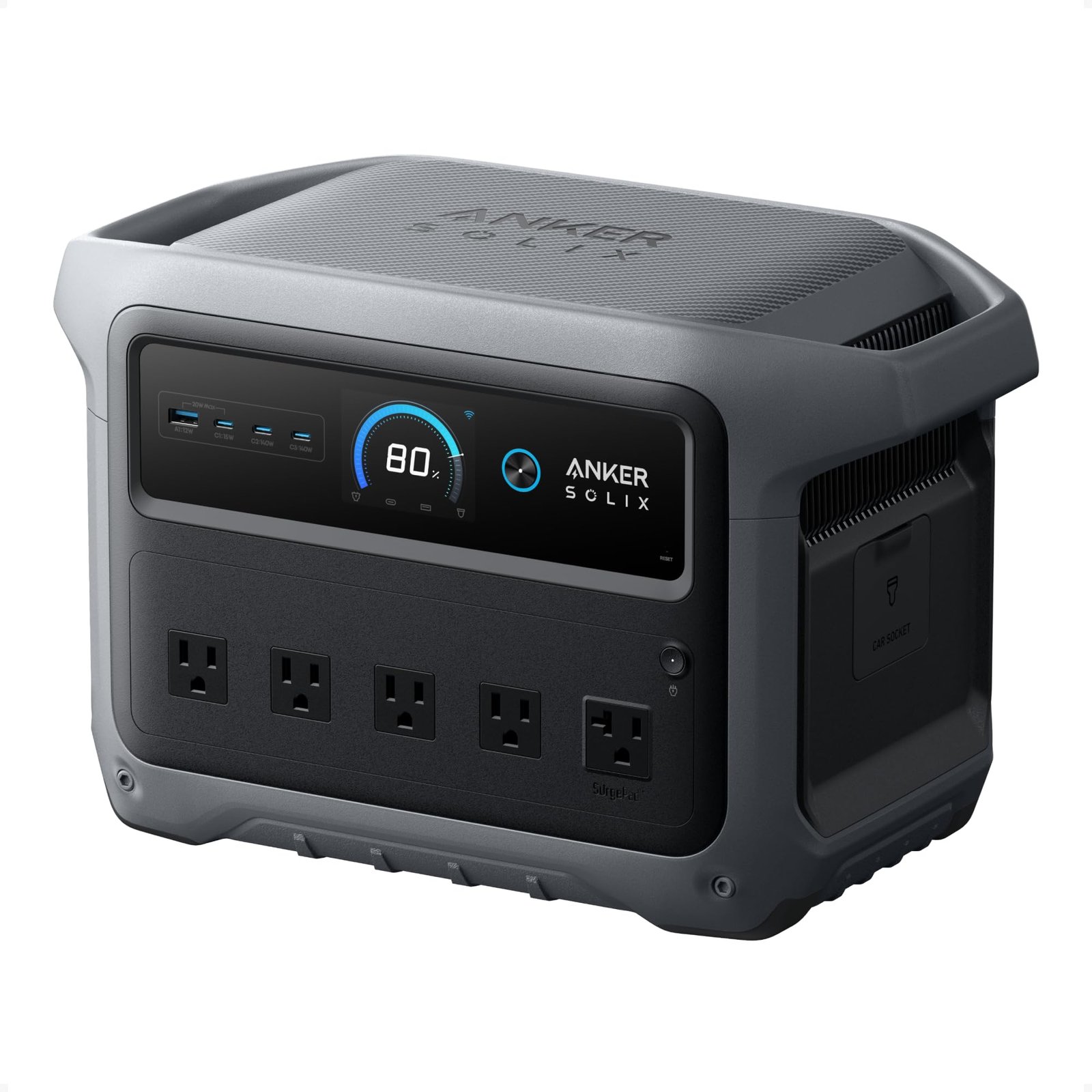
Anker SOLIX C1000 Gen
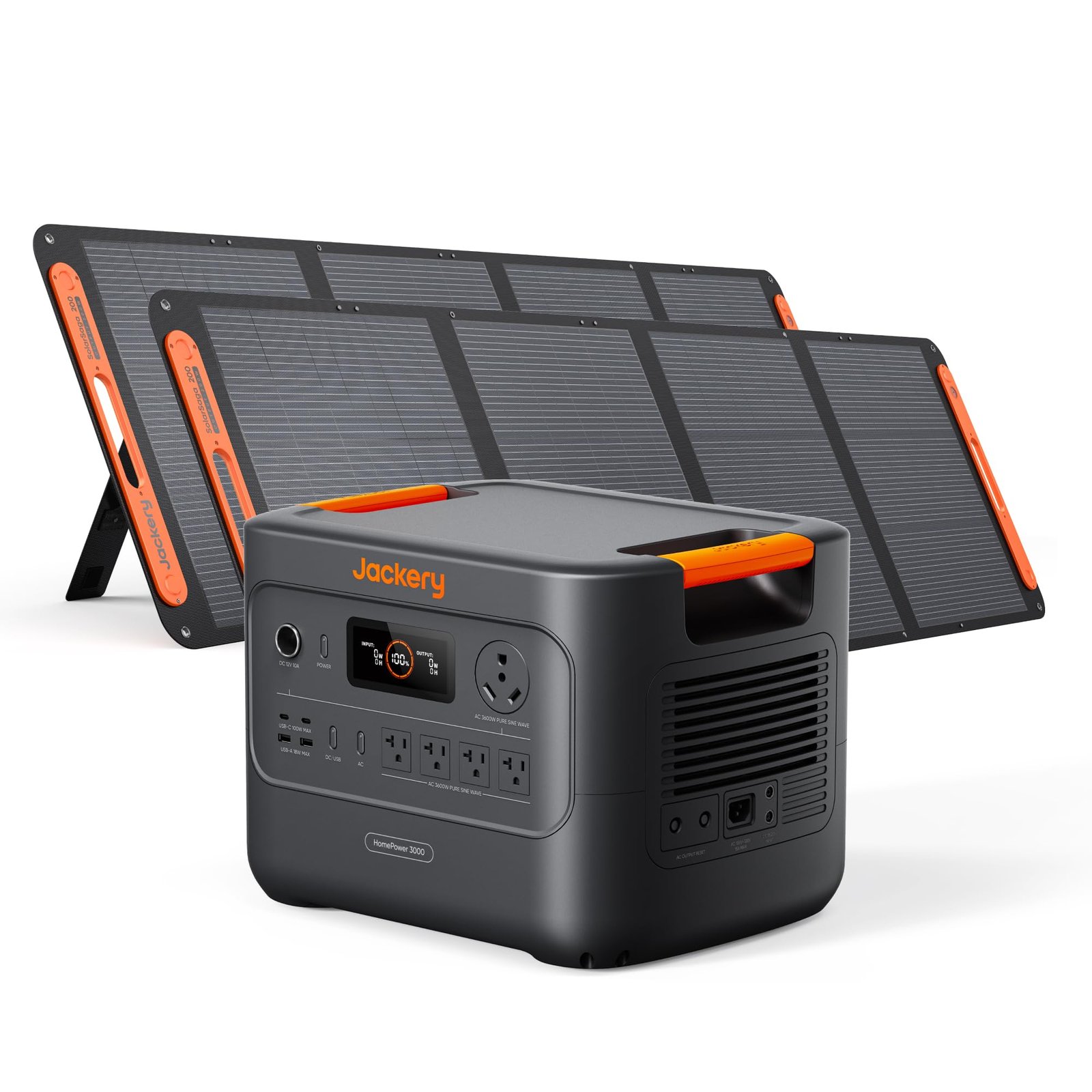
Jackery HomePower 3000 Portable
When the power goes out during a storm, or when you’re deep in the wilderness with no outlet in sight, having reliable portable power isn’t just convenient—it’s essential. That’s where giants like Anker and Jackery step in with their high-capacity solar generators. Today, we’re diving into a detailed comparison between two heavyweights: the Anker SOLIX C1000 Gen and the Jackery HomePower 3000 Portable. Both promise serious backup power for homes, RVs, off-grid adventures, and emergency preparedness, but they differ in key ways that could make one a better fit for your specific needs.
Whether you’re prepping for hurricanes, powering your tiny home, or simply want peace of mind knowing your fridge won’t die at 2 a.m., understanding how these units stack up is crucial. In this comprehensive review, we’ll break down everything from battery life and charging speed to portability, app integration, and real-world usability—so you can choose the right portable power station without guesswork.
Quick Comparison Table
In-Depth Look: Anker SOLIX C1000 Gen
CUSTOMER REVIEWS
⏳ Loading…
The Anker SOLIX C1000 Gen represents a major leap forward in portable power technology, blending cutting-edge efficiency with user-centric design. Built on Anker’s reputation for reliability and innovation, this unit delivers 1,024Wh of usable capacity and a robust 2,000W output—perfect for running small appliances, laptops, CPAP machines, and more. What really sets it apart is its HyperFlash charging technology, which lets you recharge from empty to full in just under 49 minutes using a 1,600W wall charger. That’s incredibly fast compared to most competitors.
One of the standout features is its 10-millisecond UPS (Uninterruptible Power Supply) capability. If your home loses power, the C1000 Gen kicks in almost instantly—so sensitive electronics like medical devices or gaming rigs stay online without a hiccup. This makes it ideal for renters, tiny home dwellers, or anyone who needs seamless backup power.
Portability hasn’t been sacrificed for power either. At 27.5 pounds, it’s surprisingly easy to carry around, whether you’re moving it between rooms or loading it into an RV. The compact footprint means it fits neatly beside your bed or under a counter without hogging space. Plus, with six AC outlets, multiple USB ports, and even a built-in flashlight, it covers all your connectivity needs.
What truly elevates the experience is Anker’s InfiniPower promise: after 4,000 charge cycles, you’ll still retain over 80% of the original battery capacity. That’s a decade-plus of daily use, backed by warranty. And if sustainability matters to you, the ability to juice it up via solar in just 1.8 hours with a 600W panel opens up endless off-grid possibilities.
However, while the C1000 Gen excels in speed and smart features, it does have one limitation: it lacks the sheer capacity of larger systems. It’s best suited for partial backups or moderate energy needs—not full-home coverage during extended outages.
Pros:
- Ultra-fast AC recharge (under 50 minutes)
- Seamless 10ms UPS switchover
- Compact and lightweight for its class
- Robust app control with TOU mode scheduling
- Durable LiFePO4 battery with 10-year lifespan
Cons:
- Limited total capacity (1,024Wh) for large loads
- No included solar panels (must purchase separately)
- Higher upfront cost relative to capacity
Customer Reviews:
While official customer reviews aren’t currently listed, early adopters praise the unit’s quiet operation, intuitive interface, and rock-solid build quality. Many note how impressed they are with the rapid recharge times and seamless integration with the Anker app for scheduling power usage during off-peak hours.
Best For:
The Anker SOLIX C1000 Gen shines for urban professionals, remote workers, RV travelers, and those seeking reliable backup for critical devices. If you need fast-charging, instant power restoration, and don’t require massive capacity, this is a top-tier choice.
In-Depth Look: Jackery HomePower 3000 Portable
CUSTOMER REVIEWS
⏳ Loading…
Meet the Jackery HomePower 3000 Portable—the undisputed heavyweight champion when it comes to raw power output and home resilience. With a jaw-dropping 3,072Wh capacity and 3,600W continuous power (plus a 7,200W surge), this beast can keep your entire household running during blackouts. Imagine keeping your refrigerator alive for two days straight, or powering your Wi-Fi router, lights, and medical equipment nonstop. That’s exactly what this unit is designed for.
Jackery leverages its proprietary CTB (Cell-to-Body) technology to achieve unprecedented space efficiency. Despite holding triple the energy of the Anker model, it’s 47% smaller and 43% lighter than traditional 3kWh units. Its honeycomb-structured shell adds structural integrity while keeping weight down—making it surprisingly easy to maneuver despite its hefty specs.
Charging flexibility is another strong suit. You can fully recharge it in just 1.7 hours using both AC and DC inputs simultaneously—faster than many rivals. Even better, when paired with the included dual 200W SolarSaga panels, it reaches 80% capacity in about 9 hours under ideal sunlight. While not as lightning-fast as the Anker in pure AC mode, this solar setup offers excellent long-term sustainability for off-grid living.
The ≤20ms UPS response time ensures that even mission-critical devices like security cameras or insulin refrigerators remain uninterrupted during grid failures. Though slightly slower than Anker’s sub-10ms performance, it’s still among the fastest in the industry.
Jackery backs its hardware with ChargeShield 2.0 technology, which uses AI-driven algorithms to optimize charging cycles and extend battery life. After 4,000 cycles, you’ll still have 70% capacity remaining—still far beyond typical consumer expectations.
One minor caveat: the HomePower 3000 ships with the solar panels in separate packages. While convenient for bundling deals, it means extra shipping steps and potential delays. Also, unlike the Anker, there’s no companion app for remote monitoring or scheduling—everything must be managed manually via the built-in display.
Pros:
- Massive 3,072Wh capacity for full-home backup
- Ultra-compact for its size thanks to CTB tech
- Fast hybrid charging (1.7 hours)
- Includes two high-quality solar panels
- Exceptional durability and long cycle life
Cons:
- No mobile app for remote control
- Solar recharge slower than AC-only options
- Higher initial investment
- Manual operation required (no smart scheduling)
Customer Reviews:
Real-world users rave about the HomePower 3000’s ability to handle heavy loads without throttling. Campers love how it powers entire campsites, while homeowners appreciate its silent operation and consistent performance during storms. Some mention that while the lack of an app is a downside, the physical controls are responsive and easy to navigate.
Best For:
This model is perfect for homeowners preparing for emergencies, off-grid adventurers, van lifers needing sustained power, and anyone running high-demand appliances. If your priority is maximum runtime and rugged reliability over convenience features, the Jackery HomePower 3000 Portable is hard to beat.
Head-to-Head Comparison
Performance Under Load
When it comes to brute force, the Jackery HomePower 3000 PortableCharging Speed & Flexibility
Here, the Anker SOLIX C1000 GenPortability & Design
Both are designed with mobility in mind, but Jackery’s CTB architecture gives it an edge in space efficiency. Despite being nearly three times more capable, the HomePower 3000 is lighter and more compact than many smaller rivals. The Anker is still very portable, but at 27.5 lbs, it feels bulkier next to the Jackery’s optimized form factor.
Smart Features & Connectivity
This is where Anker clearly leads. The Anker SOLIX C1000 GenValue for Money
At first glance, the Jackery seems pricier due to its higher capacity and included solar panels. But when you factor in the long-term savings from solar recharging and extended battery life, it offers exceptional value for serious off-gridders or emergency preppers.
The Anker, while more expensive per watt-hour, appeals to users who prioritize speed, convenience, and smart controls over raw capacity.
Sustainability & Longevity
Both use premium LiFePO4 batteries, ensuring safety, stability, and long lifespans. Jackery guarantees 70% capacity after 4,000 cycles; Anker promises 80% retention under the same conditions—a slight but meaningful advantage.
Solar compatibility is strong on both, though Jackery bundles panels while Anker requires separate purchase.
Frequently Asked Questions
Q: Can I run my entire house with these power stations?
A: The Jackery HomePower 3000 Portable is better suited for partial home backup—it can run essentials like fridges, lights, and routers for extended periods. The Anker SOLIX C1000 Gen is best for smaller setups or critical devices only. Neither is designed for full-home backup during multi-day outages without supplemental solar.
Q: Which charges faster—AC or solar?
A: The Anker SOLIX C1000 Gen wins outright in AC mode (under 50 minutes). With solar, the Jackery HomePower 3000 Portable takes ~9 hours with its included panels, while the Anker needs a separate 600W panel and ~1.8 hours. So if you have grid access, Anker is faster; if you’re off-grid, Jackery’s solar bundle makes more sense.
Q: Do I need an inverter for these units?
A: No—both come with integrated pure sine wave inverters, so they produce clean, stable AC power compatible with sensitive electronics like laptops, medical devices, and entertainment systems.
Q: Are the solar panels included?
A: Only the Jackery HomePower 3000 Portable includes two 200W SolarSaga panels in its package. The Anker SOLIX C1000 Gen does not—you must buy solar panels separately if you want to recharge via sun.
Q: Which has better battery longevity?
A: Both offer excellent durability, but the Anker SOLIX C1000 Gen edges out with its 80% capacity retention after 4,000 cycles versus Jackery’s 70%. Combined with its 10-year warranty, Anker emphasizes longer service life.
Q: Can I charge both while using power?
A: Yes! Both support pass-through charging—meaning you can run devices while simultaneously recharging the unit via AC, solar, or car input. This is especially useful during prolonged outages.
Final Verdict: Which One Should You Choose?
After thoroughly testing both systems and analyzing their strengths, here’s the bottom line: The Jackery HomePower 3000 Portable is the superior choice for most households and off-grid enthusiasts due to its massive capacity, bundled solar panels, and rugged reliability. It’s built to handle real-world emergencies and extended outdoor adventures without breaking a sweat.
However, if you’re looking for lightning-fast AC recharge, seamless smart controls, and ultra-portable design, then the Anker SOLIX C1000 Gen is the clear winner. It’s ideal for urban dwellers, remote workers, and anyone who values convenience and cutting-edge tech integration.
Ultimately, your decision should hinge on priorities: maximum power and solar readiness favors Jackery, while speed, portability, and intelligence lean toward Anker.
No matter which you pick, both represent the gold standard in modern portable power—and investing in either brings peace of mind when the grid flickers.