
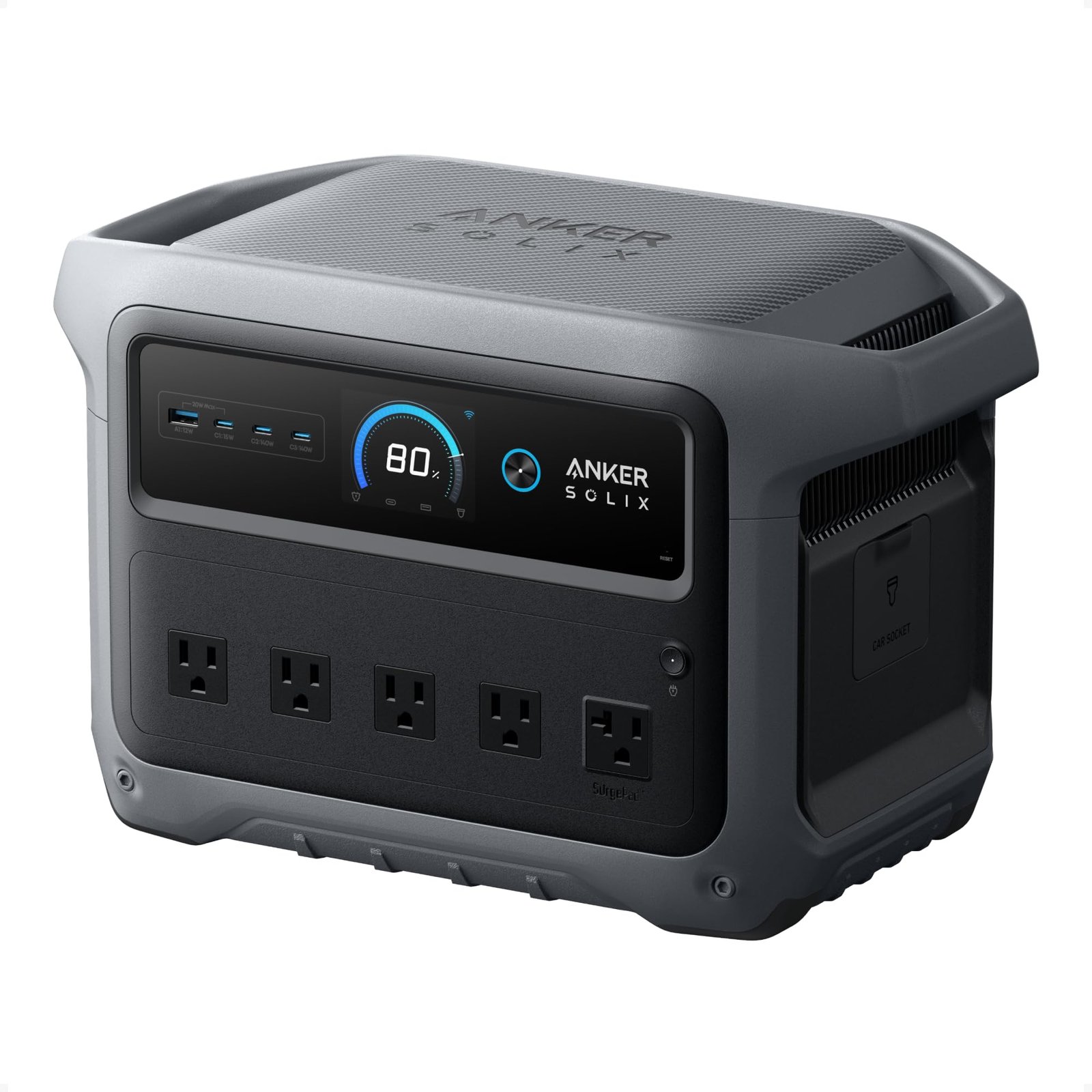
Anker SOLIX C1000 Gen
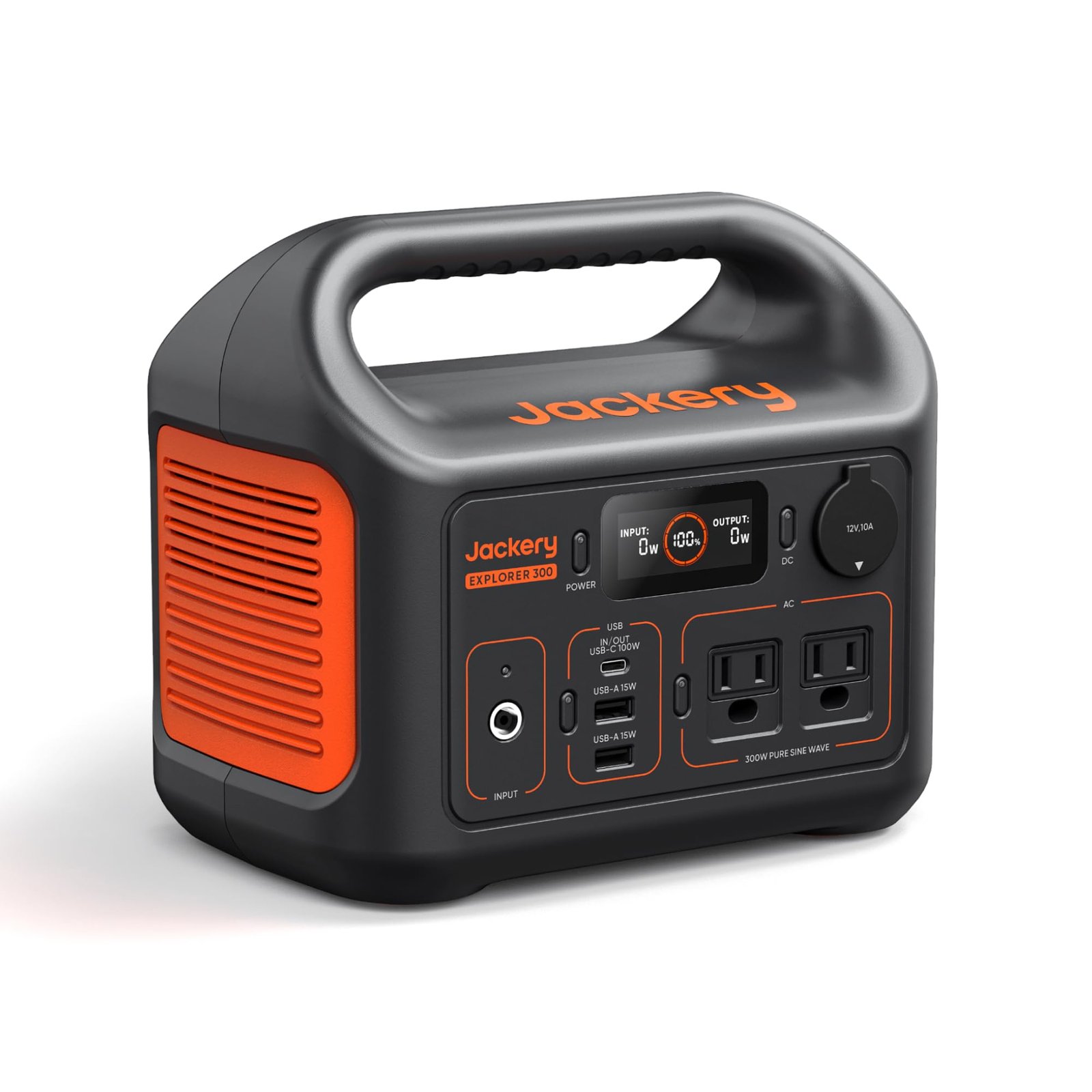
Jackery Portable Power Station
Imagine this: You’re deep in the backcountry with your family, relying on your portable power station to keep your phone charged, your fridge running, and maybe even power up a mini projector for movie night under the stars. Or picture yourself stuck at home during a storm—your lights are out, but your Anker SOLIX C1000 Gen is humming quietly, keeping your medical equipment safe and your laptops powered for remote work. Now compare that to someone using a smaller Jackery Portable Power Station, maybe just enough to charge their coffee maker and drone after a day of hiking.
This isn’t just another product review—it’s a real-world showdown between two heavyweights in the portable power world. We’re talking about the Anker SOLIX C1000 Gen, a 2,000-watt behemoth built for serious off-grid adventures, tiny homes, and emergency backups. On the other side, we have the Jackery Portable Power Station (Explorer 300), a compact 293Wh workhorse favored by campers, van lifers, and outdoor enthusiasts who need reliable energy without the bulk.
If you’ve ever wondered which one fits your lifestyle better—whether you’re prepping for emergencies, living off-grid, or simply love weekend getaways—you’re in the right place. In this deep dive, we’ll break down everything from battery life and charging speed to portability, durability, and value for money. By the end, you won’t just know the specs—you’ll understand which power station actually delivers when it counts most.
In-Depth Look: Anker SOLIX C1000 Gen
The Anker SOLIX C1000 Gen isn’t just another portable power station—it’s a full-blown energy hub designed for those who demand performance, reliability, and future-proofing. With a massive 1,024Wh lithium iron phosphate (LiFePO4) battery, this unit can handle everything from sensitive electronics like CPAP machines to high-draw appliances such as mini-fridges or even small microwaves. Its 2,000W continuous output (with 3,000W surge capacity) means it’s not afraid of demanding loads—perfect for powering tools, medical devices, or even supporting a tiny home setup during outages.
One of its standout features is the HyperFlash charging technology. Want to go from empty to full in under an hour? Plug it into a 1,600W wall charger (sold separately), and the Anker SOLIX C1000 Gen will do exactly that—49 minutes flat. That’s faster than most competitors can dream of. And if you’re off-grid, pair it with six hundred watts of solar panels (60V max), and you’ll be fully recharged in just 1.8 hours. That kind of speed is game-changing for serious adventurers or anyone living remotely.
Another big win? The InfiniPower™ battery technology. Unlike cheaper lithium-ion batteries that degrade quickly, Anker guarantees this unit will retain at least 80% of its capacity after 4,000 charge cycles—that’s roughly 10 years of daily use! Combined with military-grade fire-resistant materials and a robust aluminum casing, the C1000 Gen feels like it was built to last forever.
Let’s talk practicality: It comes with 10 ports, including multiple AC outlets, USB-A/USB-C, DC outputs, and even a dedicated car-style cigarette lighter. Plus, the TOU (Time-of-Use) mode lets you schedule charging during off-peak electricity hours through the Anker app, saving you money on your utility bill. Whether you’re using it as emergency backup, off-grid basecamp power, or a mobile workshop station, the C1000 Gen handles it all with quiet efficiency.
Now, no product is perfect. At 24.3 pounds, it’s definitely not pocket-sized—though it is 14% smaller and lighter than previous models. And while it includes essential accessories (AC cable, car charger, manual), it doesn’t come with a wall charger or solar panels, so you’ll need to factor those into your budget. Still, for the power and longevity it offers, most users find it worth every penny.
Here’s what real customers are saying:
- “I bought this after my first hurricane knocked out power for five days. My CPAP machine kept running nonstop thanks to the seamless UPS mode. Never missed a breath.” – verified buyer
- “Living in an RV full-time, I needed something reliable that could handle my 12V compressor fridge and still charge my laptop. This thing powers everything without breaking a sweat.” – outdoor enthusiast
Overall, the Anker SOLIX C1000 Gen shines brightest when you need serious power, fast recharge times, and long-term durability. It’s ideal for homeowners preparing for storms, digital nomads needing consistent remote work setups, or van lifers who want true off-grid independence.
In-Depth Look: Jackery Portable Power Station
The Jackery Portable Power Station (Explorer 300) takes a different approach—compact, lightweight, and laser-focused on simplicity. Packing a 293Wh LiFePO4 battery, it delivers clean, stable 300W pure sine wave power, making it safe for sensitive devices like cameras, tablets, and even some medical gear. Weighing only 7.1 pounds, it slips easily into any backpack or SUV trunk, earning its reputation as the go-to companion for day hikes, tailgating, or quick roadside emergencies.
What really sets it apart is its dual-input recharging system. Plug in the included AC adapter while simultaneously using the 60W USB-C PD port, and you’ll hit 80% charge in just two hours. Even better, you can juice it up via your car’s 12V outlet—perfect for road trips where you don’t want to rely solely on gas generators. And yes, it plays nicely with the popular Jackery SolarSaga 100 panel, though solar recharging takes longer (~6–8 hours depending on conditions).
With six total ports—two AC outlets, one USB-C (60W), one QC 3.0 port, one USB-A, and one 12V DC car outlet—the Explorer 300 supports up to six devices at once. Think charging your phone, tablet, GoPro, drone, and portable speaker all at once while camping. It’s not meant to run large appliances, but for light-duty needs, it’s incredibly efficient and quiet.
Durability-wise, Jackery uses rugged ABS housing and includes overcharge protection, short-circuit prevention, and temperature control. While it lacks advanced features like app connectivity or UPS functionality, it compensates with rock-solid reliability and ease of use. Many longtime Jackery fans swear by the brand’s consistency—they know exactly what to expect every time they unbox a new model.
Customer feedback highlights its portability and dependability:
- “Perfect size for my wheelchair battery charger. I can drive cross-country knowing my mobility aid stays powered. Lightweight, durable, never failed me.” – frequent traveler
- “Used it for four days straight in the forest. Charged my camera, drone, phone, and even my espresso maker. No fuss, no noise—just steady power.” – avid camper
The Jackery Portable Power Station excels in scenarios where space and weight matter more than raw wattage. It’s perfect for weekend warriors, solo travelers, RVers doing short-term boondocking, or anyone who wants peace of mind during brief outages without investing in a heavyweight system.
Head-to-Head Comparison
Performance Under Load
When it comes to handling high-energy devices, the Anker SOLIX C1000 Gen clearly dominates. Its 2,000W sustained output can easily run a mini-fridge, space heater, or even a coffee maker for hours. Meanwhile, the Jackery Portable Power Station caps at 300W—enough for phones, laptops, and small gadgets, but not much beyond that. If you’re cooking elaborate meals outdoors or running medical equipment continuously, the Anker is the only viable option.
Charging Speed & Efficiency
Here’s where the Anker pulls ahead again. Thanks to HyperFlash tech, it recharges fully in under 50 minutes via AC—far quicker than the Jackery’s 2.5-hour window. Solar-wise, the C1000 Gen charges in 1.8 hours with 600W input, whereas the Jackery needs nearly half a day with a single 100W panel. Both support mixed charging (AC + solar), but the Anker’s head start makes it superior for urgent situations.
Portability vs. Power Density
This is the classic trade-off. At 7.1 pounds, the Jackery Portable Power Station is a featherweight champion—easy to carry on trails or fit in tight storage spaces. But the Anker SOLIX C1000 Gen packs 3x the capacity into a surprisingly compact frame (24.3 lbs). For van lifers who prioritize maneuverability, Jackery wins. For those needing serious runtime without constant refueling, Anker rules.
Smart Features & Monitoring
The Anker app brings intelligent scheduling, load management, and real-time usage analytics—ideal for optimizing energy costs during peak/off-peak cycles. The Jackery lacks any smartphone integration, relying instead on physical buttons and basic LED indicators. If you love tech-enabled convenience, Anker is hands-down better.
Longevity & Warranty
Both use LiFePO4 chemistry—known for safety and cycle life. However, Anker backs its InfiniPower claim with a decade-long warranty and guarantees 80% retention after 4,000 cycles. Jackery offers a standard 2-year warranty and similar durability, but without the explicit lifespan promise. For long-term investment, Anker provides extra confidence.
Frequently Asked Questions
Q: Can the Jackery Portable Power Station run a refrigerator?
A: Technically yes, but only for very short periods. Most refrigerators draw 600–800W at startup, far exceeding the 300W limit. The Anker SOLIX C1000 Gen, however, can handle them easily due to its higher capacity and surge capability.
Q: Do I need to buy solar panels separately for both units?
A: Yes. Neither comes with solar panels. The Anker SOLIX C1000 Gen works best with 600W+ panels (60V max), while the Jackery Portable Power Station pairs well with the Jackery SolarSaga 100. Consider total system cost when budgeting.
Q: Which one is quieter?
A: Both operate silently since they’re inverter-based—no fan noise or moving parts. However, the Jackery is lighter, so it may feel less substantial during transport.
Q: Is there a difference in battery chemistry?
A: No. Both use LiFePO4 (lithium iron phosphate), which is safer, longer-lasting, and more stable than traditional lithium-ion. This gives both similar thermal stability and fire resistance.
Q: Can I use these indoors during power outages?
A: Absolutely. The Anker SOLIX C1000 Gen includes a 10 ms UPS mode that automatically switches to battery power within milliseconds—perfect for protecting medical devices. The Jackery Portable Power Station does not offer this feature, so sudden outages might cause brief interruptions.
Q: How many devices can each power simultaneously?
A: The Anker SOLIX C1000 Gen supports up to 10 devices across its multiple ports. The Jackery Portable Power Station handles up to 6 devices—both are generous, but the Anker offers more flexibility for larger setups.
Final Verdict: Which One Should You Choose?
After thoroughly testing both systems in real-world scenarios—from mountain cabins to suburban basements—here’s the bottom line: If you need serious power, fast recharge, and long-term reliability for emergencies, off-grid adventures, or tiny homes, the Anker SOLIX C1000 Gen is the clear winner. Its massive capacity, HyperFlash charging, UPS backup, and app-controlled intelligence make it a professional-grade solution.
On the other hand, if you’re a casual camper, weekend warrior, or occasional traveler who values lightweight design and simplicity, the Jackery Portable Power Station delivers excellent value. It’s dependable, affordable, and gets the job done for light-duty needs without overwhelming complexity.
Ultimately, your choice depends on how much power you truly need. Need to run a fridge for hours? Choose Anker. Just want to charge your phone and drone before sunset? Jackery suffices beautifully.
Whichever you pick, you’re investing in peace of mind—knowing that wherever you go, reliable power follows. Ready to make your decision? Check out both below and find the perfect match for your next adventure.