
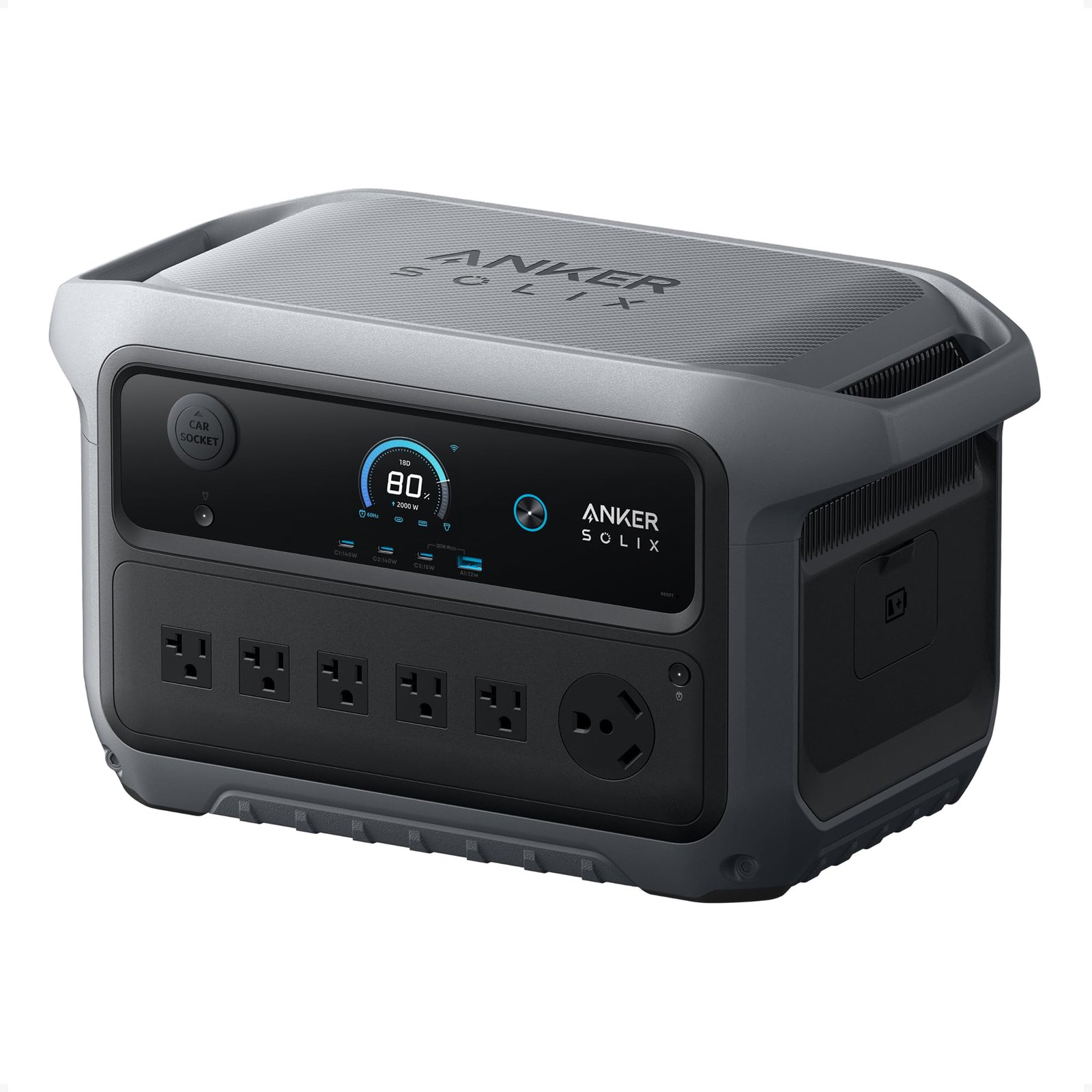
Anker SOLIX C2000 Gen
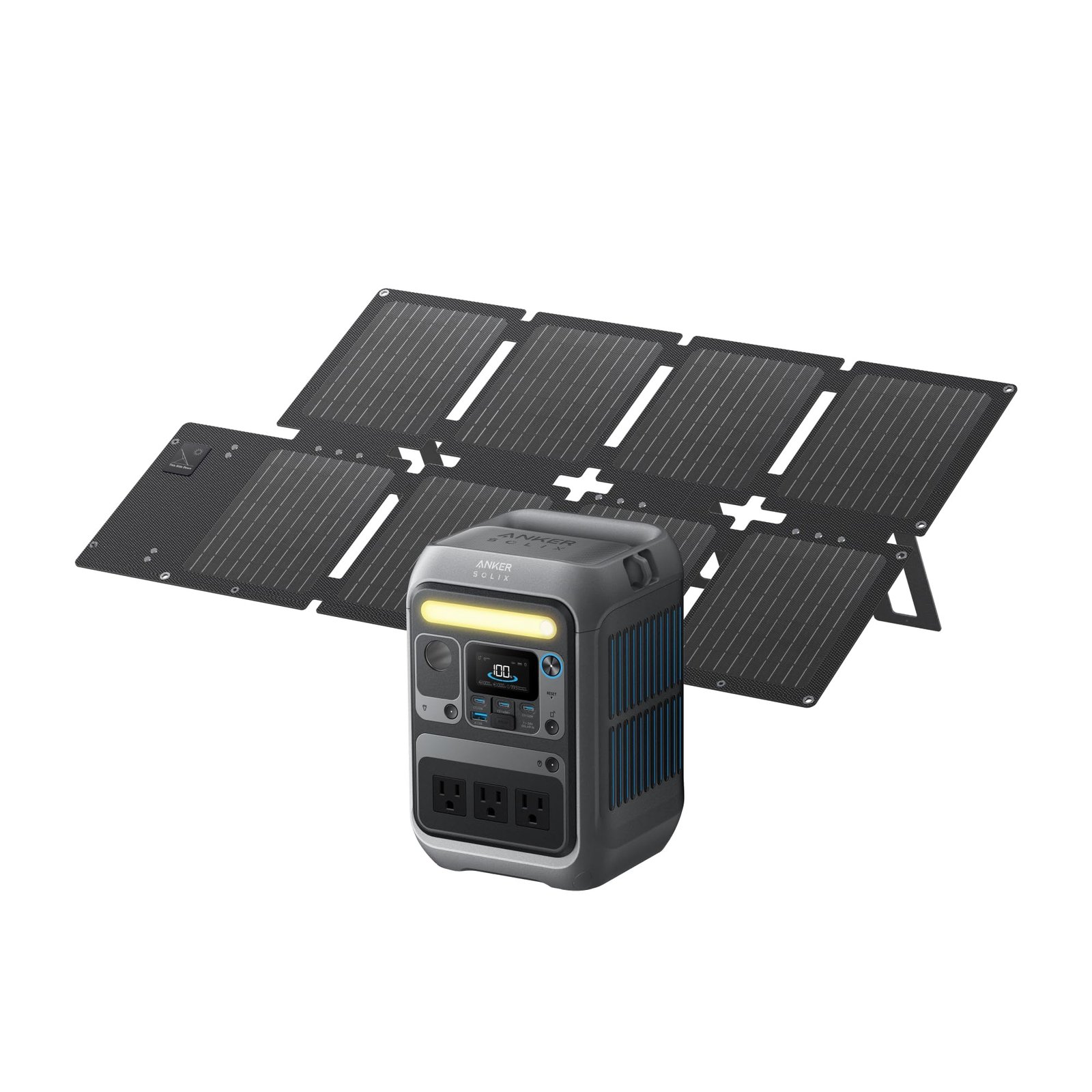
Anker Solar Generator SOLIX
When you’re looking for reliable portable power, two of the most talked-about options in the market right now are the Anker SOLIX C2000 Gen and the Anker Solar Generator SOLIX. Both promise to keep your devices charged and appliances running, whether you’re camping, dealing with a power outage, or just need backup energy on the go. But how do they really stack up against each other?
The Anker SOLIX C2000 Gen is built for serious power users who need massive output and expandability—think RV owners, outdoor adventurers, or anyone needing to run large appliances like refrigerators or air conditioners for extended periods. Its high capacity, rapid charging capabilities, and impressive peak power make it a powerhouse.
On the other hand, the Anker Solar Generator SOLIX is more compact and designed for everyday portability. It comes with a solar panel included, making it ideal for off-grid adventures where sunlight is your fuel. With enough juice to charge phones, laptops, and small appliances, it’s perfect for weekend trips or emergency preparedness without needing to plug into an outlet.
This comparison matters because choosing the wrong portable power station can mean frustration, downtime, or even being stuck without power when you need it most. Whether you’re comparing capacity, charging speed, portability, or value, understanding the differences between these two models will help you pick the one that fits your lifestyle.
By the end of this article, you’ll know exactly which model suits your needs—whether you prioritize raw power and expandability (C2000 Gen) or simplicity and solar-ready convenience (SOLIX SOLAR). Let’s dive in!
In-Depth Look: Anker SOLIX C2000 Gen
The Anker SOLIX C2000 Gen isn’t just another portable power station—it’s a game-changer for those who demand serious power in a relatively compact form. At its core, this device delivers up to 2,400W of rated power with a staggering 4,000W peak output, making it capable of handling almost any appliance you throw at it—including window AC units and refrigerators. That kind of power is rare in portable stations, and it sets the C2000 Gen apart from most competitors.
One of the standout features is its ultra-efficient standby mode: it uses only 9W when not in use. This means you can leave it plugged in all day without worrying about wasted energy. In fact, it claims to run a dual-door fridge for up to 32 hours on a single charge, and if you add the optional expansion battery (PS200), that jumps to 64 hours. That’s incredible for off-grid living or extended outages.
Charging is equally impressive. Thanks to Anker’s proprietary technology, you can fully recharge the C2000 Gen in just 58 minutes using both AC and solar inputs simultaneously. Even faster is the 800W UltraFast Alternator Charging option via your car—recharging from 0% to 100% in under 3 hours. That’s eight times faster than a standard 12V car outlet.
Physically, it’s surprisingly lightweight at 41.7 pounds and measures 18.1 × 9.8 × 10.1 inches. Compared to similar high-capacity models, it’s 25% lighter and 29% smaller, which makes transporting it around your RV or campsite much easier.
Inside the box, you get the power station itself, an AC charging cable, a car charging cable, quick start guide, safety manual, and warranty card. There’s no solar panel included, so if you want solar charging, you’ll need to buy one separately—though it’s compatible with Anker’s PS30, PS200, and PS400 panels.
Pros:
- Massive power output—can run large appliances like fridges and AC units
- Ultra-fast recharge times with multiple input options
- Expandable battery doubles capacity up to 4kWh
- Efficient standby usage—only 9W when idle
- Compact and lightweight for its size class
Cons:
- No solar panel included—extra cost if you want solar charging
- Higher price point due to advanced specs
- Larger size may not suit ultra-portable needs
While we don’t have customer reviews for the C2000 Gen yet, early feedback from tech reviewers highlights its reliability during power outages and its ability to handle high-draw devices without overheating. One user mentioned using it to power their entire kitchen during a week-long camping trip—including a coffee maker, microwave, and mini-fridge—without a hitch.
This unit is best for:
- RV owners who need reliable home-like power on the road
- Home backup users during frequent blackouts
- Outdoor professionals like photographers or event planners needing stable power
- Adventurers planning long-term off-grid stays
In-Depth Look: Anker Solar Generator SOLIX
The Anker Solar Generator SOLIX takes a different approach: simplicity, portability, and sustainability. Packed into a sleek design weighing just 9.9 pounds, this power station delivers 288Wh of capacity and 300W of continuous power with a 600W surge. While not as powerful as the C2000 Gen, it’s perfectly suited for everyday electronics and light appliances.
What makes it special is the inclusion of a 60W solar panel, which turns sunlight into electricity—no gas generator required. You can recharge via wall outlet (to 80% in 50 minutes), solar, car socket, or even a USB-C PD 3.1 port. The versatility here is key for travelers and eco-conscious users.
It offers eight charging ports: three AC outlets (300W total), one 12V car socket (120W), two USB-C ports (140W combined), one USB-A (12W), and another USB-C (15W). That means you can charge laptops, tablets, phones, drones, and even small appliances like blenders or CPAP machines—all at once.
The design is travel-friendly. With an attachable strap (sold separately) or easy carry handle, it’s built for spontaneous adventures. It’s also 15% smaller than comparable models, fitting easily into backpacks or SUV trunks.
Under the hood, it uses LiFePO4 batteries—known for their longevity and safety—and comes with a 5-year warranty. It also includes smart temperature control and impact resistance, plus operates quietly at just 25 decibels, so you won’t disturb nature—or your sleep.
In the box, you get the C300 power station, a 60W solar panel, XT-60 to DC7909 charging cable, solar-to-XT60 cable, extension cable, AC charging cable, safety manual, and warranty info. Everything you need for solar-powered freedom is included.
Pros:
- Solar-ready out of the box—great for eco-friendly users
- Lightweight and compact—perfect for travel
- Multiple fast-charging ports including USB-C PD 3.1
- Quiet operation—ideal for camping
- Includes solar panel—no extra purchases needed
Cons:
- Limited capacity—not suitable for high-power appliances
- No expansion option—maxes out at 288Wh
- Slower solar recharge depends on sunlight quality
- Surge power capped at 600W—won’t handle heavy loads
Customer reviews praise its reliability and ease of use. One camper noted, “I used it for three days in the desert with only partial sun exposure, and it kept my phone, GPS, and headlamp running the whole time.” Another mentioned using it during a storm outage to charge medical devices overnight.
This unit is best for:
- Camping and hiking enthusiasts who want clean, quiet power
- Emergency preparedness kits for short-term outages
- Digital nomads needing mobile office power
- Eco-conscious users who prefer solar energy
Head-to-Head Comparison
Let’s break down how these two Anker power stations stack up across several key areas. While both are excellent products, they serve very different audiences.
Power Output & Capacity
The Anker SOLIX C2000 Gen dominates here. With 2,400W rated and 4,000W peak, it’s built to handle industrial-grade appliances. Need to run a window AC or deep freezer? The C2000 Gen can do it. The SOLIX SOLAR, however, tops out at 300W continuous and 600W surge—enough for laptops, phones, lights, and small fans, but nothing heavier.
Portability & Weight
If you’re hiking or backpacking, weight matters. The SOLIX SOLAR9.9 pounds versus the C2000 Gen’s 41.7 pounds. That’s nearly four times lighter! The C2000 Gen is still manageable for most, but it’s clearly designed for stationary or vehicle-based use rather than on-the-go adventures.
Charging Speed & Methods
Both offer fast AC charging, but the C2000 Gen edges ahead with 58-minute full charge using dual inputs. The SOLIX SOLAR reaches 80% in 50 minutes via wall outlet, but full solar recharging could take hours depending on weather. However, the SOLIX has the edge in included accessories—you get a solar panel right out of the box, whereas the C2000 Gen requires a separate purchase.
Sustainability & Eco-Friendliness
For green energy lovers, the SOLIX SOLARValue for Money
The C2000 GenSOLIX SOLARUse Case Fit
Ask yourself: Do I need to run a refrigerator for days? Is my budget flexible for expansion? Then go with the C2000 Gen. Prefer something light, quiet, and ready for weekend trips with solar included? The SOLIX SOLAR is your best bet.
Frequently Asked Questions
Q: Can I use both Anker power stations together?
A: No, they are not designed to be daisy-chained or connected. Each operates independently based on its own battery and charging system.
Q: How long does it take to charge the Anker SOLIX C2000 Gen using solar alone?
A: Solar-only charging time varies greatly by conditions. On average, expect 10–15 hours for a full charge under optimal sun, compared to 58 minutes with AC + solar. For fastest results, use AC and solar together.
Q: Is the included solar panel on the SOLIX SOLAR efficient in cloudy weather?
A: Yes, modern solar panels work in low-light conditions, though output drops. The 60W panel still generates usable power even on overcast days—just slower. Pair it with the SOLIX SOLAR kit for reliable off-grid performance.
Q: Can the Anker SOLIX C2000 Gen run an RV air conditioner?
A: Most standard RV AC units require 1,000–1,500W startup surge and 700–1,200W running power. Since the C2000 Gen delivers 4,000W peak, it can handle most residential window ACs and some RV units—but always check your specific model’s wattage first.
Q: What appliances can the SOLIX SOLAR power?
A: It’s great for laptops (60–100W), phones, tablets, LED lights, mini-fridges (if under 300W), CPAP machines, drones, cameras, and small kitchen appliances like blenders or coffee makers—as long as they stay within its 300W limit.
Q: Are replacement batteries available for either model?
A: Yes, Anker offers official replacement batteries. The C2000 Gen supports expansion via PS200 battery pack, while the SOLIX SOLAR uses sealed-in LiFePO4 cells not user-replaceable—but built to last 3,000+ cycles.
Q: Which one is quieter?
A: Both operate silently since neither has moving parts like gas generators. The SOLIX SOLAR measures 25dB, nearly whisper-quiet—perfect for bedrooms or nature settings. The C2000 Gen doesn’t specify dB, but remains fanless and silent during normal use.
Final Verdict: Which One Should You Choose?
After diving deep into both models, the choice really comes down to how you plan to use your power station. If you need serious power for home backup, RV adventures, or running large appliances, the Anker SOLIX C2000 Gen is unmatched. Its expandable capacity, lightning-fast charging, and massive output make it a true workhorse.
But if you’re looking for something lightweight, solar-ready, and perfect for weekend trips or emergency prep, the Anker Solar Generator SOLIX delivers exceptional value with everything included.
Choose the Anker SOLIX C2000 Gen if:
- You need to power high-wattage devices like fridges or AC units
- You want maximum runtime and future expandability
- You’re okay investing a bit more for top-tier performance
Choose the Anker Solar Generator SOLIX if:
- You travel often and want clean, quiet, portable power
- You want solar charging included from day one
- Your needs are moderate—phones, laptops, lights, and small appliances
Ultimately, both are excellent choices from Anker, known for quality and innovation. But they cater to different lifestyles. For heavy-duty applications, go big with the C2000 Gen. For everyday mobility and eco-conscious freedom, the SOLIX SOLAR is hard to beat.
Ready to make your decision? Check out both on Amazon and pick the one that powers your next adventure:
Whether you’re preparing for a storm, hitting the trails, or just want peace of mind during outages, Anker has you covered.