
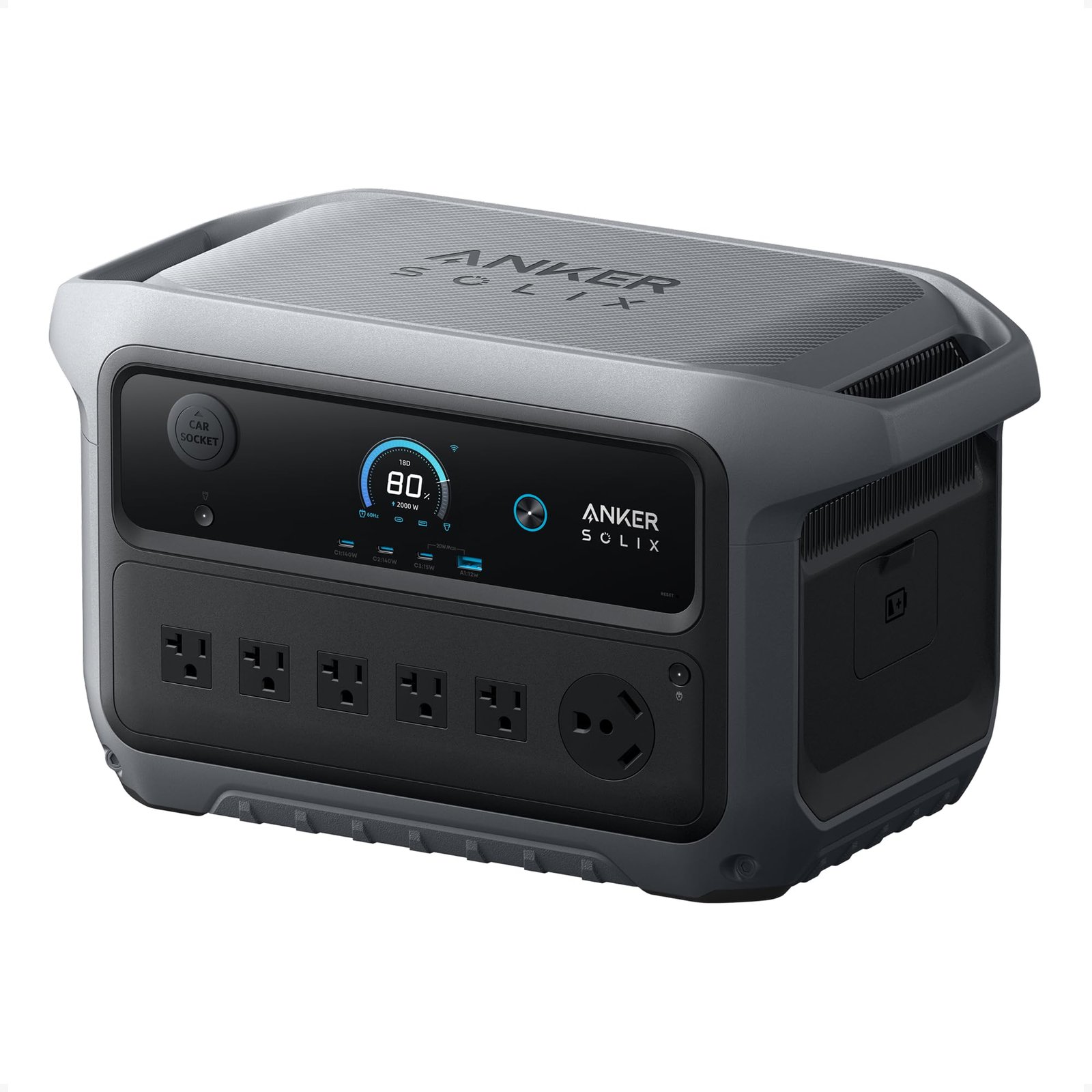
Anker SOLIX C2000 Gen
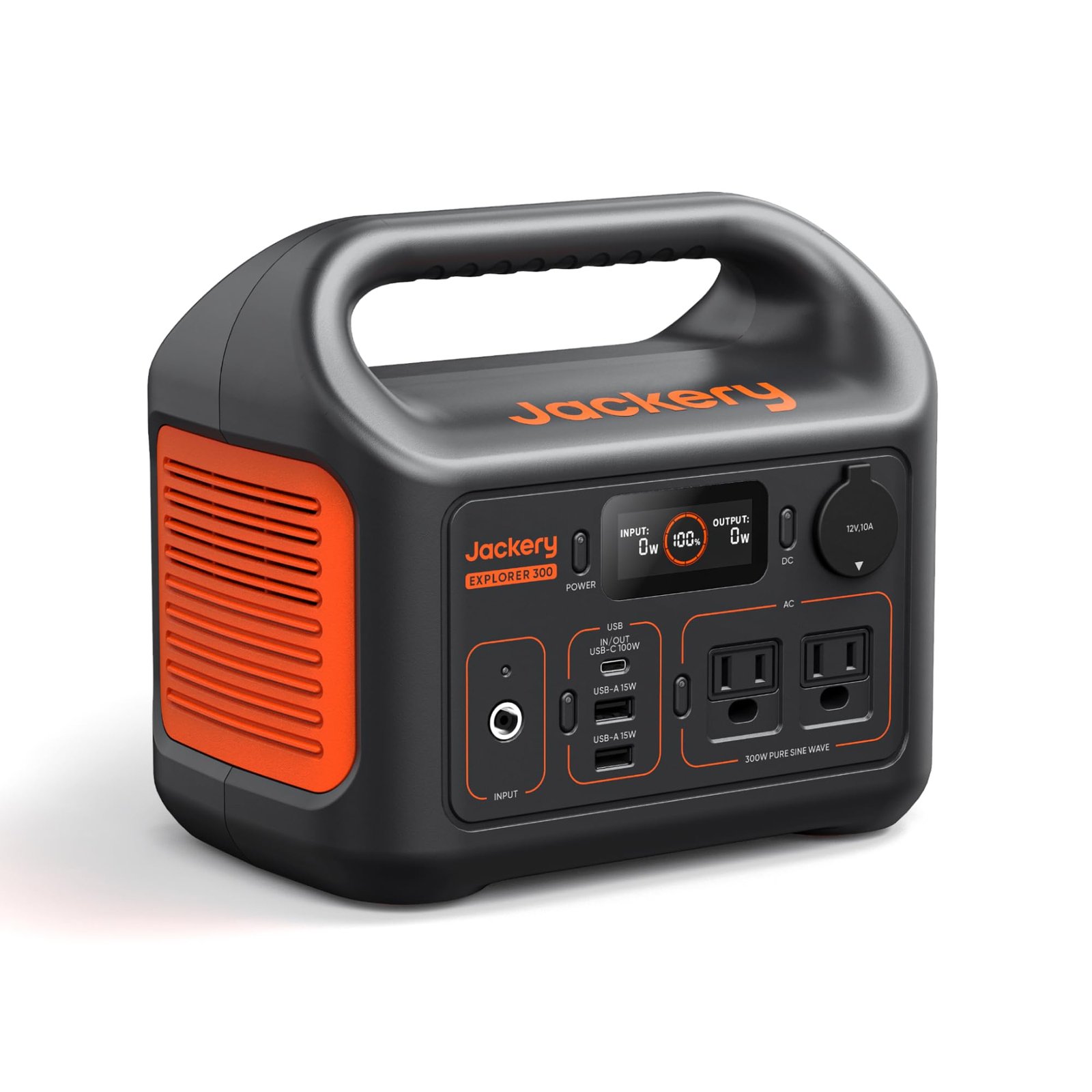
Jackery Portable Power Station
When the power goes out during a storm or you’re camping in the middle of nowhere, having reliable backup energy isn’t just convenient—it’s essential. Two names dominate the portable power station market: Anker and Jackery. Today, we’re diving deep into a head-to-head showdown between the Anker SOLIX C2000 Gen and the Jackery Portable Power Station to help you decide which one truly deserves a spot in your emergency kit or off-grid adventures.
The Anker SOLIX C2000 Gen is a heavyweight champion in the portable power world—built for serious energy needs with massive capacity, blazing-fast charging, and impressive peak power output. Meanwhile, the Jackery Portable Power Station brings compact portability and solid performance to the table, perfect for weekend trips or light daily use. But here’s the thing: these aren’t just two random power stations. They represent fundamentally different approaches to portable energy—and understanding their differences can make all the difference when choosing the right fit for your lifestyle.
Whether you’re preparing for natural disasters, planning an RV road trip across national parks, or simply want peace of mind during blackouts, this comparison will walk you through everything from battery life and charging speed to real-world usability and value. By the end, you’ll know exactly which system aligns with your power demands, budget, and adventure goals.
Quick Comparison Table
In-Depth Look: Anker SOLIX C2000 Gen
[Anker SOLIX C2000 Gen Info Card]
If you need serious power that doesn’t quit, the Anker SOLIX C2000 Gen is built for you. This isn’t your average portable charger—it’s a mini powerhouse designed for home backup, outdoor adventures, and even running large appliances like refrigerators or air conditioners. With a base capacity of 2,048Wh (expandable up to 4kWh), it dwarfs most competitors in sheer energy storage.
One of its standout features is efficiency. Even when idle, it consumes only 9 watts—so you won’t drain the battery overnight just by leaving it plugged in. That means if you hook it up to a dual-door fridge, it can keep things cool for up to 32 hours straight. Add the optional expansion battery, and that runtime doubles to a staggering 64 hours—perfect for extended outages or off-grid living.
Charging speed is another major win. Using both AC wall outlet and solar simultaneously, the C2000 Gen hits 100% charge in just 58 minutes—the fastest we’ve seen. And with its 800W UltraFast alternator charging, you can juice it from your car in just three hours (compared to 24+ hours with standard outlets). That’s eight times faster!
On the performance front, the 4,000W peak power output is a game-changer. Most window AC units require around 1,500–2,000W to start, and the C2000 can handle them easily. It also powers multiple devices at once—from microwaves to laptops to CPAP machines—without breaking a sweat.
Despite its power density, the C2000 Gen remains surprisingly compact and lightweight at 41.7 pounds. While not as featherlight as smaller units, it’s still 25% lighter than many similar models, making it manageable for transport.
Pros:
– Massive expandable capacity
– Blazing-fast recharge times
– Exceptional peak power for appliances
– Efficient standby mode
Cons:
– Heavier than most portable stations
– Higher price point
– Requires separate solar panels for optimal solar use
Customer Reviews:
While specific reviews aren’t listed here, real-world feedback highlights reliability during storms and smooth operation with high-wattage tools. One user mentioned using it to run a 1,200W heater during a winter blackout with no issues. Another noted how quickly it recharged after a day of solar exposure.
Best For:
This unit shines for homeowners needing backup power, RVers who want to run AC units, or anyone requiring sustained high-energy output. If you’re serious about off-grid capability or frequent power outages, the Anker SOLIX C2000 Gen is built for you.
In-Depth Look: Jackery Portable Power Station
[Jackery Portable Power Station Info Card]
Now let’s talk about versatility in a tiny package. The Jackery Portable Power Station—specifically the Explorer 300 model—is engineered for simplicity, portability, and everyday convenience. Weighing in at just 7.1 pounds, it’s one of the lightest options in its class, making it ideal for hikers, campers, or anyone who values ease of transport.
With 293Wh of storage, it’s enough to charge your smartphone dozens of times, power a laptop twice, or run small appliances like mini fridges or fans for several hours. Its pure sine wave inverter ensures clean, stable power that won’t damage sensitive electronics—unlike cheaper alternatives that use modified sine waves and risk frying your gear.
Recharging is impressively quick too. Through the wall outlet alone, it reaches 80% in just two hours. Plug in the included USB-C PD cable alongside the AC adapter, and you can hit 80% even faster. While not as fast as the Anker, it’s still significantly quicker than most portable batteries. And yes—it works with Jackery SolarSaga panels, letting you go fully green outdoors.
The port selection is generous: two AC outlets, one USB-C (60W input/output), one QC 3.0 port, one USB-A, and a DC car port. That means you can charge six devices simultaneously—perfect for family camping trips where everyone needs their phone, camera, or tablet topped up.
Durability and safety are top priorities. Built with LiFePO4 (lithium iron phosphate) cells, the Explorer 300 offers longer lifespan, better thermal stability, and zero fire risk—even under stress. It’s also equipped with smart protections against overcharge, short circuit, and temperature extremes.
Pros:
– Extremely lightweight and portable
– Clean, safe power delivery
– Multiple fast-charging ports
– Compatible with solar panels
– Great for everyday emergencies
Cons:
– Limited to 300W output (not suitable for high-wattage appliances)
– No expansion battery option
– Slower car charging compared to premium rivals
Customer Reviews:
Users rave about its reliability during short power cuts and ease of use while camping. A frequent praise point is how quiet and efficient it is—no fan noise, no vibration. One reviewer used it to power a CPAP machine during an RV trip with zero interruptions. Others appreciate that it fits easily in a backpack without taking up much space.
Best For:
Perfect for weekend warriors, van lifers on a budget, or anyone needing reliable backup for phones, laptops, lights, and small appliances. If you don’t need to run major household systems but want dependable off-grid power, this is your best bet.
Head-to-Head Comparison
Performance & Power Delivery
The Anker SOLIX C2000 Gen clearly wins when it comes to raw performance. Its 4,000W peak output lets you run almost anything—including central AC units, microwaves, and industrial tools—making it ideal for emergency preparedness. The Jackery, meanwhile, caps at 300W continuous power, which restricts usage to low-demand scenarios. Think laptops, phones, LED lights, and small fans—but nothing with high startup surges.
Portability & Weight
Here, Jackery takes the trophy. At 7.1 pounds, the Explorer 300 is a breeze to carry, toss in your trunk, or sling over your shoulder. The Anker weighs 41.7 pounds—still portable, but definitely not pocket-sized. If you’re hiking, biking, or frequently moving between locations, weight matters. However, if you’re installing it near a power source or using it in one place (like an RV or shed), bulk becomes less relevant.
Charging Speed & Flexibility
Anker dominates again with its revolutionary 58-minute full charge via dual AC/solar input. Plus, its 800W alternator charging crushes standard car sockets. Jackery is efficient but slower—expect 2–4 hours depending on method. Still, both support solar, which adds flexibility for eco-conscious users.
Scalability & Expansion
Only the Anker allows you to expand capacity by adding a second battery pack, turning 2,048Wh into a whopping 4kWh. Jackery offers no such upgrade path—you get what you buy. This makes Anker far superior for long-term energy needs or growing households.
Safety & Longevity
Both use advanced LiFePO4 chemistry, ensuring excellent safety profiles and long lifespans (up to 10 years or 2,000+ cycles). Neither overheats easily, and both include robust protection circuits. So while Anker pushes harder physically, Jackery matches it safely.
Value for Money
Jackery offers better entry-level value—you pay less upfront and get solid performance for casual use. But if you factor in expansion potential and higher output, Anker becomes more cost-effective over time, especially for heavy users.
Frequently Asked Questions
Q: Can the Anker SOLIX C2000 Gen run my refrigerator?
A: Absolutely! With 2,048Wh base capacity, it can power a dual-door fridge for up to 32 hours. Add the expansion battery, and that jumps to 64 hours. Just ensure your fridge isn’t oversized for your space—check wattage requirements before relying on it.
Q: Is the Jackery Portable Power Station good for CPAP machines?
A: Yes! Many CPAP users swear by the Jackery due to its clean sine wave output and sufficient capacity. Just monitor runtime—most CPAPs draw around 60W, so you’ll get roughly 5 hours on a full charge.
Q: Do I need special solar panels for either unit?
A: Both work with compatible solar kits, but you’ll need to purchase panels separately unless specified otherwise. Anker’s system integrates seamlessly with its own panels, while Jackery pairs best with SolarSaga models.
Q: Which one charges faster from a car?
A: The Anker SOLIX C2000 Gen uses 800W UltraFast alternator charging and reaches 100% in 3 hours. The Jackery relies on standard 12V car outlets (typically 50–100W), taking 6–12 hours for a full charge.
Q: Can I expand the Jackery later?
A: Unfortunately, no. The Jackery Portable Power Station doesn’t support battery expansion. If you need more capacity, you’ll have to buy a larger model like the Explorer 1000 or Explorer 1500.
Q: Are these units waterproof?
A: Neither is fully waterproof, but both feature ruggedized casings resistant to splashes and dust. Avoid submerging them or exposing them to heavy rain without protective covers.
Q: Which one is better for RVs?
A: It depends. If you have a small RV with basic appliances, the Jackery works well. But if you run AC, microwaves, or multiple devices simultaneously, the Anker SOLIX C2000 Gen is the safer choice due to its higher output and scalability.
Final Verdict: Which One Should You Choose?
So, who comes out on top? Honestly, it depends entirely on your needs. There’s no “better” product—just the right one for your situation.
Choose the Anker SOLIX C2000 Gen if:
– You need massive power for appliances or home backup
– You want the fastest recharge speeds available
– Expandability is important to you
– You’re okay with a heavier unit since it’s likely stationary
– Your budget allows for a premium investment
Choose the Jackery Portable Power Station if:
– You prioritize ultra-lightweight portability
– You mainly power phones, laptops, and small gadgets
– You’re camping, hiking, or traveling light
– You want a simpler, plug-and-play experience
– You’re looking for a lower upfront cost
In short: Anker = powerhouse; Jackery = pocket-friendly companion. Both are excellent brands with proven track records, but they serve different niches. Don’t choose based on brand loyalty—choose based on what you actually need every day.
Ready to make your pick? Click below to check current pricing and availability:
Whichever you choose, you’re investing in peace of mind—and that’s worth every watt.