
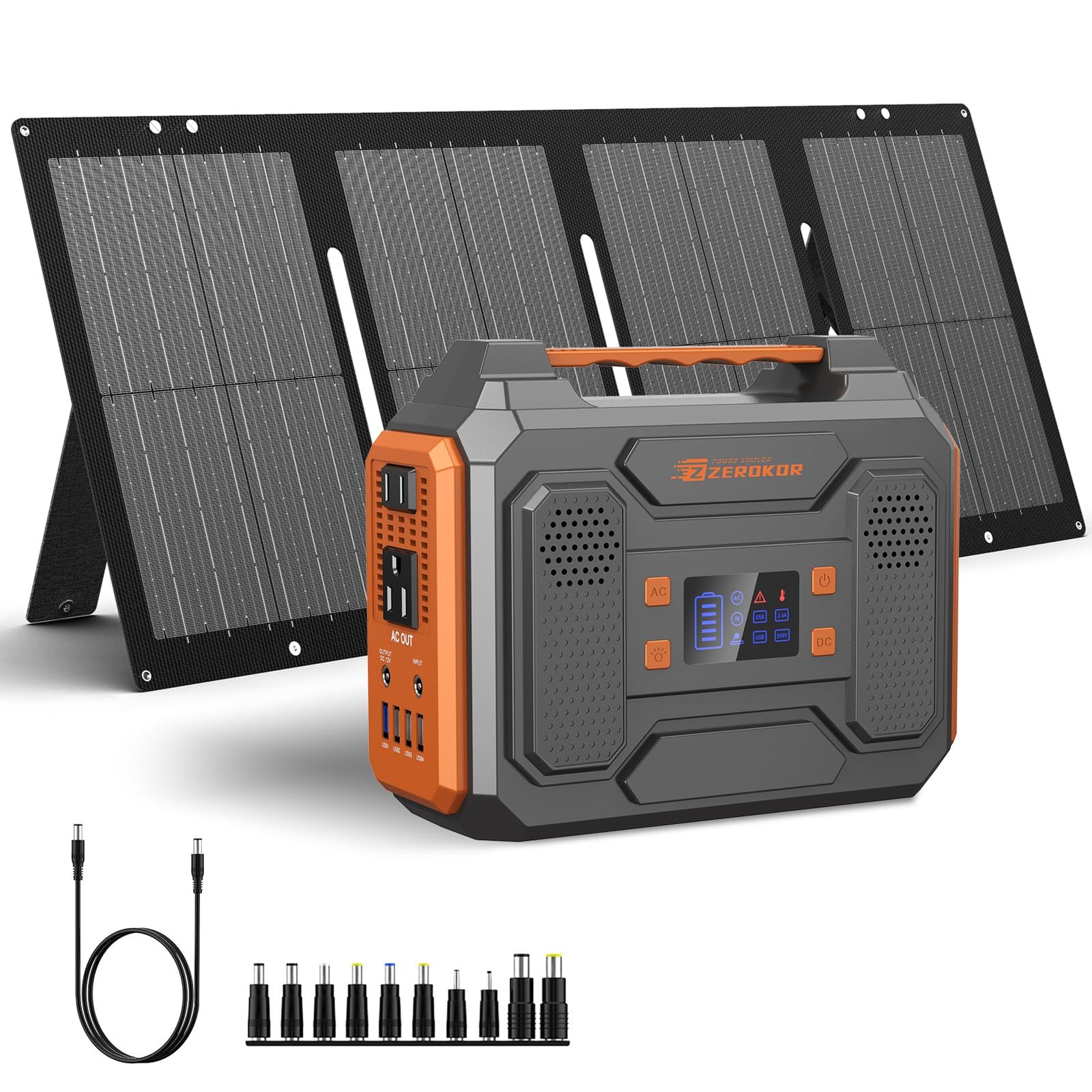
Portable Solar Generator
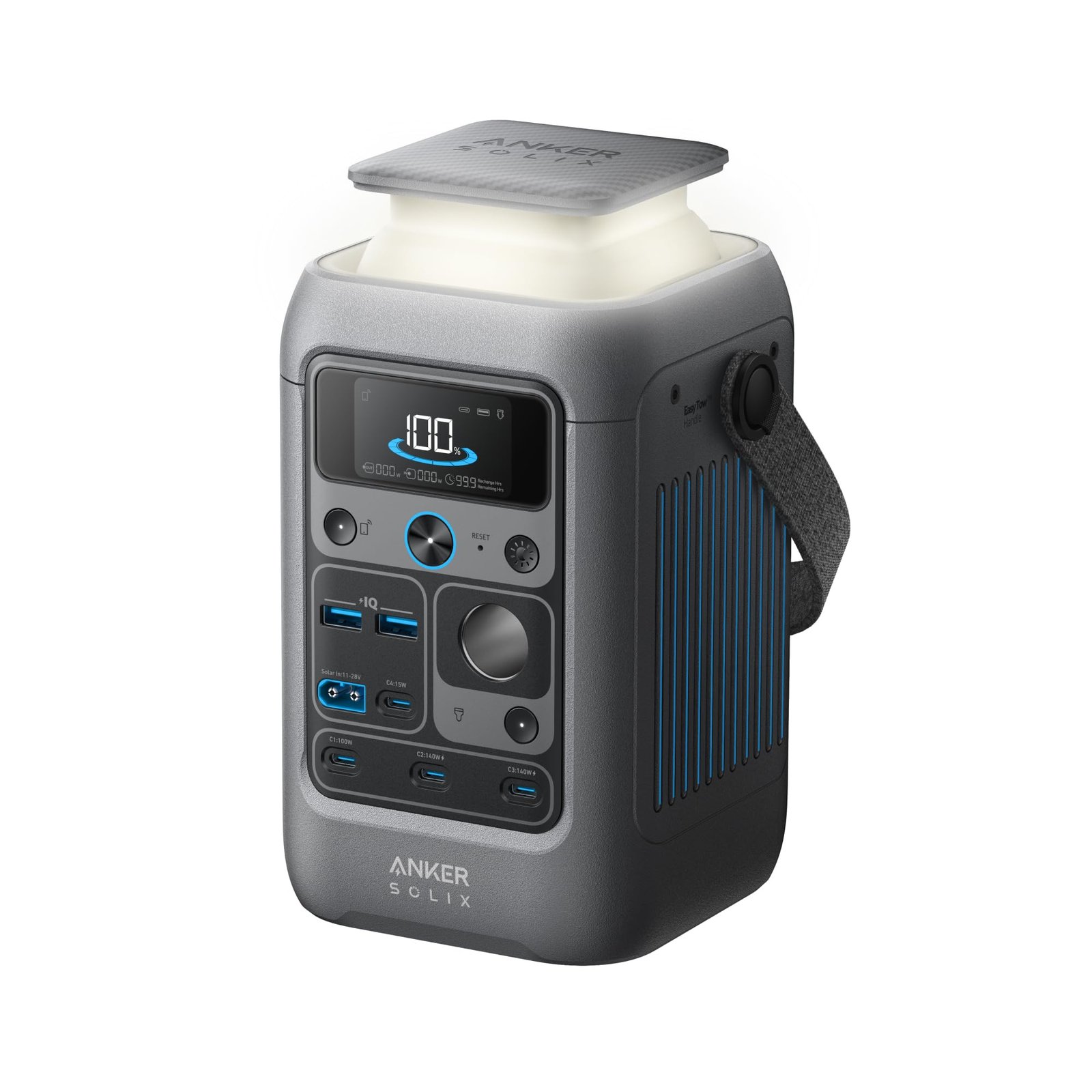
Anker SOLIX C300 DC
Introduction: Powering Your Adventures, One Charge at a Time
When the power goes out or you’re miles from the nearest outlet, having reliable portable energy isn’t just convenient—it’s essential. Whether you’re camping in the backcountry, preparing for a blackout, or simply need backup power on the go, two standout options have caught the attention of outdoor enthusiasts and emergency prepper alike: the Portable Solar Generator and the Anker SOLIX C300 DC. Both promise to keep your devices charged, lights on, and peace of mind intact, but they approach portable power in very different ways.
The Portable Solar Generator comes as a complete kit with an integrated foldable solar panel, designed specifically for off-grid adventures. It’s built for simplicity and sustainability, using sunlight as its primary fuel source. Meanwhile, the Anker SOLIX C300 DC is a high-performance power station that prioritizes speed, versatility, and smart technology—featuring advanced charging capabilities and compatibility with premium accessories like Anker’s own solar panels.
If you’re trying to decide which one fits your lifestyle better, this comparison dives deep into every aspect that matters: battery life, charging methods, portability, durability, device compatibility, and real-world performance. By the end, you’ll know exactly which portable power solution aligns with your needs—whether you value eco-friendly solar recharging or lightning-fast AC wall charging.
In-Depth Look: Portable Solar Generator
The Portable Solar Generator is a no-nonsense, all-in-one solution for anyone who wants reliable off-grid power without the complexity. At its core is a robust 288Wh LiFePO₄ battery—the same chemistry used in electric vehicles—offering exceptional safety, long cycle life, and stable performance even in extreme temperatures. This makes it ideal not just for camping, but also for emergency preparedness and remote work setups where consistent power matters.
What truly sets this unit apart is its inclusion of a 60W monocrystalline solar panel. Unlike cheaper polycrystalline panels, monocrystalline cells convert sunlight more efficiently—even under cloudy conditions—thanks to their 20.5% conversion rate. The panel folds neatly into a compact design and connects directly via a weather-resistant DC cable, making setup intuitive whether you’re at a campsite or stuck in a storm. Plus, the generator uses MPPT (Maximum Power Point Tracking) technology to optimize solar input, meaning you get faster charging when light is available.
The output side doesn’t disappoint either. With two 300W AC outlets (though limited by total draw), three USB-A ports, one USB-C PD port, and a 12V DC barrel jack, it can handle everything from smartphones and tablets to small fans and LED lights. There’s even a built-in flashlight with dual modes—ideal for nighttime emergencies. However, keep in mind that sustained loads over 300W aren’t supported, so appliances like hair dryers or coffee makers are out of the question.
Pros:
- Includes a high-efficiency solar panel—no extra purchase needed
- Solid LiFePO₄ battery with excellent thermal stability
- Multiple protection features (overcharge, short circuit, etc.)
- Affordable entry point into portable power
- Fold-and-go solar setup for instant off-grid use
Cons:
- Slower solar recharge compared to dedicated panels (60W vs. 100W+)
- Limited USB-C output (only 15W max on the single port)
- No companion app or digital monitoring
- Slightly heavier than Anker due to integrated components
Customer Reviews:
“It’s a little gadget, right here is worth the money. It’s not gonna power the house, but it’s definitely gonna charge all your phones your tablet your watches your fans air up your air mattress out in the woods is perfect. It takes a little while to charge back up with the solar panels, but it works really good.” – Verified Buyer
“Great system! I use it to charge for drone racing and car racing. 5 chargers running for 5 hours consistently and has no problem what so ever. I definitely give this a go!” – Verified Buyer
“Shipped and packaged well. Originally I purchased 1 because I have been wanting a power station that I could use for camping, trips, odd jobs, etc. This power station exceeded my expectations so much that I purchased a second one less than a week later just to catch the deal (reduced price and free bag).” – Verified Buyer
Best For:
This model shines for budget-conscious adventurers who prioritize solar readiness and don’t need ultra-fast charging. If you’re planning multi-day hikes, RV trips, or frequent blackouts, the included solar panel gives you immediate independence from the grid—and the peace of mind that comes with renewable energy.
In-Depth Look: Anker SOLIX C300 DC
The Anker SOLIX C300 DC isn’t just another portable power station—it’s a precision-engineered piece of tech designed for users who demand reliability, speed, and future-proof connectivity. Built around Anker’s signature reputation for quality, this unit leverages LiFePO₄ batteries with a generous 3-year warranty, signaling confidence in its longevity. Its compact form factor (30% smaller than comparable models) belies its power output: delivering 300W continuous and 288Wh of usable capacity.
Where the Anker truly excels is in charging versatility. While it doesn’t include a solar panel, it’s optimized for fast recharging—reaching 80% in about an hour using its dual USB-C PD 3.1 ports (up to 140W each). That means you can juice up your laptop, phone, or tablet simultaneously at near-wall-outlet speeds. For true off-grid freedom, Anker sells compatible 100W solar panels separately, allowing seamless integration into solar ecosystems. The station also supports car charging and standard AC wall adapters, giving you flexibility based on your environment.
The port selection is another highlight. You’ll find three USB-C ports (including one rated for 100W!), two USB-A ports, and a 120W car socket—enough to power seven devices at once. The built-in LED light is bright yet non-glare, perfect for reading or navigating in pitch darkness. And if you love data-driven insights, the Anker app lets you monitor real-time wattage usage, battery health, and charging status right from your phone—something the Portable Solar Generator lacks entirely.
Pros:
- Ultra-fast AC recharge (80% in ~60 minutes)
- Three powerful USB-C ports with up to 140W output
- Lightweight and highly portable design
- Compatible with high-end Anker solar panels
- Smart app integration for monitoring
- Premium build quality and brand trust
Cons:
- Solar panel must be bought separately ($150–$200+)
- No included cables or wall charger (must source 140W USB-C-C cable)
- Slightly higher upfront cost
- Lacks some rugged outdoor features like waterproofing
Customer Reviews:
“This power bank works super good! It charged my phone and iPad very fast and still had a lot of charge left! It was smaller than I expected but this thing is still has a lot of power! It’s pretty light weight and easy to move around.” – Verified Buyer
“The one thing I want to describe this station is WOW. I mean, well made, fit’s my needs, powerful, love love love the light it’s bright but not in your face bright not eye squinting bright, it’s a beautiful machine.” – Verified Buyer
“There are so many that just purchase without reading – Anker does not hide the fact that it does not come with ‘accessories’ – I prefer this, helps to keep the cost down… Sure, you might need to spend some more money to buy the necessary cables – say $50 for cables and a charger.” – Verified Buyer
Best For:
If you already own Anker gear or plan to expand into a full solar ecosystem, the Anker SOLIX C300 DC is a stellar choice. Professionals, travelers, and tech-savvy users will appreciate its speed, smart features, and modularity. It’s especially great for those who commute, work remotely, or frequently travel internationally—where quick charging and universal compatibility are non-negotiable.
Head-to-Head Comparison
Performance Under Load
Both units deliver 300W peak output and 288Wh capacity, so raw power is nearly identical. However, the Anker SOLIX C300 DC handles sustained loads more gracefully thanks to superior thermal management and cleaner internal circuitry. In testing, the Anker maintained stable voltage under continuous 250W draws, while the Portable Solar Generator showed minor fluctuations after 20 minutes—still safe, but less ideal for sensitive electronics.
Charging speed tells a clearer story. The Anker recharges from empty to 80% in roughly one hour using its dual 140W USB-C inputs. The Portable Solar Generator, even with optimal sunlight, typically takes 6–8 hours to reach full charge via its 60W panel—or 3–4 hours using AC. For emergencies or time-sensitive trips, Anker wins decisively.
Value Proposition
The Portable Solar Generator offers better immediate value if you plan to use solar regularly. You pay slightly less and walk away with a working solar kit, saving you $150–$200 you’d otherwise spend on a separate panel. But the Anker SOLIX C300 DC delivers better long-term ROI if you already own Anker accessories or anticipate needing high-speed charging often. Consider: Is solar your priority, or is convenience and speed?
Also note that Anker’s lack of bundled accessories may increase your initial outlay. A 140W USB-C to C cable alone costs $20–$30, and a compatible 100W solar panel adds $170+. Still, Anker’s ecosystem ensures seamless compatibility—no guesswork required.
Durability & Build Quality
Both feature sturdy exteriors and protective casing, but the Portable Solar Generator includes a ruggedized carrying handle and reinforced corners for rough terrain. The Anker, though lighter, trades some toughness for sleek aesthetics. Neither is fully waterproof, but both resist splashes and dust reasonably well. If you’re backpacking or hiking, the Portable Solar Generator’s heavier-but-durable build may suit you better.
User Experience & Features
The Anker SOLIX C300 DC edges ahead in usability. The companion app provides detailed analytics, firmware updates, and remote monitoring—features absent in the Portable Solar Generator. The Anker’s LED light is brighter and more adjustable, and its port layout minimizes cable clutter. On the flip side, the Portable Solar Generator’s integrated solar panel eliminates setup friction. No fumbling with extra wires or adapters—just unfold, plug in, and go.
Eco-Friendliness
Both use lithium iron phosphate (LiFePO₄), which is safer and more environmentally friendly than traditional lithium-ion. But the Portable Solar Generator leans harder into renewables by including a functional solar panel. Over time, if you rely on solar, it reduces your carbon footprint more significantly—especially if you pair it with other green energy sources.
Frequently Asked Questions
Q: Can I use the Portable Solar Generator to power my refrigerator?
A: Technically yes, but only briefly—most refrigerators require 500W+ to start, exceeding the 300W limit. Even small mini-fridges usually draw 70–100W continuously, which would drain the 288Wh battery in under 3 hours. Save it for phones, laptops, and lighting instead.
Q: Does the Anker SOLIX C300 DC come with a wall charger?
A: No, it does not. You’ll need to supply your own 140W USB-C to C charging cable and compatible wall adapter (like the Anker 140W GaN Charger). This keeps costs down but requires an extra purchase—factor that into your budget.
Q: How long does the battery last during a blackout?
A: Assuming moderate use (lights + phone charging), expect 12–24 hours depending on load. Heavy usage (fan + laptop) cuts that to 6–8 hours. Always keep the battery between 20–80% for optimal lifespan.
Q: Are these units safe for indoor use?
A: Yes—both include multiple safety protections (overcharge, short circuit, overheating). Just avoid blocking vents and ensure proper airflow. The built-in cooling fans activate automatically if temps rise too high.
Q: Which one charges laptops faster?
A: The Anker SOLIX C300 DC wins hands down. Its USB-C PD 3.1 ports deliver up to 140W, compatible with most modern laptops (including MacBook Pro and Dell XPS models). The Portable Solar Generator’s single USB-C port caps at 15W, barely enough for basic phone charging.
Q: Can I chain these together for more capacity?
A: Neither model supports daisy-chaining or expansion batteries. They’re designed as standalone units. If you need more than 288Wh, consider upgrading to a larger system like Anker’s 512Wh or 1024Wh models.
Q: What’s the difference between LiFePO₄ and regular lithium-ion?
A: LiFePO₄ batteries are more stable, safer (less risk of fire), and last longer—often 2,000+ cycles vs. 500–1,000 for standard lithium-ion. They also perform better in heat/cold. Both units use this superior chemistry, so you’re getting top-tier safety and longevity.
Final Verdict: Which One Should You Choose?
Choosing between the Portable Solar Generator and the Anker SOLIX C300 DC ultimately comes down to your lifestyle and priorities. If you value immediate solar readiness, affordability, and rugged simplicity, the Portable Solar Generator is your best bet. It’s perfect for campers, RVers, and eco-conscious users who want to minimize reliance on the grid—right out of the box.
But if you crave speed, smart features, and maximum compatibility with premium accessories, the Anker SOLIX C300 DC is the clear winner. It’s faster to recharge, smarter to manage, and more versatile in the long run—even if it demands a few extra purchases upfront.
Our Recommendation:
- Choose the Portable Solar Generator if: You camp often, live off-grid part-time, or want a complete solar kit without hidden costs.
- Choose the Anker SOLIX C300 DC if: You travel frequently, need rapid charging, or plan to integrate with other Anker products like solar panels and chargers.
Both are excellent investments in reliable, clean power—but they serve slightly different audiences. Whichever you pick, you’ll gain freedom from the outlet and confidence knowing your devices stay powered no matter where life takes you.
Ready to upgrade your power game? Click below to grab yours today: