
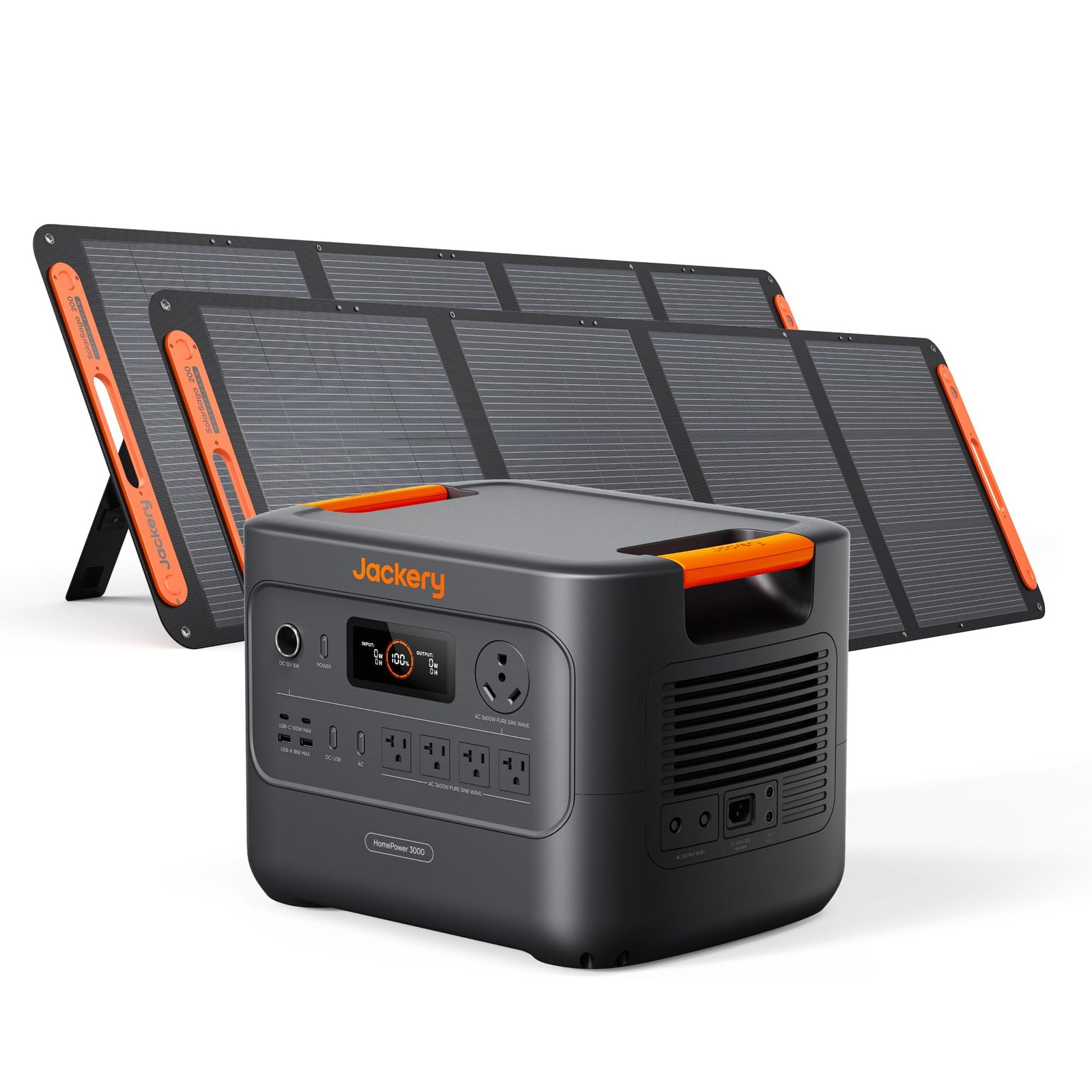
Jackery HomePower 3000 Portable
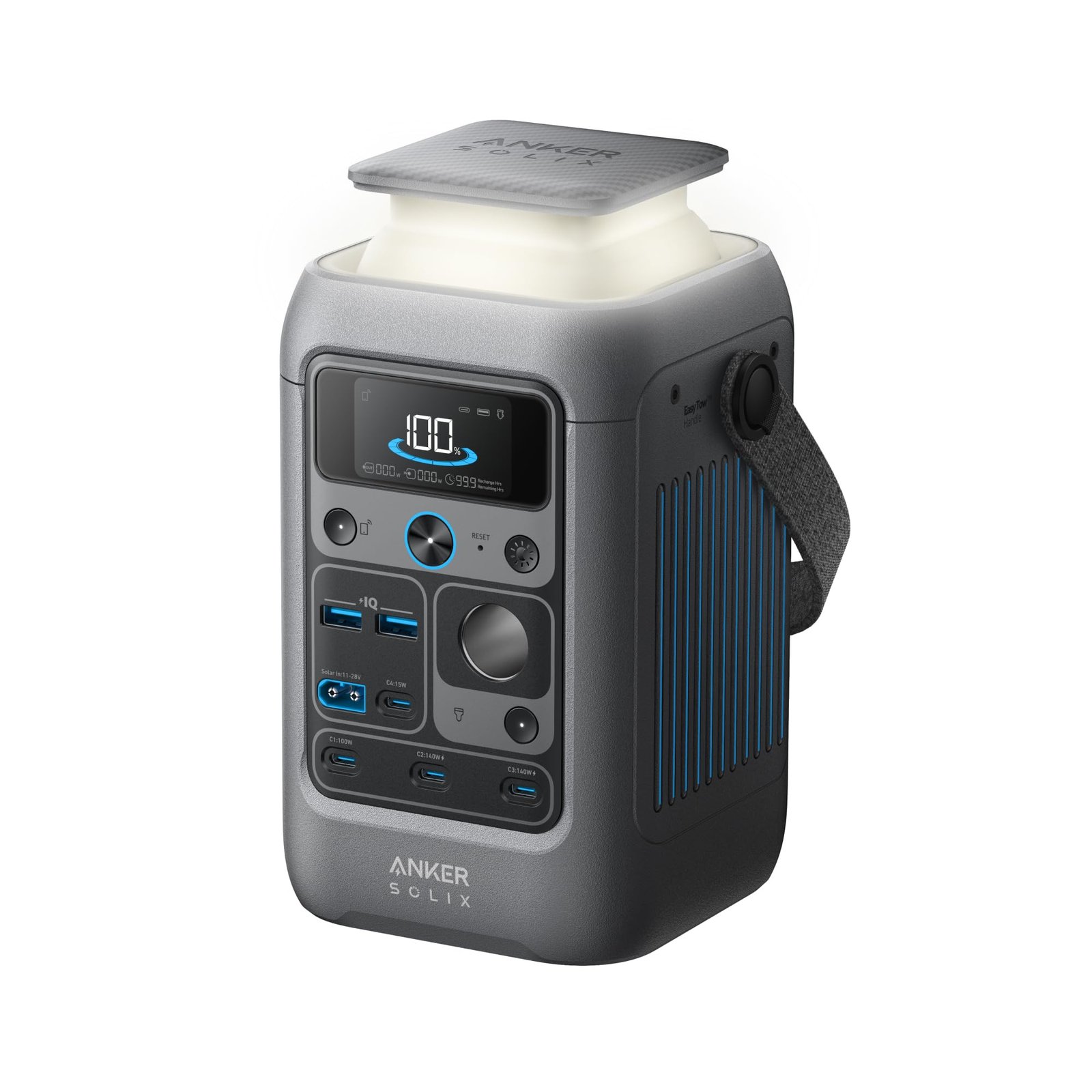
Anker SOLIX C300 DC
When unexpected power outages strike—whether from storms, grid failures, or simply needing off-grid freedom—having reliable backup energy is no longer a luxury, it’s a necessity. That’s why portable power stations like the Jackery HomePower 3000 Portable and the Anker SOLIX C300 DC have surged in popularity. Both promise to keep your devices running, your fridge cool, and your home essentials powered when the lights go out. But are they truly comparable? Can one handle serious home backup while the other excels at on-the-go charging?
In this deep dive, we’ll compare these two top-tier portable power stations side by side—looking at capacity, portability, charging options, real-world performance, and who each unit is best suited for. Whether you’re preparing for emergencies, powering outdoor adventures, or just want peace of mind during brownouts, understanding the strengths and limitations of each will help you make an informed decision.
Let’s explore how the massive Jackery HomePower 3000 Portable stacks up against the compact yet powerful Anker SOLIX C300 DC, and which one deserves a spot in your emergency kit or camping setup.
In-Depth Look: Jackery HomePower 3000 Portable
[Jackery HomePower 3000 Portable] is a game-changer in the world of home backup power. With a massive 3,072Wh capacity and an impressive 3,600W output (with 7,200W surge), it’s built to handle more than just phone charging. This isn’t your average battery pack—it’s designed to run entire households during outages. Imagine keeping your refrigerator running for up to two days, your WiFi router alive, security cameras powered, and even lighting and fans working without interruption.
One of its standout features is the ultra-fast ≤20ms UPS (Uninterruptible Power Supply) mode. That means if the grid goes down, your sensitive electronics—like medical equipment, computers, or streaming devices—won’t even flicker. It switches seamlessly within 20 milliseconds, far faster than most people can notice. For those living in hurricane-prone areas or dealing with frequent brownouts, that reliability is priceless.
The Jackery HomePower 3000 Portable also shines in versatility. It comes equipped with multiple ports: dual 100W USB-C PD ports for fast-charging laptops and tablets, several USB-A ports, a DC output, and even a built-in TT-30 RV connector. This makes it ideal not only for homes but also for RVs and remote work setups. Plus, with hybrid charging capabilities, you can recharge it via AC, DC, solar panels (when paired with SolarSaga units), or even a gas generator—giving you flexibility in any situation.
Charging speed is another strong point. Fully recharging from empty takes just 1.7 hours using both AC and DC inputs simultaneously. When using solar alone (with two 200W panels), it reaches 80% in about 9 hours. While not as fast as some competitors, it’s still highly efficient for off-grid use.
Powered by durable LiFePO₄ batteries, this unit promises longevity—up to 4,000 charge cycles while retaining 70% capacity. That’s decades of use under normal conditions. Jackery backs this with advanced ChargeShield 2.0 technology, which uses AI algorithms to optimize charging speed and protect the battery from overheating or degradation.
Despite its hefty capacity, the Jackery HomePower 3000 Portable is surprisingly compact. Thanks to innovative Cell-to-Battery (CTB) technology, it’s 47% smaller and 43% lighter than similar 3kWh models. Its honeycomb-structured shell adds strength without adding bulk, and the integrated inverter enhances safety and portability.
Now, let’s be honest—there are downsides. At 35.3 pounds, it’s not exactly pocket-sized, and you’ll need wheels and a telescoping handle to move it easily. Also, while the included accessories are functional, you may need to purchase additional cables or solar panels separately unless you opt for the bundled version.
But overall, the Jackery HomePower 3000 Portable delivers on its promise: robust, reliable, and ready for serious home backup needs.
Pros:
- Massive 3,072Wh capacity – runs refrigerators and appliances for days
- Ultra-fast UPS mode – seamless transition during outages
- Durable LiFePO₄ battery with 4,000+ cycle lifespan
- Multiple charging options – AC, DC, solar, gas generator
- Compact for size – uses space-efficient CTB tech
Cons:
- Heavy at 35.3 lbs – requires cart or careful lifting
- Solar charging slower than AC-only methods
- Accessories often sold separately
Customer Reviews:
“I have this 3000, 1000 explorer, and 240 explorer. What I like about this HomePower 3000: the Jackery brand name, the competitive pricing which tell me that their marketing dept is in the business to capture the majority of the market share so they’re in for the long run, the lovely look of it. Alright, let’s get to the real things: I’ve owned other power stations, but Jackery beats the daylight out of them. The reliability is unbelievable. It has many protections built in. You could do nothing…”
“Very impressive machine. Extremely well made. I charged it using the wall socket in less than three hours. Discharged it using a refrigerator, toaster and electric heater. Recharged it with a 2000 watt gas generator. I had also purchased a Jackery 12 volt charger and a double line splitter and a thirty foot extension for the 2 200 watt solar panels. The recharge times weren’t as fast but they were acceptable. Purchased for elk hunting in the Goat Rocks wilderness.”
Best For: Homeowners in disaster-prone areas, RVers needing reliable backup power, remote workers, or anyone who wants to keep essential appliances running during extended outages. If you need serious power for real-world applications—not just phones—this unit stands out.
In-Depth Look: Anker SOLIX C300 DC
[Anker SOLIX C300 DC] takes a different approach. Instead of aiming to power your whole house, it focuses on maximum portability and fast charging for personal devices and small electronics. Weighing only 7.7 pounds and measuring just 8.5 x 6.1 x 3.9 inches, it slips easily into a backpack or carry-on luggage—perfect for travelers, campers, or digital nomads.
With 288Wh of capacity and 300W peak output, it won’t run your refrigerator—but it will charge your laptop twice, power a mini-fridge for several hours, or keep your camera, drone, and phone juiced throughout a weekend trip. What it lacks in raw power, it makes up for in speed and smart design.
One of its biggest advantages is blazing-fast recharge time: thanks to dual PD 3.1 USB-C ports, you can reach 80% charge in just one hour using the included 140W cable and a compatible wall charger. That’s incredibly quick compared to most competitors, especially given its compact size.
The Anker SOLIX C300 DC is built around LiFePO₄ chemistry, which offers better thermal stability, longer lifespan, and improved safety over traditional lithium-ion. Anker backs this with a generous 3-year warranty, reflecting confidence in durability.
It includes seven total ports: three USB-C (including high-speed 140W and 100W options), two USB-A (12W each), and a 120W car outlet. This gives you plenty of flexibility for phones, tablets, laptops, smartwatches, lights, and even small tools. However, there are no AC outlets, so you can’t plug in standard household appliances directly. You’ll need adapters or converters for larger devices.
For outdoor enthusiasts, Anker recommends pairing it with their 60W or 100W solar panels (sold separately) for sustainable off-grid charging. Just note: it’s incompatible with older Anker panels like the PS30 or PS200 series.
Another neat feature is the optional mobile app integration, allowing you to monitor real-time power usage, input/output rates, and battery health. It’s a small touch, but useful for tech-savvy users who want data-driven insights.
On the downside, the lack of AC outlets limits its usefulness for non-digital appliances. Also, while lightweight, it doesn’t come with carrying handles or straps—you’ll need to buy those separately if you plan to travel frequently. And as with many Anker products, cables and chargers aren’t always included**, so factor in extra costs if you don’t already own compatible gear.
Still, for what it’s designed to do—keep your gadgets powered anywhere—the Anker SOLIX C300 DC excels.
Pros:
- Ultra-lightweight at 7.7 lbs – easy to carry anywhere
- Blazing-fast recharge – 80% in just one hour
- Seven versatile ports – supports laptops, phones, drones, etc.
- LiFePO₄ battery with 3-year warranty
- App monitoring – track usage and performance
Cons:
- No AC outlets – limited to USB-powered devices
- Lacks built-in handles or strap attachment points
- Requires separate cables/chargers for full functionality
- Lower total capacity (288Wh) vs. home backup units
Customer Reviews:
“This power bank works super good! It charged my phone and iPad very fast and still had a lot of charge left! It was smaller than I expected but this thing is still has a lot of power! It’s pretty light weight and easy to move around. Very easy to use just turn it on and plug in your devices and it starts charging. There is an app to download when you can track the wattage going in and out of the device which is pretty cool. Overall though I would definitely recommend this product it is really wo…”
“The one thing I want to describe this station is WOW. I mean, well made, fit’s my needs, powerful, love love love the light it’s bright but not in your face bright not eye squinting bright, it’s a beautiful machine. I can’t wait to take it with me overseas, I didn’t need the prong plugs just usb a and usb c. Most of my devices including all my rechargeables are usb a and usb c. like fans, smaller power banks, phones, flashlights, ipads, apple watch, small lights, tiny puck lights and so much…”
Best For: Frequent travelers, campers, van lifers, outdoor adventurers, students, or anyone who primarily needs to keep smartphones, tablets, laptops, and small electronics charged without relying on wall outlets. Ideal for situations where weight and portability outweigh raw power needs.
Head-to-Head Comparison
Performance & Power Delivery
When it comes to sheer power, the Jackery HomePower 3000 Portable dominates. With nearly 3,100Wh of usable energy and pure sine wave AC output, it can run full-sized appliances like refrigerators, microwaves (briefly), space heaters, and entertainment systems. Its 7,200W surge capability means it can kick-start motors without hiccups.
In contrast, the Anker SOLIX C300 DC maxes out at 300W—enough for laptops, phones, and small LED lights, but nowhere near sufficient for major household loads. It’s optimized for direct DC charging, making it perfect for modern USB-C laptops and accessories, but useless for anything requiring traditional AC power.
If you’re powering medical equipment, running a CPAP machine overnight, or keeping your freezer from thawing, go with Jackery. If you just need juice for your tablet and camera on a hike, Anker wins hands down.
Portability & Design
This is where Anker clearly leads. At under 8 pounds, the SOLIX C300 DC fits snugly in a backpack. Jackery’s unit, while compact for its class, weighs over four times as much—35.3 lbs—and requires wheels and a sturdy cart for mobility. That said, Jackery includes a robust handle and large rear wheels, making indoor movement manageable. But if you’re hiking or traveling light, Anker is the obvious choice.
Charging Speed & Flexibility
Both support solar and AC charging, but their speeds differ drastically:
– Jackery: 1.7–2.2 hours via AC/DC hybrid; ~9 hours to 80% with solar.
– Anker: 1 hour to 80% with AC; solar charging slower but still viable.
Anker’s ultra-fast recharge makes it ideal for last-minute trips where you need quick top-ups. Jackery prioritizes endurance over speed—better for long-term backup scenarios.
Durability & Longevity
Both use LiFePO₄ batteries, known for superior cycle life and safety. Jackery claims 4,000 cycles at 70% retention, while Anker offers a 3-year warranty (roughly equivalent to 1,500–2,000 cycles). In practice, both should last 8–10 years with moderate use. However, Jackery’s larger battery likely sees less daily wear-and-tear per cycle, potentially extending real-world lifespan.
Value for Money
Price isn’t listed, but based on market trends:
– The Jackery HomePower 3000 Portable typically costs $2,500–$3,000 (depending on bundles).
– The Anker SOLIX C300 DC retails around $500–$600.
While Anker is significantly cheaper, consider what you’re buying: Jackery delivers home-critical backup power, whereas Anker delivers personal device mobility. If your priority is protecting your home during disasters, Jackery offers unmatched value. If you’re a light user needing occasional off-grid charging, Anker is far more cost-effective.
User Experience & Ease of Use
Jackery’s interface is simple—LED indicators and physical buttons suffice. Anker adds a mobile app for real-time monitoring, which many find helpful. However, the app requires Bluetooth pairing and may drain battery slightly. Neither has complex menus, so setup is straightforward for all skill levels.
Frequently Asked Questions
Q: Can the Anker SOLIX C300 DC power a refrigerator?
A: No, the Anker SOLIX C300 DC has a 288Wh capacity and 300W max output, which is insufficient for most refrigerators (typically 400–800W startup surge). It can briefly run a mini-fridge for short periods, but not reliably. For full-sized fridges, consider the Jackery HomePower 3000 Portable, which can keep one running for 1–2 days.
Q: Is solar charging necessary for either unit?
A: Solar is optional for both, but highly recommended for off-grid use. The Jackery HomePower 3000 Portable pairs well with SolarSaga panels for extended autonomy. The Anker SOLIX C300 DC works with Anker’s 60W or 100W solar panels (sold separately). Neither requires solar, but it greatly increases usability in remote locations.
Q: Which one is better for RVs?
A: Depends on your needs. If you’re boondocking and need to run air conditioners, microwaves, or washing machines, choose the Jackery HomePower 3000 Portable—it’s designed for heavy-duty RV use with AC outlets and high surge capacity. If you’re car camping and only need to charge phones and laptops, the Anker SOLIX C300 DC is lighter and more convenient.
Q: Do I need to buy extra cables for the Anker SOLIX C300 DC?
A: Yes. The package includes one 140W USB-C to C cable, but you may need additional cables for USB-A devices or alternative chargers. Check compatibility before purchasing. For the best experience, pair it with Anker’s GaNPrime chargers.
Q: How long does each battery last under typical use?
A: The Jackery HomePower 3000 Portable can power a standard fridge for 1–2 days or a home office setup (laptop, router, lights) for up to 15 hours. The Anker SOLIX C300 DC lasts about 6–8 hours on mixed usage (phone + laptop + lights). Exact runtime depends on device efficiency and ambient temperature.
Q: Are there any safety concerns with either model?
A: Both use industry-standard LiFePO₄ technology, which is safer than lithium-ion (less risk of fire/thermal runaway). Jackery includes UPS mode to protect sensitive electronics. Anker emphasizes impact resistance and temperature control. Always follow manufacturer guidelines for charging and storage.
Final Verdict: Which One Should You Choose?
After thoroughly comparing the Jackery HomePower 3000 Portable and the Anker SOLIX C300 DC, it’s clear they serve very different purposes—and excel in their respective niches.
Choose the Jackery HomePower 3000 Portable if:
– You live in an area prone to hurricanes, blizzards, or frequent blackouts
– You need to keep refrigerators, medical devices, or home offices running
– You own an RV and want reliable backup power for appliances
– You prioritize durability, long-term reliability, and maximum capacity
Choose the Anker SOLIX C300 DC if:
– You travel frequently and need to keep laptops, phones, and cameras charged
– You enjoy camping, hiking, or van life but don’t need AC power
– Weight and portability are top priorities
– You prefer ultra-fast recharging and smart app integration
There’s no “better” option overall—only the right one for your lifestyle. If you’re building an emergency preparedness kit or safeguarding your home against outages, Jackery is the heavyweight champion. If you’re chasing convenience and mobility, Anker delivers exceptional performance in a tiny package.
Ultimately, both brands represent the gold standard in portable power today. Your decision should hinge on whether you need home-critical resilience or on-the-go convenience.
Ready to make your pick? Don’t forget to check current pricing and bundle deals on Amazon: