
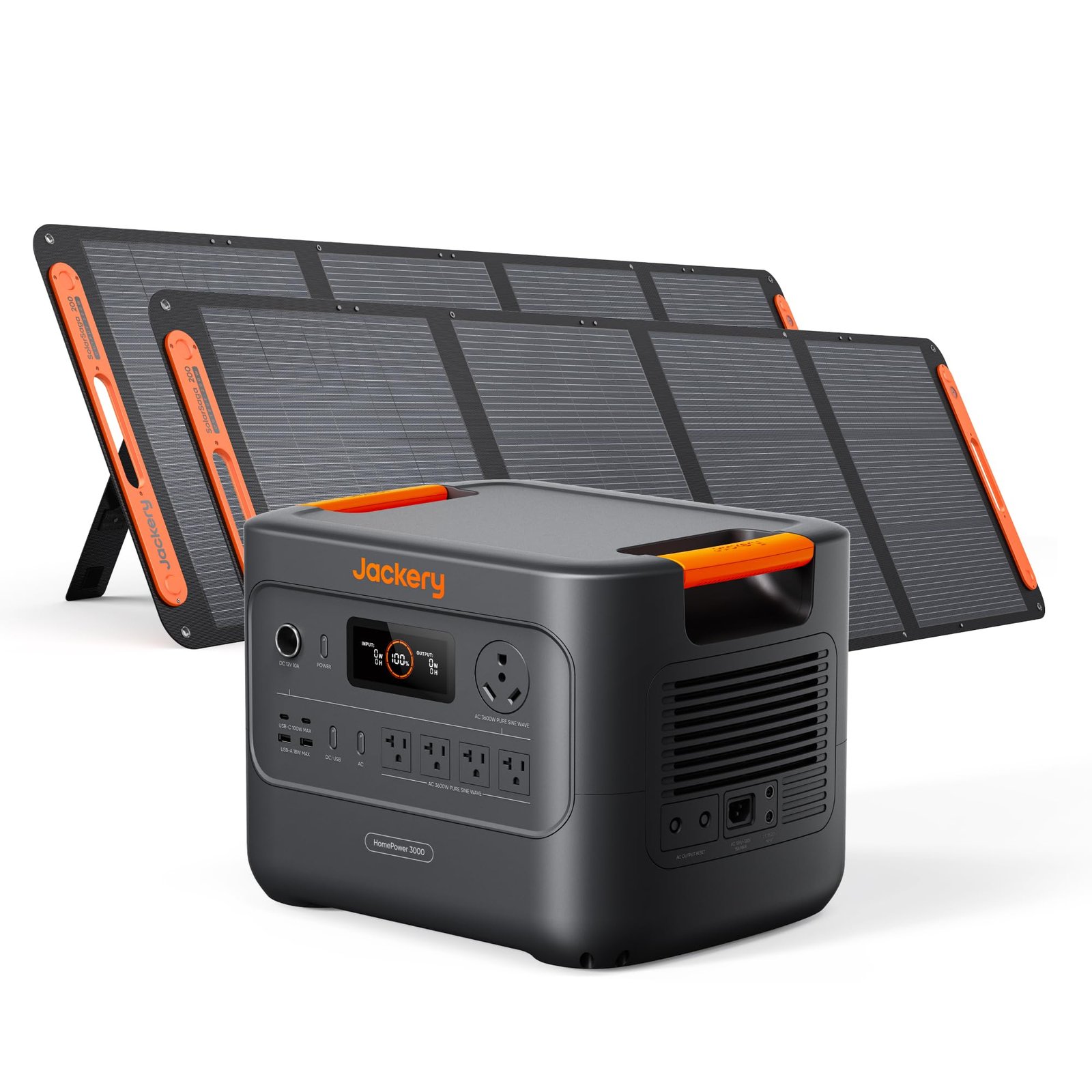
Jackery HomePower 3000 Portable
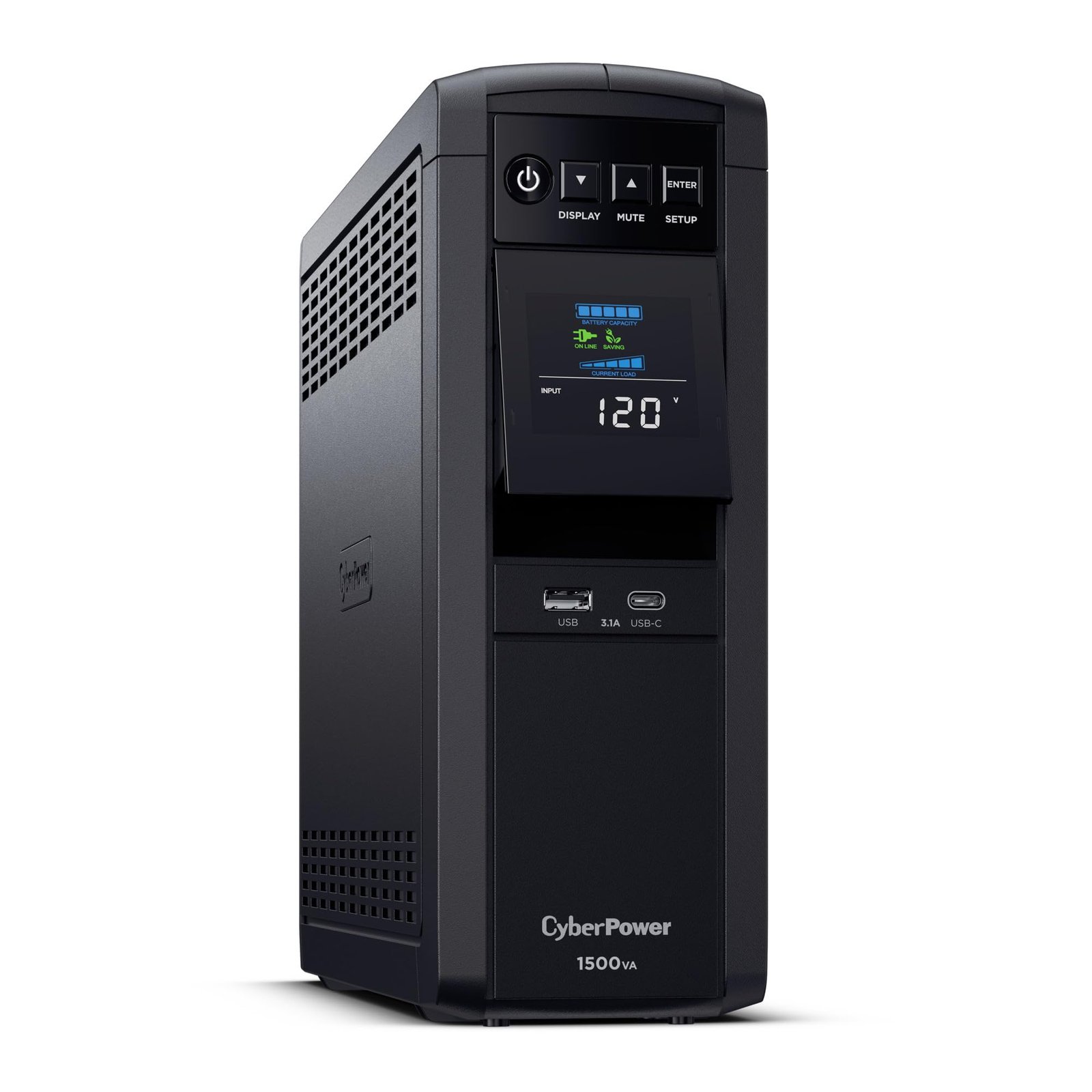
CyberPower CP1500PFCLCD PFC Sinewave
Introduction: Powering Your World in Any Emergency
In today’s unpredictable world, where hurricanes knock out the grid, wildfires force evacuations, or a simple brownout threatens your home office setup, having reliable backup power isn’t just convenient—it’s essential. That’s why so many of us are turning to portable power solutions. But when it comes to choosing the right one, you’re likely faced with two very different types of devices: massive, solar-ready power stations like the Jackery HomePower 3000 Portable and compact, line-interactive UPS units like the CyberPower CP1500PFCLCD PFC Sinewave.
This comparison dives deep into these two power giants, not just listing their specs, but exploring how they actually perform in real-world scenarios. We’ll examine what each excels at, where they fall short, and who they’re truly designed for. Whether you’re prepping for emergencies, running off-grid adventures, protecting sensitive electronics, or simply want peace of mind during storms, understanding the difference between a full-featured power station and a surge protector with battery backup can save you from making an expensive mistake.
By the end of this article, you’ll know exactly which device fits your lifestyle—whether you need hours of runtime for appliances or milliseconds of protection for your computer during a brief outage. Let’s get into it.
Quick Comparison Table
View CyberPower CP1500PFCLCD PFC Sinewave on Amazon →
In-Depth Look: Jackery HomePower 3000 Portable
The Jackery HomePower 3000 Portable isn’t just another power bank—it’s a mini-grid in a wheeled suitcase. With a massive 3072Wh capacity and 3600W output (with a 7200W surge), it’s built to handle serious loads. Think refrigerators, space heaters, Wi-Fi routers, security systems, and even small microwaves. It’s the kind of device that lets you keep your life running during multi-day outages without breaking a sweat.
One of its standout features is the ultra-fast recharge time. Fully charging via AC takes only 1.7 hours—faster than many competitors. When paired with solar panels, it reaches 80% charge in under 9 hours. The inclusion of dual 100W USB-C PD ports means you can juice up high-demand gadgets like laptops and drones quickly. Plus, the built-in TT-30 RV port makes it ideal for campers who want reliable shore power.
What really sets the Jackery apart is its reliability. Equipped with LiFePO4 batteries, it offers 4,000+ cycles while retaining 70% capacity—far exceeding traditional lithium-ion or lead-acid options. The ChargeShield 2.0 technology uses AI to optimize charging and extend lifespan, reducing wear over time. And let’s not forget the seamless UPS functionality: it switches to battery power in less than 20 milliseconds, meaning devices like medical fridges or security cameras won’t even blink during a brief brownout.
Design-wise, it’s surprisingly compact for its size. At just 47% smaller and 43% lighter than comparable models, it’s engineered with Jackery’s proprietary Cell-to-Battery (CTB) technology for maximum space efficiency. The honeycomb-style bottom adds durability, while the integrated inverter design improves safety. Maneuvering it around your home is easy thanks to the sturdy wheels and telescoping handle.
Pros:
- Massive capacity—keeps essentials running for days
- Fast recharge times—AC-only in under 2 hours
- Solar compatible—ideal for off-grid use
- High-quality LiFePO4 battery—longer lifespan and safer chemistry
- Seamless UPS switching—protects sensitive equipment
Cons:
- Higher price point—premium features come at a premium cost
- Larger footprint—not ideal for tight spaces or frequent transport
- Separate shipping—solar panels arrive separately, which may delay setup
Customer reviews highlight both reliability and versatility. One user praised its performance during hunting trips in remote wilderness, noting it powered everything from lights to communication gear. Another emphasized how well it handled heavy loads like refrigerators and heaters during storms. Many appreciate the brand trust associated with Jackery, especially compared to lesser-known brands.
Best for: Families seeking long-term backup power, outdoor enthusiasts needing reliable off-grid energy, or anyone wanting to integrate solar into their home emergency plan. If you need sustained power for appliances beyond a few minutes, this is your go-to.
In-Depth Look: CyberPower CP1500PFCLCD PFC Sinewave
If the Jackery is a powerhouse, the CyberPower CP1500PFCLCD PFC Sinewave is more like a smart guard dog for your electronics. This uninterruptible power supply (UPS) doesn’t aim to run your entire household—instead, it focuses on protecting critical devices during short-term outages or voltage fluctuations. With 1500VA/1000W capacity, it’s perfectly suited for computers, networking gear, and modern power supplies that use active PFC (Power Factor Correction).
What makes this model special is its PFC sinewave output. Unlike cheaper square-wave or simulated sine wave UPS units, this generates a true pure sine wave that matches standard utility power exactly. That means it works flawlessly with sensitive electronics like gaming rigs, audio equipment, and modern server systems without risking damage or performance issues. Most conventional sine wave UPSes can’t handle active PFC loads reliably—but CyberPower designed this specifically for them.
The unit features 12 total outlets: six battery-backed & surge-protected NEMA 5-15R receptacles, plus six additional surge-only outlets to reduce load on the battery section. Input is via a right-angle plug with a five-foot cord, making it great for tight spaces behind desks or entertainment centers. Two USB ports—one Type-A, one Type-C—allow you to charge phones and tablets directly from the UPS even when mains power returns.
Perhaps the most advanced feature is the color LCD panel. It tilts up to 22 degrees for better visibility and displays detailed real-time data: battery level, load percentage, runtime remaining, input voltage, frequency, and any faults. Early warnings help prevent downtime by letting you address issues before they escalate. Automatic Voltage Regulation (AVR) also corrects minor sags or surges without draining the battery, extending overall system life.
CyberPower backs this unit with a generous 3-year warranty that includes the battery—rare among competitors. Their $500,000 Connected Equipment Guarantee covers replacement costs if connected gear gets damaged by electrical events (subject to terms). Free PowerPanel software lets you monitor status remotely and configure alerts via email or SNMP.
Pros:
- True PFC sinewave output—safe for all modern power supplies
- Detailed monitoring—color LCD with tiltable screen
- AVR functionality—extends battery life by avoiding unnecessary drain
- Robust warranty—includes battery coverage and equipment guarantee
- Compact desktop design—fits anywhere
Cons:
- Limited runtime—only enough for brief outages (~10–15 mins at half load)
- No solar charging—relies solely on wall power
- Lead-acid battery—shorter cycle life vs. lithium options
- Not for high-wattage appliances—won’t run microwaves or fridges
While we didn’t find recent customer reviews for this specific model, CyberPower has strong reputation feedback across similar products. Users consistently praise the clean sine wave output and responsive LCD interface. Some note that the battery degrades faster if frequently used near full capacity, so it’s best reserved for true emergencies rather than routine testing.
Best for: Home offices, gaming setups, network servers, or any environment where protecting sensitive electronics from voltage spikes and brief outages is critical. If your priority is millisecond-level protection for computers and routers during short blackouts, this delivers exactly that.
Head-to-Head Comparison
Performance Under Load
The Jackery HomePower 3000 Portable clearly dominates here. Its 3600W continuous output allows it to run large appliances like refrigerators, fans, and even small window AC units—something the CyberPower CP1500PFCLCD PFC Sinewave cannot do. Even at half-load, the CyberPower lasts only about 10–15 minutes before shutting down, whereas the Jackery could theoretically keep a fridge running for 1–2 days depending on efficiency.
Runtime Duration
This is where the two devices serve completely different purposes. The Jackery is built for sustained operation. With 3072Wh capacity and typical inverter efficiency, it can provide several hours of power to multiple devices simultaneously. The CyberPower, however, is designed for short bursts. It buys you just enough time to save work, shut down safely, or wait for mains power to return.
Charging Options
The Jackery offers far greater flexibility. You can charge via AC outlet, DC car charger, gas generator, or solar panels. This makes it ideal for remote locations or extended outages. The CyberPower relies entirely on wall power—no alternative sources available. If your local grid goes down and you have no generator or sun, the CyberPower becomes useless once its battery drains.
Battery Technology
Jackery uses LiFePO4 (lithium iron phosphate), which is safer, more stable, and lasts significantly longer than the sealed lead-acid (SLA) battery inside the CyberPower. SLA batteries typically offer 300–500 cycles, while LiFePO4 delivers 2,000–4,000+. Additionally, LiFePO4 performs better in extreme temperatures and poses lower fire risk.
Portability & Size
The CyberPower wins on compactness—it’s a desktop unit weighing 25 pounds. The Jackery, while portable, weighs nearly double and requires wheels and a handle to move comfortably. If you’re constantly relocating or lack storage space, the CyberPower is far more practical.
Price-to-Value Ratio
The Jackery costs significantly more upfront, reflecting its higher capacity, advanced features, and build quality. However, when considering long-term usability and versatility, many users find it worth the investment. The CyberPower is much more affordable but serves a narrow niche—perfect for office protection, not home backup.
Ease of Use
Both are straightforward, but in different ways. The Jackery requires some setup (connecting solar panels, learning load management), while the CyberPower is plug-and-play. The CyberPower’s LCD provides excellent diagnostics, whereas the Jackery shows basic battery level and output status via LED indicators.
Safety & Reliability
Both brands have good safety records. The Jackery’s UL certification, integrated inverter, and advanced BMS (Battery Management System) make it exceptionally safe. The CyberPower meets UL standards too, but its reliance on older SLA tech and lack of thermal management in compact form slightly raises concerns during prolonged use.
Frequently Asked Questions
Q: Can I use the CyberPower CP1500PFCLCD PFC Sinewave to run my refrigerator?
A: No, not reliably. While it has 1000W continuous power, refrigerators often draw 700–1200W during startup (surge). Even if it powers on, runtime would be extremely short—likely under 30 minutes—making it impractical for appliance backup. The Jackery HomePower 3000 Portable, with its higher surge capacity and larger battery, is far better suited for refrigeration.
Q: Does the Jackery HomePower 3000 Portable come with solar panels included?
A: Not always. While some bundles include 2x SolarSaga 200W panels, many listings ship the power station separately. Always check the product description. If you need solar capability, factor in extra cost and shipping time for panels, which may arrive days or weeks later.
Q: How long does the CyberPower CP1500PFCLCD PFC Sinewave battery last?
A: In real-world use, expect 3–5 years with proper care. Avoid discharging below 50% regularly, store in cool, dry places, and replace the battery if runtime drops noticeably. Unlike lithium options, lead-acid degrades faster under shallow cycling or heat exposure.
Q: Is the Jackery HomePower 3000 Portable safe for indoor use?
A: Yes, absolutely. It has UL certification, passive cooling (no fan noise), and no harmful emissions. Just ensure adequate ventilation if running high loads continuously. Unlike generators, it produces zero CO₂ and operates silently—ideal for bedrooms, basements, or RVs.
Q: Can I connect both devices together for hybrid backup?
A: Technically possible, but not recommended. The CyberPower lacks recharging inputs, so you’d need to manually transfer power—risky and inefficient. Better to choose one solution based on your primary need: short-term protection (CyberPower) or long-term backup (Jackery).
Q: Which is quieter during operation?
A: Both are silent. The Jackery uses passive heat dissipation with no moving parts. The CyberPower has internal fans that engage only during high load or low battery, but remain whisper-quiet under normal conditions. Neither produces audible noise during steady-state operation.
Q: Do either support daisy-chaining or parallel operation?
A: The Jackery supports parallel connection with additional units (via optional cables), allowing you to expand capacity. The CyberPower CP1500PFCLCD PFC Sinewave does not support expansion—each unit is standalone.
Final Verdict: Which One Should You Choose?
After thoroughly comparing the Jackery HomePower 3000 Portable and the CyberPower CP1500PFCLCD PFC Sinewave, the choice ultimately depends on your primary use case.
If you’re looking for long-term home backup, off-grid adventures, or the ability to keep appliances running through multi-day outages, the Jackery HomePower 3000 Portable is the clear winner. Its massive capacity, solar compatibility, superior battery chemistry, and versatile ports make it a true lifeline during emergencies. Yes, it costs more, but when you consider how much it can actually do, the value becomes evident.
On the other hand, if your main concern is protecting sensitive electronics—like computers, routers, or audio equipment—from voltage fluctuations or brief blackouts lasting seconds to minutes, then the CyberPower CP1500PFCLCD PFC Sinewave is the smarter pick. Its pure sine wave output, detailed monitoring, and compact design make it perfect for home offices, server rooms, or entertainment centers where downtime equals lost productivity.
Don’t confuse protection with power. The CyberPower saves your devices; the Jackery keeps your home functional. They solve different problems, even though both relate to electricity.
For most households facing frequent or prolonged outages, investing in the Jackery HomePower 3000 Portable offers broader peace of mind. But for professionals or gamers who can’t afford even a moment of system interruption, the CyberPower remains unbeatable in its category.
Whichever you choose, remember: having backup power isn’t about having the most expensive gadget—it’s about being prepared when it matters most.