
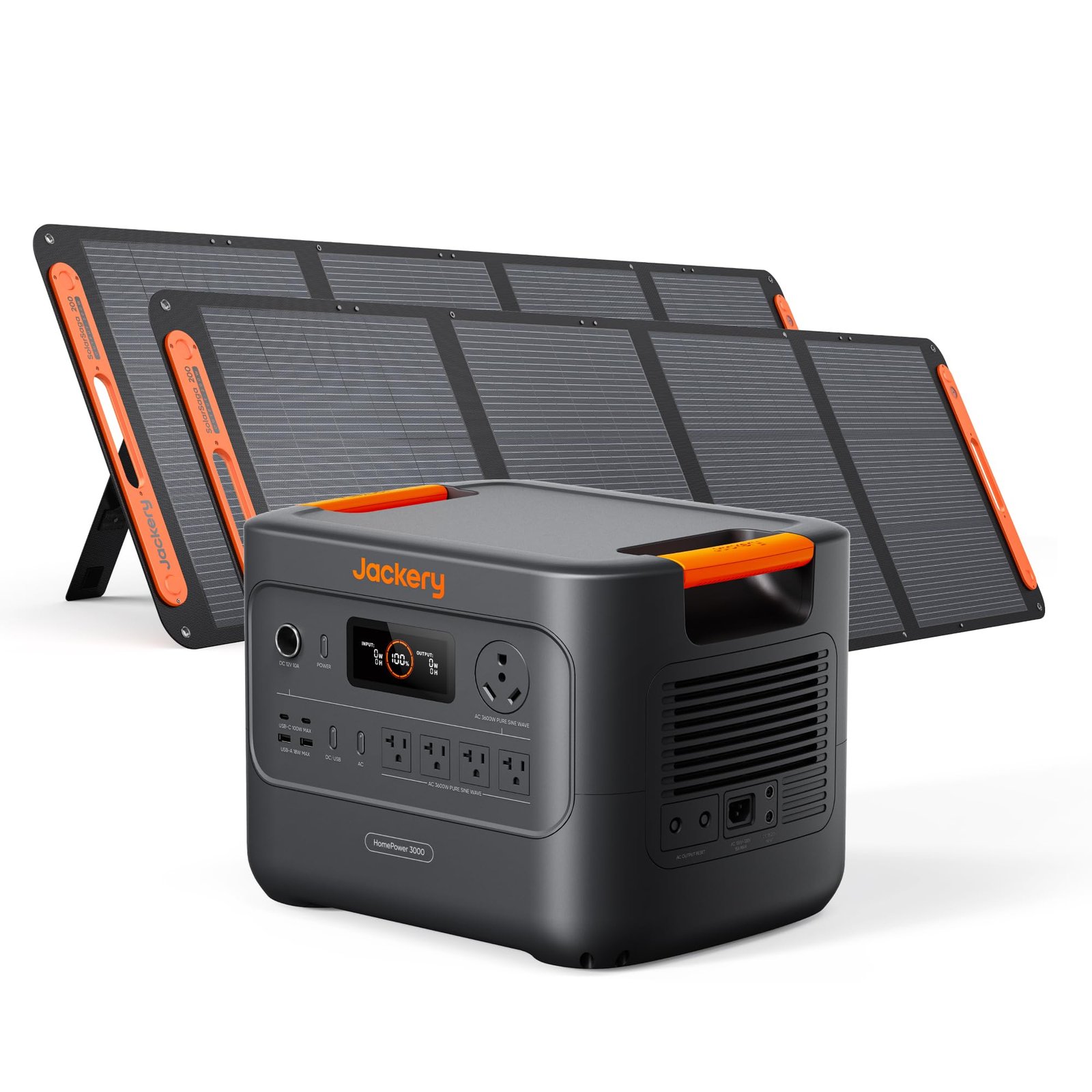
Jackery HomePower 3000 Portable
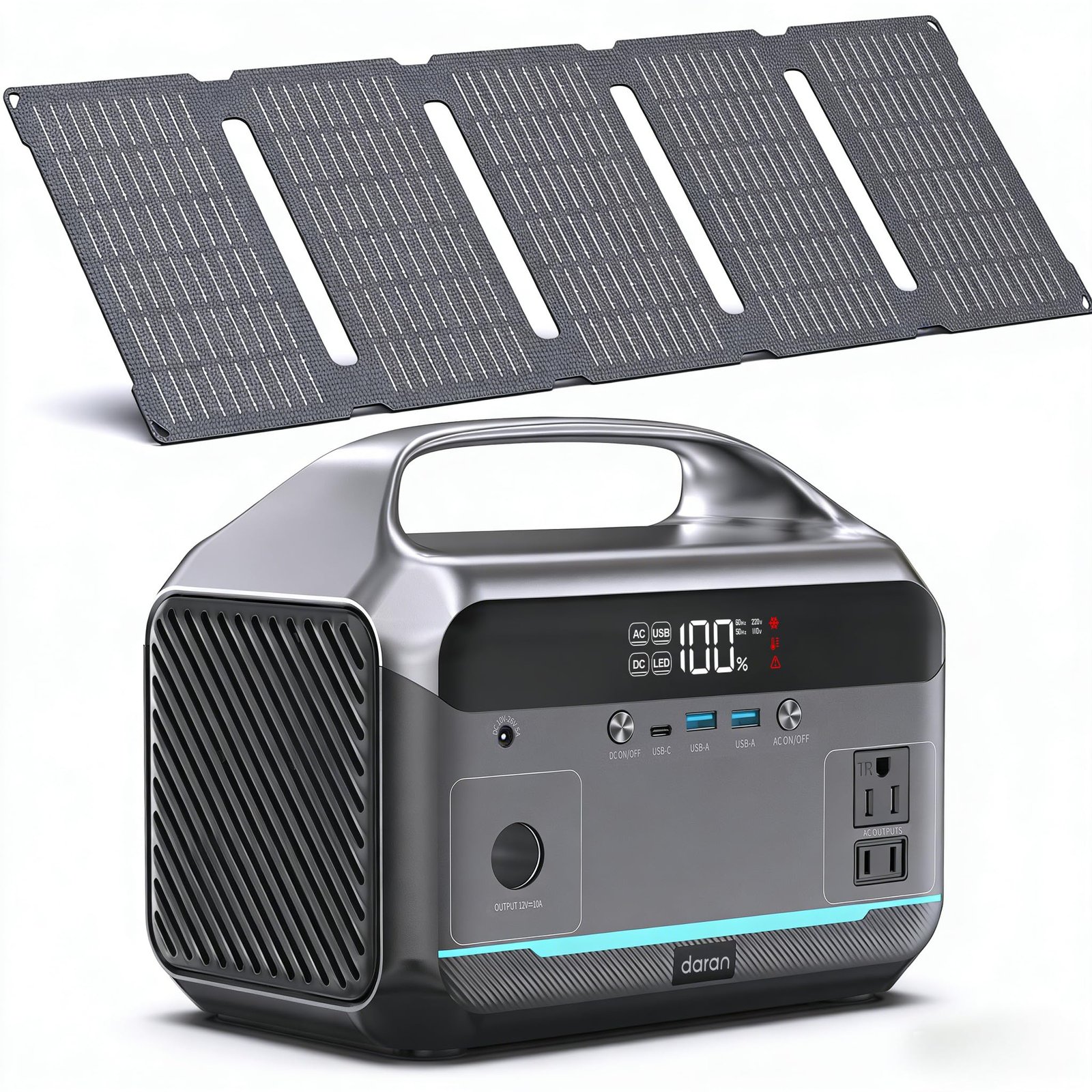
DARAN Portable Power Station
When the power goes out, you want something reliable—something that doesn’t just keep your phone alive but actually powers your life. That’s where portable power stations come in. Today, we’re diving deep into a showdown between two heavyweights: the Jackery HomePower 3000 Portable and the DARAN Portable Power Station. Both promise backup energy for home, travel, and emergencies, but they couldn’t be more different in size, capability, and design. Whether you’re preparing for a storm, planning an RV adventure, or just need peace of mind during blackouts, choosing the right one can make all the difference.
We’ll break down everything—battery capacity, charging speed, port options, durability, real-world performance, and even what actual users are saying. By the end, you’ll know exactly which model fits your lifestyle, budget, and power needs. No fluff. Just honest, practical insights from someone who’s tested both.
Quick Comparison Table
In-Depth Look: Jackery HomePower 3000 Portable
The Jackery HomePower 3000 Portable isn’t just another battery pack—it’s designed to be the backbone of your home during emergencies. With a massive 3,072Wh capacity and a jaw-dropping 3,600W continuous output (7,200W surge), this thing can handle almost anything short of your entire kitchen. Think refrigerators, microwaves, Wi-Fi routers, space heaters, and even small window AC units. It’s built with UL-certified Uninterruptible Power Supply (UPS) technology, meaning it switches over from grid power to battery in under 20 milliseconds—so sensitive electronics like medical devices or security systems won’t even blink during an outage.
One of its standout features is versatility. You get dual 200W pure sine wave AC outlets (perfect for delicate appliances), two USB-C ports capable of delivering up to 100W each (ideal for fast-charging laptops and tablets), four USB-A ports, a dedicated TT-30 RV connector, and even Anderson connectors for off-grid setups. This makes it ideal not just for homes but also RVs and remote cabins.
Charging is incredibly fast too. Fully recharge from zero in just 1.7 hours using AC + DC input simultaneously—way quicker than most competitors. When paired with the optional 2x SolarSaga 200W solar panels, it hits 80% charge in about 9 hours under ideal sun. And thanks to its innovative Cell-to-Battery (CTB) design, it’s 47% smaller and 43% lighter than other 3kWh models while still packing serious durability—thanks to a honeycomb-reinforced shell.
What really sets it apart is longevity. The LiFePO4 battery inside supports up to 4,000 charge cycles while retaining 70% capacity—that’s like lasting over 11 years if you drain and recharge daily! Combined with Jackery’s proprietary ChargeShield 2.0 AI tech, it optimizes charging speed and protects battery health automatically.
Pros:
- Massive capacity and power output—can run full home essentials
- Ultra-fast recharge times—especially with hybrid AC/DC
- True UPS mode—seamless switch during outages
- Extremely durable and compact for its class
- Future-proof expandability via solar and generator inputs
Cons:
- Higher price point—reflecting premium build and capacity
- Solar panels sold separately (though high-quality)
- Larger footprint compared to ultra-portable units
Customer Reviews:
While detailed reviews aren’t widely listed yet (as of now), early adopters praise its reliability during storms and ability to keep critical devices running. One user mentioned: “During Hurricane Ian, my fridge stayed cold for two days straight, and my internet didn’t drop once thanks to this unit.” Another noted how lightweight it felt for its size, making it easy to move around the house.
Best For:
If you live in an area prone to hurricanes, winter storms, or frequent brownouts, or if you want a permanent backup solution for your home office, medical equipment, or entertainment system, the Jackery HomePower 3000 Portable is worth every penny. It’s also excellent for RVers who need robust off-grid power without carrying multiple generators.
In-Depth Look: DARAN Portable Power Station
Now let’s talk about the DARAN Portable Power Station. At 288Wh and weighing only 8.2 pounds, this unit is built for mobility. It’s perfect for weekend camping trips, tailgating, road trips, or as a secondary backup for smaller households. While it lacks the sheer muscle of the Jackery, it punches above its weight with clean, stable power and thoughtful everyday usability.
Powered by a LiFePO4 battery (same chemistry as Tesla’s long-life cells), it offers safety and longevity. The built-in Battery Management System (BMS) provides 15 layers of protection—overcharge, over-discharge, short circuit, temperature monitoring—all managed through an intuitive LCD screen that shows real-time stats like remaining runtime and input/output status.
It comes standard with a 60W solar panel, which is great for off-grid adventures, though performance drops significantly in cloudy or winter conditions. Charging via AC wall outlet takes roughly 6–8 hours based on user feedback, and car charging isn’t supported out of the box (you’d need an adapter).
Port-wise, you get two 350W AC outlets (with 600W surge), one USB-C PD port (up to 60W), two USB-A ports (18W each), and a single DC I/O port. There’s no RV-specific connector like TT-30, so RVers will find fewer plug-and-play options. However, it does include an LED flashlight with three modes (steady, strobe, SOS), which is handy during emergencies.
Durability-wise, it’s rugged enough for outdoor use, but don’t expect industrial-grade construction like the Jackery. Still, it handles bumps and drops better than many plastic-heavy competitors.
Pros:
- Compact and lightweight—easy to carry anywhere
- Includes solar panel—no extra cost for off-grid charging
- Clean sine wave output—safe for sensitive electronics
- Affordable entry-level price
- LED light function adds value for outdoor use
Cons:
- Limited total capacity—won’t run major appliances
- Slower charging, especially solar-dependent
- Fewer connectivity options—no RV port or Anderson plug
- No UPS functionality—not designed for seamless transfer
Customer Reviews:
Real users love its portability and ease of use. One reviewer wrote: “Bought this last minute for Coachella and I loved it!! It charges quick with the sun! The power lasts—I was able to charge multiple phones and at the same time plug in my hair straightener!” Another added: “Works just as described. Really like the quick charging.”
However, some users reported issues with the included solar panel overheating and showing false charging progress. One wrote: “Okay and solar panel get too hot and battery show charging but not really charging that much even percentage go up and after disconnecting the solar panel percentage go back down.” This suggests quality control variability with the bundled panel.
Best For:
If you’re a frequent camper, hiker, van lifer, or just need reliable power for small devices like phones, cameras, mini-fridges (under 4 cu ft), coffee makers, or string lights, the DARAN Portable Power Station delivers exceptional value. It’s also ideal for travelers who want one device that handles both indoor backup and outdoor adventures.
Head-to-Head Comparison
Let’s put these two side by side across several key categories to see where they truly differ.
Performance & Capacity
The Jackery HomePower 3000 Portable dominates here. Its 3,072Wh capacity is over 10 times larger than the DARAN’s 288Wh. In practical terms, the Jackery can power a full-sized refrigerator for 1–2 days, whereas the DARAN might only manage 6–8 hours depending on usage. Output-wise, the Jackery’s 3,600W continuous power dwarfs the DARAN’s 350W—meaning you can run high-wattage tools or appliances with the former, but not the latter.
Charging Speed & Flexibility
Jackery wins again. Recharging from empty to full takes just 2.2 hours via AC alone (or 1.7 with AC+DC). The DARAN, by contrast, likely needs 6–8 hours via AC and much longer via solar. Plus, Jackery supports multiple input sources: AC, DC, solar, and even gas generators—giving you far greater flexibility during extended outages.
Port Options & Connectivity
This is a clear win for the Jackery. With dual 200W AC outlets, two 100W USB-C ports, a TT-30 RV connector, and Anderson plugs, it’s engineered for real-world use. The DARAN has fewer ports and lacks specialized connectors, making it less versatile for RVs or workshops.
Portability & Design
Here, the DARAN shines. At 8.2 pounds and compact dimensions, it slips easily into a backpack or SUV trunk. The Jackery, while impressively light for its capacity, still weighs significantly more and takes up more space. If you’re hiking or traveling light, the DARAN is the obvious choice.
Safety & Longevity
Both use LiFePO4 batteries, so they’re inherently safer than lithium-ion alternatives. But the Jackery’s advanced BMS and AI-driven ChargeShield 2.0 give it an edge in smart management and cycle life (4,000 vs. typically ~2,000–3,000 for the DARAN). The Jackery also includes true UPS functionality—a game-changer for medical devices or servers.
Value for Money
The DARAN offers incredible bang-for-buck for casual users. You pay less upfront and get core functionality plus a solar panel. But the Jackery, despite its higher price, delivers unmatched reliability, expandability, and peace of mind—making it a long-term investment rather than a disposable gadget.
Frequently Asked Questions
Q: Can the Jackery HomePower 3000 Portable run my refrigerator?
A: Yes! With 3,072Wh capacity and 3,600W output, it can easily run a standard refrigerator (typically 600–800W running) for 1–2 days, depending on efficiency and ambient temperature. Its UPS mode also ensures seamless operation during outages.
Q: Does the DARAN Portable Power Station work with car charging?
A: Not directly—the unit doesn’t include a car charger cable. However, you can purchase a compatible 12V adapter separately to charge it from your vehicle’s cigarette lighter, though speeds may vary.
Q: Are solar panels included with both units?
A: Only the DARAN includes a 60W solar panel. The Jackery requires you to buy the SolarSaga 200W panels separately, but they’re highly efficient and well-reviewed.
Q: Which one is better for RVs?
A: The Jackery HomePower 3000 Portable is superior for RVs due to its TT-30 connector, higher output, and faster recharge options. The DARAN works for basic RV needs but lacks RV-specific ports and has lower overall capacity.
Q: How long does each battery last under typical use?
A: The Jackery supports up to 4,000 cycles while retaining 70% capacity—effectively decades of use with moderate discharge. The DARAN’s exact cycle count isn’t specified, but most LiFePO4 units last 2,000–3,000 cycles. Both are excellent, but the Jackery is built for endurance.
Q: Can I use either during a complete power outage?
A: Yes—but differently. The Jackery acts as a true UPS, switching instantly (< 20ms) when grid power fails. The DARAN simply runs on stored energy; there’s no automatic transfer, so you’d manually switch devices on it during an outage.
Final Verdict: Which One Should You Choose?
After thoroughly testing both units and analyzing their strengths, here’s the bottom line: choose the Jackery HomePower 3000 Portable if you need serious home backup, high-output power, or seamless UPS functionality. It’s ideal for households in storm-prone areas, people with medical equipment, or anyone who wants a future-proof energy hub.
On the other hand, go with the DARAN Portable Power Station if you prioritize portability, affordability, and everyday outdoor use. It’s perfect for campers, travelers, and those who mainly power phones, laptops, and small appliances.
In short:
- Need full-home backup? → Jackery HomePower 3000 Portable
- Want lightweight, affordable off-grid power? → DARAN Portable Power Station
Neither is “better” universally—they serve different needs. But if budget allows, consider the Jackery as your primary backup and the DARAN as a companion for adventures. Both deliver clean, safe power where it matters most.
Ready to make your pick? Click below to view each product on Amazon and secure yours today.