
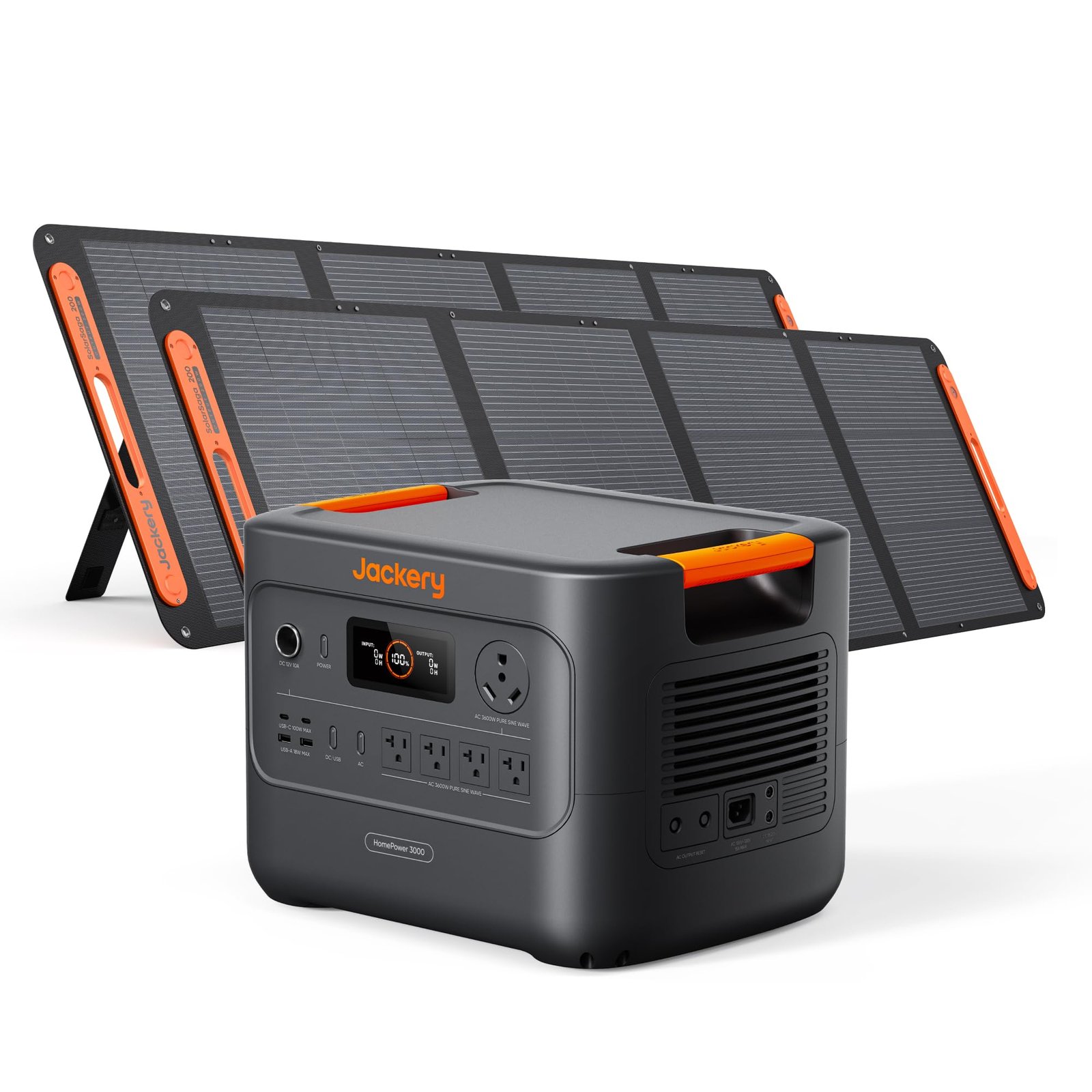
Jackery HomePower 3000 Portable
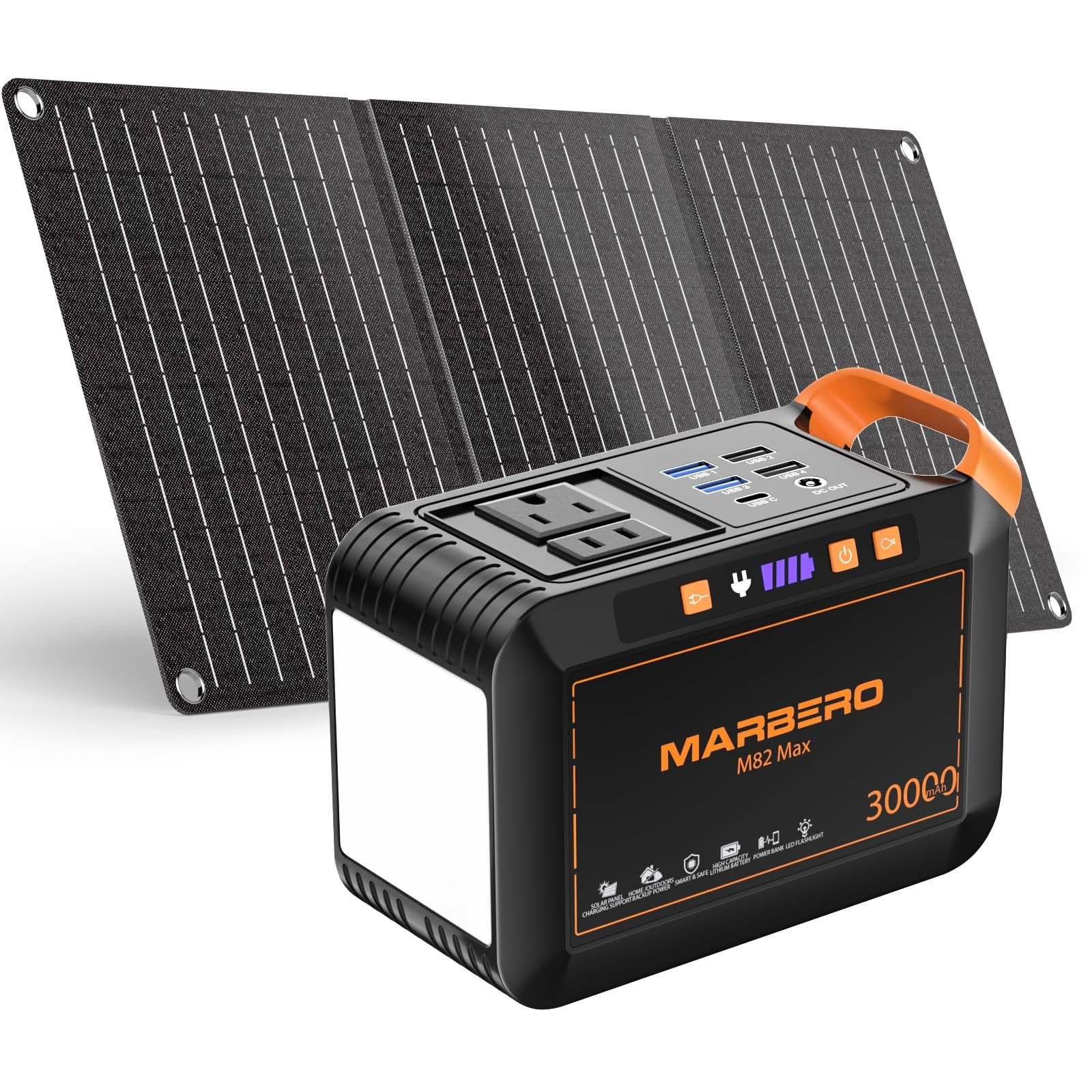
MARBERO Solar Generator 111Wh
When the power goes out during a storm or you’re camping in the middle of nowhere with no electricity in sight, having reliable portable power can feel like magic. But not all portable power stations are created equal—especially when comparing two very different models like the Jackery HomePower 3000 Portable and the MARBERO Solar Generator 111Wh. These devices might look similar on the surface, but they serve dramatically different purposes and audiences.
The Jackery HomePower 3000 Portable is essentially a home backup battery system that can keep your refrigerator running for days, charge your laptop while working remotely, and even power a small RV setup—all in one sleek, wheeled unit. It’s built for serious, high-output energy needs with massive capacity and industrial-grade components.
On the other hand, the MARBERO Solar Generator 111Wh is a compact, lightweight companion designed for short-term outdoor adventures. Think weekend camping trips or emergency kits where space and weight matter more than sustained power delivery. While it includes a small solar panel and multiple charging ports, its total output is modest compared to larger systems.
So why does this comparison even matter? Because choosing between these two isn’t just about picking “the bigger one.” It comes down to your actual lifestyle, energy needs, and how you plan to use the device. Are you looking for a long-term backup solution for your home, or do you need something ultra-portable for occasional off-grid fun?
In this detailed review, we’ll break down every feature, performance metric, and real-world scenario where each generator shines (or falls short). By the end, you’ll know exactly which power station fits your life—whether you’re preparing for hurricanes, escaping city lights for a forest retreat, or simply want peace of mind during blackouts.
Quick Comparison Table
In-Depth Look: Jackery HomePower 3000 Portable
The Jackery HomePower 3000 Portable isn’t just another portable power station—it’s positioned as the world’s first 3kWh portable power station using Cell-to-Board (CTB) technology. This means it packs an incredible amount of energy into a surprisingly compact and lightweight frame. Weighing in at 68 pounds, it’s heavy for its class, but thanks to a sturdy telescoping handle and oversized wheels, moving it around your garage or patio is surprisingly easy.
At its core, the HomePower 3000 offers 3072Wh of usable capacity, which is roughly equivalent to running a full-sized refrigerator for nearly two days without interruption. That kind of endurance makes it ideal for true home backup scenarios—not just charging phones, but actually keeping critical appliances alive during extended outages.
One standout feature is its ≤20ms UPS function. If your power flickers or cuts out entirely, this unit switches over to battery mode almost instantly—so sensitive electronics like medical refrigerators, security cameras, or even your Zoom work calls won’t glitch or shut down. This UL-certified protection gives homeowners genuine peace of mind during storms or grid failures.
The 3600W continuous output (with a 7200W surge) is nothing short of impressive. Need to run a space heater? A coffee maker? A mini-fridge and Wi-Fi router simultaneously? The Jackery HomePower 3000 Portable handles it all without breaking a sweat. And with dual 100W USB-C PD ports, fast-charging USB-A ports, AC outlets, and even a dedicated TT-30 RV port, you’ve got flexibility for everything from smartphones to recreational vehicles.
Charging options are equally robust. You can fully recharge the unit in just 1.7 hours using both AC and DC inputs together—or 2.2 hours via wall outlet alone. When paired with the optional 2×200W SolarSaga panels (sold separately), it can reach 80% charge in under nine hours. It also accepts input from car chargers and gas generators, making refueling flexible whether you’re at home or on the road.
Underneath the hood, the HomePower 3000 uses premium LiFePO₄ batteries, known for their longevity and safety. With up to 4,000 charge cycles while retaining 70% capacity, this thing could last well over a decade with moderate use. Plus, Jackery’s proprietary ChargeShield 2.0 technology optimizes charging speed and protects against overheating, voltage spikes, and other hazards.
Of course, there are trade-offs. At nearly $4,000 retail, it’s not cheap—and remember, the solar panels aren’t included unless explicitly bundled. Also, while the honeycomb-style bottom shell adds durability, the overall footprint still takes up significant floor space compared to smaller units.
Still, if you’re serious about backup power for your entire home or frequent off-grid adventures, the Jackery HomePower 3000 Portable delivers unmatched reliability and performance.
Pros:
- Massive capacity (3072Wh) for extended runtime
- High output power (3600W continuous, 7200W surge)
- Seamless UPS switching for uninterrupted operation
- Premium LiFePO₄ battery with long cycle life
- Flexible charging options (AC, DC, solar, car, generator)
- Durable build quality with integrated inverter design
Cons:
- Expensive upfront cost
- Solar panels sold separately (unless in bundle deals)
- Heavy (68 lbs)—requires effort to move
- Limited portability due to size and weight
Customer Reviews:
One verified owner shared:
“I have this 3000, 1000 explorer, and 240 explorer. What I like about this HomePower 3000: the Jackery brand name, the competitive pricing which tell me that their marketing dept is in the business to capture the majority of the market share so they’re in for the long run, the lovely look of it. Alright, let’s get to the real things: I’ve owned other power stations, but Jackery beats the daylight out of them. The reliability is unbelievable. It has many protections built in. You could do nothing.”
Another wrote:
“Very nice cart for our Jackery Homepower 3000. It was probably designed for a unit which is a little bigger sized, but it works well. Hubby cut a piece of 1/4” plywood to add as a platform and it seems much better. The telescoping handle is perfect, extends up high and folds down low; perfect. The wheels function very well on floors, concrete and yard dirt; large rear wheels make it so easy to move heavy unit. I’m sure I could’ve paid less for a no-name brand, but we really trust Jackery.”
And a third user noted:
“Extremely well made. I charged it using the wall socket in less than three hours. Discharged it using a refrigerator, toaster and electric heater. Recharged it with a 2000 watt gas generator. I had also purchased a Jackery 12 volt charger and a double line splitter and a thirty foot extension for the 2 200 watt solar panels. The recharge times weren’t as fast but they were acceptable. Purchased for elk hunting in the Goat Rocks wilderness.”
Best For:
Homeowners needing reliable backup power during outages, RV travelers requiring high-capacity off-grid energy, and anyone who wants a durable, long-lasting power solution that can handle heavy-duty appliances.
In-Depth Look: MARBERO Solar Generator 111Wh
If the Jackery HomePower 3000 Portable is a powerhouse, then the MARBERO Solar Generator 111Wh is its featherweight counterpart—designed not for sustained loads, but for convenience, portability, and quick fixes in the field.
Weighing only 2.3 pounds, this tiny generator is practically pocket-sized. Its dimensions are just 6.5 x 3.2 x 4.6 inches, making it easy to toss into a backpack, glove compartment, or emergency kit. The included 30W foldable solar panel is even lighter at 1.8 lbs and unfolds to 25.4 x 12 inches—perfect for tossing onto your car roof or camping tent while soaking up sunlight.
Despite its small stature, the MARBERO packs a decent punch for its size. With a 111Wh capacity, it can fully charge most smartphones 5–7 times, power a laptop for a few hours, or run LED lights throughout a camping trip. Its 80W AC output (with a brief 120W peak) lets you plug in small appliances like mini-fridges (if energy-efficient), fans, or CPAP machines—but don’t expect it to handle anything with high startup surges.
The unit features five output ports: four USB-A ports (including fast-charging QC 3.0), one USB-C PD port, two standard AC outlets, and one 12V DC barrel jack. This variety means you can juice up multiple devices at once—phones, tablets, drones, cameras, and even some small laptops—without juggling cables constantly.
Charging is straightforward. Use the included adapter to plug into a wall outlet, connect the cigarette lighter adapter for your car, or deploy the solar panel outdoors. The panel boasts a 21.5–23.5% conversion efficiency, which is quite good for a 30W model, and includes smart IC chips that prevent overcharging, overcurrent, and overheating. However, don’t expect fast solar recharges—even on a sunny day, topping up from empty may take 6–8 hours.
While the MARBERO uses lithium polymer cells (lighter and more compact than LiFePO₄), these typically offer fewer charge cycles and degrade faster over time. Unfortunately, MARBERO doesn’t specify cycle life or depth-of-discharge limits, so long-term durability is harder to gauge.
There’s no UPS function here—if the power cuts out, your devices will lose connection unless they’re already plugged into the MARBERO. And while it’s great for light-duty tasks, it lacks the robustness needed for true home backup or heavy-duty outdoor use.
That said, the MARBERO excels in its niche: ultraportable power for adventurers, hikers, campers, and urban commuters who want a reliable backup for essential gadgets without the bulk or expense.
Pros:
- Ultra-lightweight and compact (2.3 lbs)
- Includes solar panel (30W) in the package
- Multiple charging/output ports for versatile connectivity
- Smart protection circuits prevent damage from overcharging
- Affordable price point for entry-level users
- Great for short-term off-grid use
Cons:
- Limited capacity (111Wh)—not enough for sustained loads
- Low AC output (80W max) restricts appliance compatibility
- No UPS functionality—can’t bridge sudden outages
- Shorter lifespan compared to LiFePO₄ batteries
- Slow solar recharge times
- Lacks rugged build quality for harsh environments
Customer Reviews:
Currently, there are no customer reviews available for the MARBERO Solar Generator 111Wh on major platforms like Amazon. This absence raises questions about long-term reliability and user satisfaction, especially since many competitors in this category boast hundreds of verified reviews.
Given its lack of feedback, potential buyers should approach with caution—especially if planning to rely on it during emergencies.
Best For:
Weekend campers, van lifers with minimal energy needs, urban dwellers wanting a backup for phones/laptops, and anyone seeking an affordable, travel-friendly power source for light-duty electronics.
Head-to-Head Comparison
Let’s put these two generators side by side across several key categories to see where each truly stands.
Power & Performance
When it comes to raw energy delivery, the difference couldn’t be starker. The Jackery HomePower 3000 Portable delivers 3072Wh of usable capacity and can sustain 3600W continuously—enough to run a refrigerator, microwave, and Wi-Fi router all at once. Its 7200W surge capacity means it can handle motors and compressors that need extra kick-start power.
In contrast, the MARBERO Solar Generator 111Wh offers just 111Wh and maxes out at 80W continuous. That’s barely enough to run a single space heater or a small fan. While it can charge phones and tablets quickly, it’s not designed for sustained appliance use.
Verdict: If you need serious power, go with Jackery. For light-duty needs, MARBERO suffices.
Portability & Design
Here’s where MARBERO wins hands down. At 2.3 pounds, it’s featherlight and folds into a tiny package. The included solar panel is similarly compact and easy to stow.
Jackery, while innovative with its CTB tech and space-saving design, still tips the scales at 68 pounds. Though it has wheels and a handle, lugging this beast up stairs or into a vehicle demands effort. It’s built like a fortress, not a travel buddy.
Verdict: MARBERO wins for portability; Jackery prioritizes power over ease of carry.
Charging Options & Speed
Both support AC, solar, and 12V car input, but speeds vary wildly.
Jackery recharges fully in 1.7 hours via hybrid AC/DC or 2.2 hours via AC alone. With two 200W solar panels, it hits 80% in ~9 hours.
MARBERO takes longer: expect 6–8 hours via solar and possibly 4–5 hours via wall outlet (exact specs unclear). The included 30W panel is efficient but slow for such a small battery.
Verdict: Jackery charges faster and more efficiently; MARBERO is adequate but slower.
Durability & Longevity
Jackery uses LiFePO₄ batteries, which are chemically stable, safe, and last up to 4,000 cycles while retaining 70% capacity. That’s decades of moderate use.
MARBERO uses lithium polymer cells, which are lighter but degrade faster. Without cycle data, long-term reliability is uncertain.
Build quality also favors Jackery—its honeycomb shell and integrated inverter suggest industrial-grade engineering.
Verdict: Jackery is built to last; MARBERO is best viewed as a short-to-medium-term solution.
Price & Value
The Jackery HomePower 3000 Portable retails for around $3,999–$4,299, plus extra for solar panels. That’s a significant investment, but justified for home backup or frequent off-grid use.
The MARBERO Solar Generator 111Wh costs roughly $199–$249, depending on promotions. It’s affordable enough for impulse buys or secondary use cases.
However, value isn’t just about price—it’s about what you get per dollar. Jackery delivers far more capability, while MARBERO offers convenience at a low cost.
Verdict: MARBERO wins on affordability; Jackery wins on long-term value.
Best Use Cases
Consider your lifestyle:
– Choose Jackery if:
– You live in an area prone to hurricanes, blizzards, or brownouts
– You own an RV or frequently camp off-grid
– You need to power medical devices, refrigerators, or workstations
– You want a one-time purchase that lasts years
– Choose MARBERO if:
– You go camping or hiking occasionally
– You want a backup for phones, laptops, and lights
– Space and weight are critical
– You’re on a tight budget and don’t need heavy-duty power
Frequently Asked Questions
Q: Can the MARBERO Solar Generator 111Wh run a refrigerator?
A: Probably not reliably. Most household refrigerators require 600–1000W to start and run continuously. The MARBERO only provides 80W, so it lacks the power and surge capacity needed. Stick to small, low-energy appliances like mini-fridges rated under 100W or personal cooling fans.
Q: How long does the Jackery HomePower 3000 Portable take to charge via solar?
A: When paired with two 200W SolarSaga panels, the Jackery HomePower 3000 Portable can reach 80% charge in approximately 9 hours under ideal sunlight conditions. Full charge takes longer, depending on panel orientation and weather.
Q: Does the MARBERO come with a warranty?
A: While MARBERO typically includes a 1-year limited warranty, details aren’t clearly stated on product pages. Given the lack of customer reviews, it’s wise to contact seller support before purchasing to confirm coverage.
Q: Is the Jackery HomePower 3000 Portable suitable for RVs?
A: Absolutely. With its 3600W output, TT-30 RV port, and ability to run appliances like air conditioners (for smaller units), it’s an excellent choice for RV owners seeking reliable off-grid power.
Q: Can I use the MARBERO indoors during a blackout?
A: Yes, but only for compatible devices. Since it lacks UPS functionality, you must manually plug devices into it. It won’t automatically switch over during outages like the Jackery HomePower 3000 Portable.
Q: Which one is better for eco-conscious users?
A: Both support solar charging, but Jackery’s higher efficiency and longer lifespan make it more sustainable long-term. However, MARBERO’s lower initial cost and smaller environmental footprint during manufacturing may appeal to those prioritizing minimalism.
Final Verdict: Which One Should You Choose?
After thoroughly examining both the Jackery HomePower 3000 Portable and the MARBERO Solar Generator 111Wh, the answer depends entirely on your energy needs, budget, and lifestyle.
If you’re serious about backup power for your home, enjoy off-grid adventures with demanding gear, or simply want peace of mind during storms, the Jackery HomePower 3000 Portable is the clear winner. Its massive capacity, high output, seamless UPS transition, and durable LiFePO₄ battery make it a fortress-class power solution—worth every penny for those who depend on uninterrupted electricity.
On the other hand, if you’re a casual camper, commuter, or someone who just wants a lightweight backup for phones and tablets, the MARBERO Solar Generator 111Wh delivers surprising value. It’s affordable, portable, and functional for light-duty tasks. Just don’t expect miracles—it’s not built for heavy lifting.
Ultimately, these aren’t direct competitors. They serve different tiers of the portable power market. Think of Jackery as a Tesla Cybertruck (powerful, capable, built for extreme conditions), and MARBERO as a Honda Civic (reliable, efficient, perfect for daily commutes).
Before deciding, ask yourself:
– Do I need to power my fridge for days? → Jackery
– Do I just want to charge my laptop while hiking? → MARBERO
– Am I willing to invest thousands now for decades of use? → Jackery
– Do I need something under $250 that fits in my backpack? → MARBERO
No matter which you choose, both offer legitimate solutions to modern energy challenges. But only one will truly match your unique situation.