
Anker SOLIX C1000 Gen
Anker Solar Generator SOLIX
When the power goes out during a storm or you’re stuck camping without access to an outlet, having reliable portable power is a game-changer. Two of Anker’s most popular solar generators—the Anker SOLIX C1000 Gen and the Anker Solar Generator SOLIX—offer different approaches to staying powered on the go. But which one actually fits your lifestyle? Whether you’re preparing for emergencies, running remote work setups, or simply love spontaneous road trips, choosing between these two can make all the difference.
Both models belong to Anker’s SOLIX line, known for blending high-capacity power with smart features, but they cater to very different needs. The C1000 Gen is a heavy-duty workhorse built for extended off-grid adventures, tiny homes, and serious backup power. Meanwhile, the Solar Generator SOLIX is designed for lightweight travel, quick setups, and eco-conscious campers who want sustainable energy in a compact package. In this deep dive, we’ll compare everything from battery life and charging speed to portability and real-world usability so you can pick the perfect match for your next adventure.
## Quick Comparison Table
## In-Depth Look: Anker SOLIX C1000 Gen
[Product Info Card]
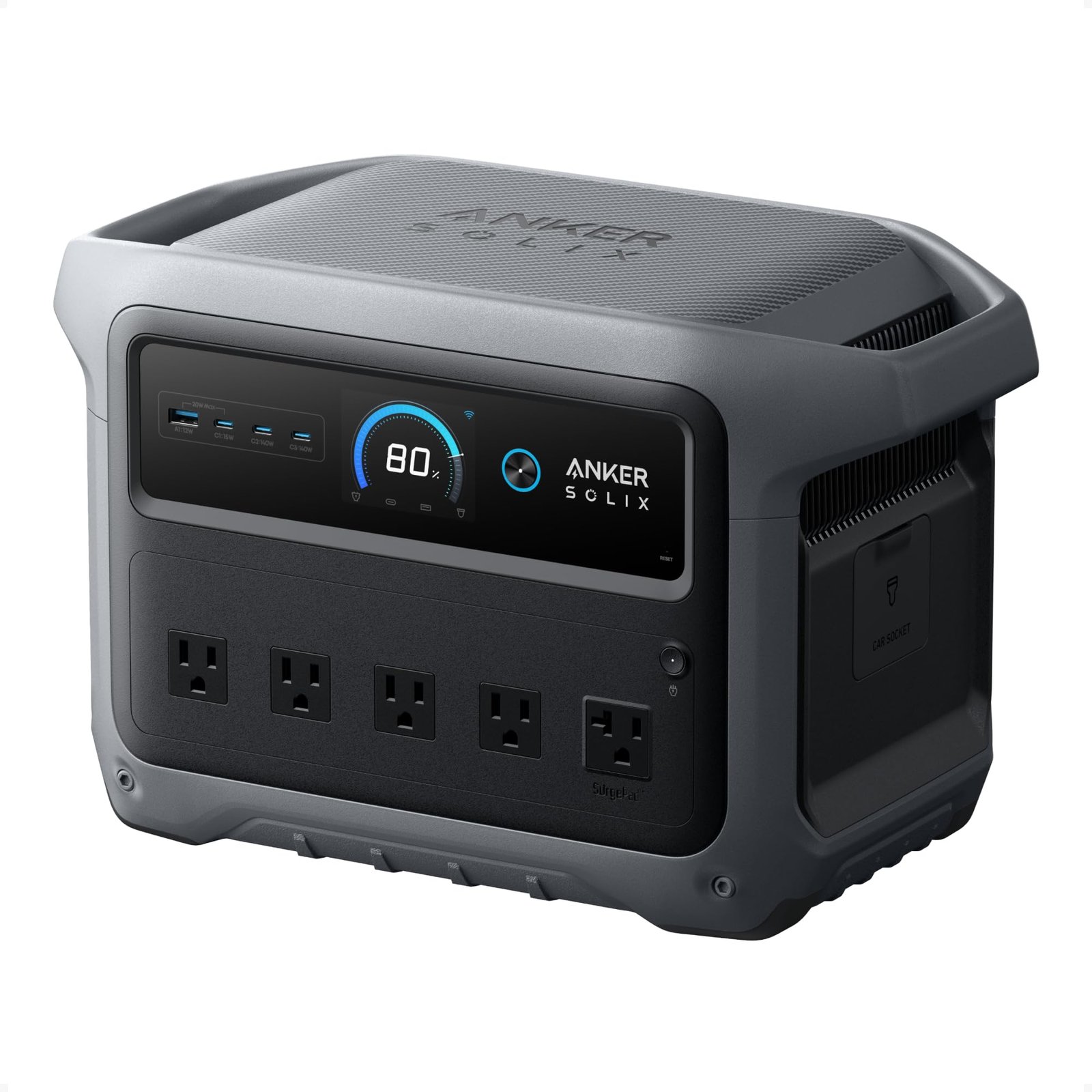
The Anker SOLIX C1000 Gen isn’t just another portable battery—it’s a full-featured power station designed for serious off-grid living and emergency preparedness. With a massive 1,024Wh capacity and 2,000W continuous output (peaking at 3,000W), this device can run everything from mini-fridges to CPAP machines and even small window AC units when paired with the right inverter settings.
One of its standout features is the HyperFlash charging technology, which allows it to recharge from zero to full in under 50 minutes using a 1,600W wall charger. That’s lightning-fast compared to most competitors that take 6–8 hours. And if you’re truly off the grid, plug in six hundred watts of solar panels and you’ll be back online in just 1.8 hours—far quicker than many other solar generators on the market.
What really sets the C1000 Gen apart is its InfiniPower™ battery system. Built with lithium iron phosphate (LiFePO4) chemistry, it’s not only safer and more stable than traditional lithium-ion batteries but also promises up to 10 years of use with 4,000 charge cycles while retaining over 80% capacity. That kind of longevity makes it ideal for people who need dependable backup year after year.
Another major advantage is the ultra-fast UPS mode, switching critical devices like medical equipment or laptops over in under 10 milliseconds during a blackout. Combined with intelligent app control—including Time-of-Use (TOU) scheduling—you can automate power usage based on electricity rates or solar availability, making it perfect for remote workers or tiny home dwellers.
With ten total ports—including four AC outlets, multiple USB-C and USB-A options, a DC port, and a 12V car socket—the C1000 Gen supports almost any setup imaginable. Whether you’re powering a coffee maker, charging phones, running a router, or even hooking up a laptop and monitor for remote work, this unit handles it all.
On the downside, at 27 pounds, it’s noticeably heavier than most travel-focused power stations. While still carryable, it’s better suited for stationary setups like RVs, cabins, or emergency kits rather than backpacking. Also, it doesn’t come with a solar panel in the box, so you’ll need to purchase one separately if you plan on recharging via sun.
### Customer Reviews
Users consistently praise the C1000 Gen for its reliability and power density. One frequent traveler wrote: “I bought this after my last generator failed during a week-long camping trip. This thing powers my entire van setup—lights, fridge, laptop, phone charger—and still has juice left at the end of the day.” Another noted: “The UPS switchover saved my CPAP machine during a regional outage. I didn’t even notice the power cut out.”
However, some mention the weight as a drawback for hiking trips, and a few wish the included cables were higher quality. Still, overall sentiment is overwhelmingly positive, especially among those needing robust, long-term backup power.
### Best For
If you’re building an off-grid tiny home, maintaining an RV lifestyle, preparing for frequent outages, or running a remote workspace outside traditional infrastructure, the Anker SOLIX C1000 Gen delivers unmatched power, durability, and smart features.
## In-Depth Look: Anker Solar Generator SOLIX
[Product Info Card]
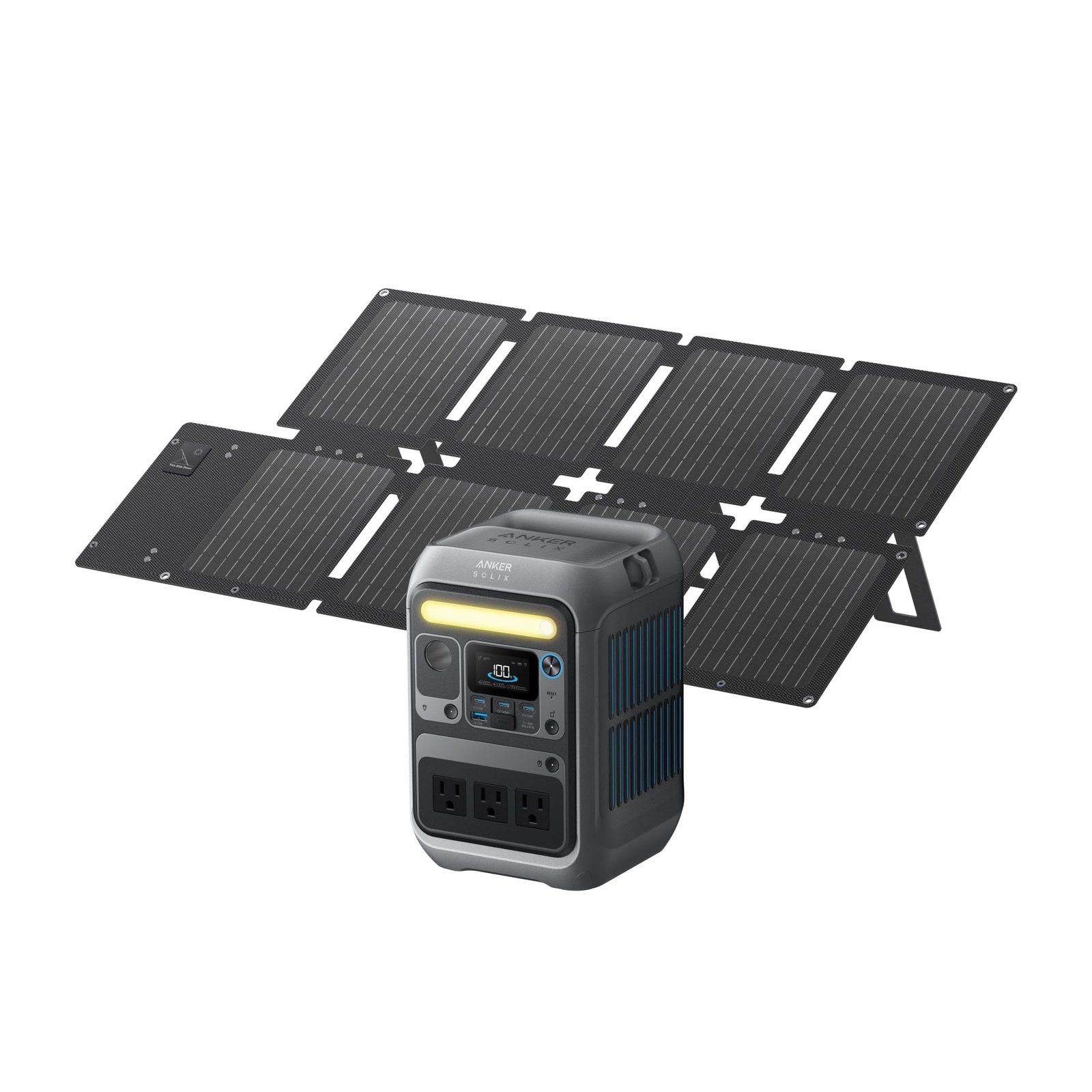
Compact, quiet, and ready for spontaneous adventures—that’s the philosophy behind the Anker Solar Generator SOLIX. Designed with the modern nomad in mind, this combo includes a 288Wh power station and a matching 60W solar panel, making it ideal for weekend getaways, tailgating, or emergency kits where space and weight matter.
At just 8.6 pounds, this is one of the lightest high-capacity solar generators available. Its slim profile and built-in handle make it easy to toss into a car trunk or attach to a backpack with an optional strap (sold separately). Despite its small size, it packs serious punch: 300W continuous output (600W surge) lets you run laptops, tablets, phones, lights, and even small appliances like blenders or mini fridges—though not simultaneously at full load.
The included 60W solar panel features an IP68 waterproof rating, meaning it can withstand rain, dust, and even submersion in water—perfect for unpredictable outdoor conditions. It connects directly to the generator via XT60-to-DC7909 cable, offering seamless solar integration without adapters or guesswork.
Charging is impressively flexible. You can juice it up from a wall outlet in about 50 minutes to reach 80% (full charge takes closer to 1.5 hours), or rely entirely on solar during extended trips. While 60W isn’t enough to fully recharge quickly, it does maintain charge efficiently during daylight hours—keeping your devices topped off without draining the battery overnight.
The SOLIX also boasts smart temperature control and impact-resistant casing, ensuring it survives drops and extreme weather. At only 25 decibels, it operates silently, so you won’t disturb wildlife or neighbors during quiet evenings.
One limitation is the lack of advanced features like app connectivity or UPS mode. Without these, it’s best used proactively rather than as emergency backup for sensitive electronics. Also, because it comes with a lower-capacity panel, expanding solar capacity later requires buying additional panels separately—and compatibility is limited to specific models.
### Customer Reviews
Many buyers highlight convenience and value. A remote worker shared: “This little thing super convenient. I got this because I work and go to school remotely and like to travel often with my spouse. The solar panels are IP68 rated, which gives peace of mind.” Another camper noted: “I’ve been able to charge my phone multiple times and even top off a tablet without running it down too quickly. The 60W solar panels are a nice addition for longer trips.”
Some reviewers mention that while the build quality feels premium, the full price of the bundle isn’t justified unless discounted—especially since higher-wattage solar panels offer better ROI. But on sale, it’s considered a steal for the portability and ease of use.
### Best For
The Anker Solar Generator SOLIX shines for digital nomads, weekend warriors, eco-conscious travelers, and anyone who values lightweight, silent, and sustainable power for short-term adventures. It’s not meant to replace a main home generator, but it’s perfect for supplementing power when you’re off the beaten path.
## Head-to-Head Comparison
### Power Capacity & Performance
When it comes to sheer energy storage, the Anker SOLIX C1000 Gen dominates with 1,024Wh vs. the SOLIX’s 288Wh—nearly quadruple the capacity. This means the C1000 can run larger loads for much longer. For example, it could power a mini-fridge for 12+ hours straight, whereas the SOLIX would drain in under three hours under similar conditions.
Output-wise, the C1000’s 2,000W continuous power far exceeds the SOLIX’s 300W limit. Need to run a microwave or a small air conditioner? Only the C1000 can handle it reliably. The SOLIX is great for lighter tasks—laptops, phones, lights, maybe a portable speaker—but anything drawing more than ~250W will trigger overload protection.
### Charging Speed & Flexibility
Both support fast wall charging, but the C1000 wins hands down with its 1,600W HyperFlash capability, reaching full charge in 49 minutes. The SOLIX takes closer to 1.5 hours for a complete charge from AC. On solar, the C1000 again pulls ahead: with 600W input, it recharges in 1.8 hours; the SOLIX’s included 60W panel would take over 16 hours for a full charge—practically useless in real-world scenarios.
That said, the SOLIX’s flexibility lies in its multi-source charging: AC, car, solar, and USB-PD. The C1000 supports these too, but lacks the same level of user-configurable options without the app.
### Portability & Design
Here’s where the SOLIX clearly wins. At 8.6 pounds, it’s less than a third the weight of the C1000 (27 lbs). Its compact form factor makes it ideal for backpacking, car camping, or throwing in a suitcase. The C1000, while still manageable, is bulkier and better suited for fixed locations like RVs, sheds, or emergency kits.
Both have sturdy builds, but the SOLIX’s IP-rated panel adds durability for outdoor use. The C1000 prioritizes ruggedness and longevity over ultra-light design.
### Smart Features & Usability
The C1000 includes several advanced features the SOLIX lacks:
– UPS mode: Instantly backs up critical devices during outages.
– App control: Schedule charging/discharging via Time-of-Use modes.
– Higher port count: More outlets mean fewer dongles or splitters needed.
The SOLIX keeps things simple—plug in, turn on—ideal for users who don’t want to fuss with apps or settings. But for those wanting automation and monitoring, the C1000 is superior.
### Value & Included Accessories
The SOLIX bundle includes a 60W solar panel, which adds immediate utility for off-grid users. The C1000 does not include a panel, so you’d pay extra for one. However, the C1000’s higher capacity, faster charging, and longer warranty (10 years vs. 5) may justify the investment if you need sustained power.
## Frequently Asked Questions
Q: Can I use both the C1000 Gen and the Solar Generator SOLIX together?
A: While both are Anker products, they aren’t designed to be used as a combined system. Each has different voltage requirements, connectors, and control systems. It’s best to choose one based on your primary use case rather than trying to mix them.
Q: Which one is better for camping?
A: If you’re doing car camping or van life with room for gear, the Anker SOLIX C1000 Gen offers far greater runtime and power for multiple devices. For backpacking or ultra-light trips, the Anker Solar Generator SOLIX is lighter and easier to carry.
Q: Does the C1000 Gen have a solar panel included?
A: No, the Anker SOLIX C1000 Gen does not come with a solar panel. You’ll need to purchase one separately if you plan on solar recharging. Compatible panels must deliver up to 600W and connect via MC4 or Anderson ports.
Q: Is the Solar Generator SOLIX compatible with higher-wattage solar panels?
A: Yes, but only certain models. The SOLIX accepts up to 100W panels, though Anker recommends using their own SOLIX-compatible panels for optimal performance. Avoid third-party panels unless explicitly verified.
Q: How long do the batteries last?
A: The Anker SOLIX C1000 Gen uses InfiniPower™ LiFePO4 cells that retain 80% capacity after 4,000 cycles—roughly 10 years of daily use. The Anker Solar Generator SOLIX also uses LiFePO4 and promises 3,000 cycles, lasting about 8–9 years under similar conditions.
Q: Can I use either as emergency backup during a blackout?
A: The Anker SOLIX C1000 Gen supports true UPS mode (<10ms switchover), making it suitable for medical devices and computers. The Anker Solar Generator SOLIX lacks this feature, so sudden outages could disrupt connected devices. For critical backup, the C1000 is the safer choice.
## Final Verdict: Which One Should You Choose?
Choosing between the Anker SOLIX C1000 Gen and the Anker Solar Generator SOLIX ultimately depends on how you plan to use your power station.
If you need high-capacity, long-lasting power for off-grid living, RVs, tiny homes, or emergency backup—especially for sensitive electronics—go with the Anker SOLIX C1000 Gen. Its massive battery, ultra-fast charging, app-controlled smart features, and robust build make it the ultimate all-in-one power solution.
But if you’re a frequent traveler, digital nomad, or weekend camper who values lightweight design, silent operation, and instant solar setup, then the Anker Solar Generator SOLIX is your best bet. It’s compact, comes with a reliable solar panel, and handles everyday tech with ease.
There’s no outright “winner”—just the right tool for your situation. Want maximum power and future-proof reliability? Pick the C1000 Gen. Craving simplicity and portability for spontaneous escapes? Grab the Solar Generator SOLIX.
Whichever you choose, you’re investing in clean, quiet, and renewable power wherever life takes you.