
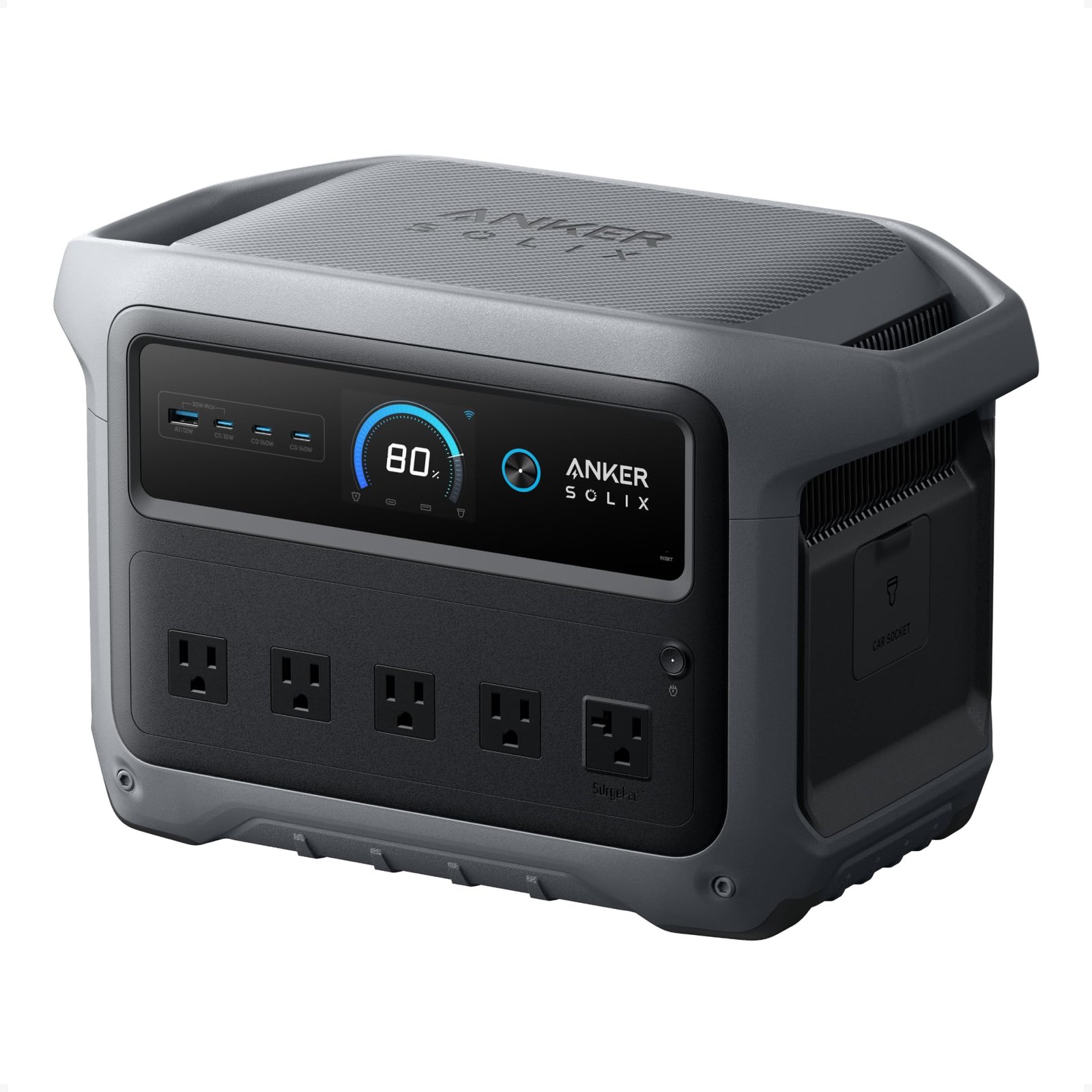
Anker SOLIX C1000 Gen
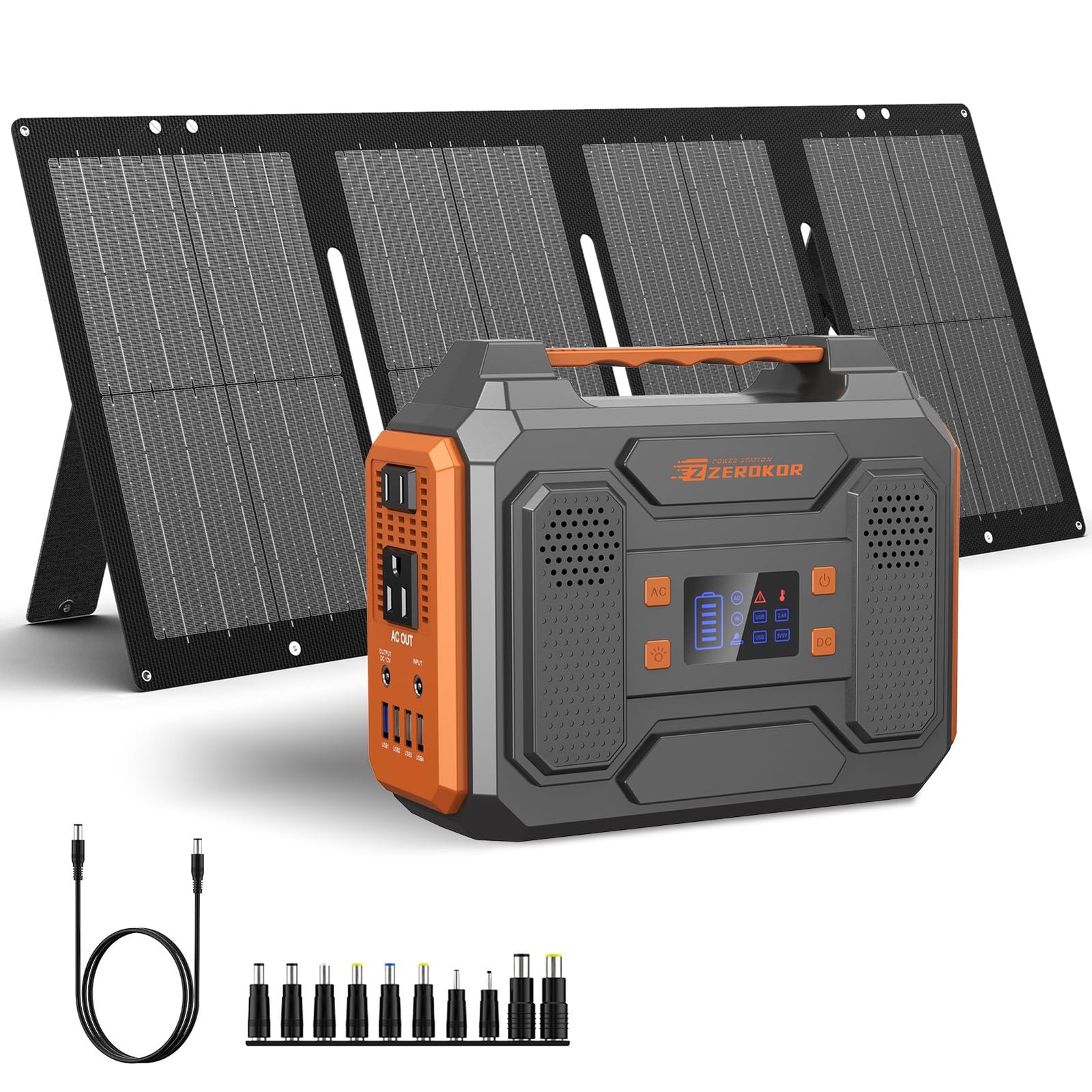
Portable Solar Generator
When it comes to portable power solutions, two products are currently making waves in the camping, off-grid living, and emergency backup markets: the Anker SOLIX C1000 Gen and the Portable Solar Generator. Both promise freedom from traditional outlets, but they serve very different needs and come with dramatically different price tags. The Anker SOLIX C1000 Gen is a premium, high-capacity power station designed for serious off-grid adventures, remote work setups, and even tiny homes. Meanwhile, the Portable Solar Generator is an affordable, compact entry into solar-powered camping, perfect for weekend trips or charging small devices on the go. If you’re trying to decide which one fits your lifestyle—whether you’re prepping for a hurricane, planning a week-long RV trip, or just want peace of mind during blackouts—this deep dive will help you understand exactly what each device offers.
Choosing between these two isn’t about picking the “better” product overall; it’s about matching your energy needs, budget, and how you plan to use the generator. Are you someone who values speed, capacity, and smart features like UPS backup and app control? Or do you prioritize affordability, portability, and simplicity for light outdoor use? In this article, we’ll compare every aspect—from battery life and recharge time to durability, safety features, and real-world performance—so you can make a confident decision. By the end, you’ll know which generator gives you the best value and reliability for your specific situation.
In-Depth Look: Anker SOLIX C1000 Gen
The Anker SOLIX C1000 Gen isn’t just another portable power station—it’s a powerhouse built for serious users who demand reliability, speed, and longevity. With a massive 1,024Wh lithium iron phosphate (LiFePO₄) battery, it offers more than triple the capacity of most competitors in its class. That’s enough juice to run a mini-fridge for over 10 hours, charge your laptop 25 times, or keep essential medical devices running during an outage. And when it comes to power delivery, the C1000 Gen delivers an impressive 2,000W continuous output (peaking at 3,000W), making it suitable for high-wattage appliances like blenders, air compressors, CPAP machines, and even small space heaters.
One of the standout features is its ultra-fast recharging capability. Thanks to Anker’s proprietary HyperFlash technology, you can go from empty to full in under 50 minutes using a compatible 1,600W AC charger. This is game-changing for anyone who needs quick top-ups between uses. Even better, you can combine charging methods—plug in solar panels while simultaneously using the wall adapter for maximum efficiency. Speaking of solar, the C1000 Gen supports up to 600W of solar input, allowing full recharge in just 1.8 hours under ideal conditions. That means you’re never stranded without power, whether you’re in the mountains or stuck in a storm.
But what truly sets the C1000 Gen apart is its intelligent design and durability. It includes a near-instantaneous UPS (uninterruptible power supply) mode that switches over in less than 10 milliseconds—perfect for sensitive electronics like routers, modems, or medical equipment. The included Anker app lets you monitor usage, schedule charging during off-peak hours (TOU mode), set discharge limits, and even receive alerts. Plus, with a 10-year warranty backed by the InfiniPower™ technology guaranteeing 80% capacity after 4,000 cycles, this isn’t a disposable gadget—it’s a long-term investment.
Of course, all these advanced features come at a premium price. The Anker SOLIX C1000 Gen costs significantly more than entry-level models, but if you need robust performance, fast charging, and enterprise-grade reliability, it’s worth every penny. It’s not just for campers—it’s for professionals, van lifers, tiny home dwellers, and anyone who wants true energy independence.
In-Depth Look: Portable Solar Generator
On the other end of the spectrum sits the Portable Solar Generator, a no-nonsense, budget-friendly option designed for casual campers, occasional travelers, and those dipping their toes into off-grid living. Packed with a 300Wh lithium-ion battery and bundled with a 60W monocrystalline solar panel, this unit shines in simplicity and affordability. Its lightweight build (around 8 lbs) and compact form factor make it easy to toss into a backpack or SUV trunk for spontaneous adventures. Whether you’re hiking, tailgating, or dealing with a short-term power outage, this generator handles smartphones, tablets, LED lights, fans, and even small laptops with ease.
What makes the Portable Solar Generator particularly appealing is its inclusion of the solar panel right out of the box. No extra purchases needed—just unfold the panel, connect it to the unit, and start harvesting sunlight. The panel itself boasts 20.5% conversion efficiency thanks to monocrystalline cells, outperforming many polycrystalline alternatives in low-light conditions. While it won’t fully recharge the battery in under two hours like the Anker model, you can expect a complete solar charge in 12–16 hours on a sunny day—plenty fast for overnight recharging during camping trips.
The generator also offers multiple charging options: wall outlet, 12V carport, or direct solar input. It features a user-friendly interface with LED indicators, a built-in flashlight (including SOS mode), and several output ports—two AC outlets (up to 300W combined), three USB-A ports, one USB-C PD port, and a DC output. Safety is prioritized too, with built-in BMS protection against short circuits, over-voltage, overheating, and overloads. A smart cooling fan kicks in automatically when temperatures rise, ensuring stable performance.
While it lacks app connectivity, high-wattage support, and rapid charging, the Portable Solar Generator compensates with unbeatable value. At under $400, it’s accessible to nearly anyone looking to escape the grid for short periods. Customer feedback highlights its reliability for drone charging, camping gear, and emergency phone top-ups. As one reviewer put it: “It’s not gonna power the house, but it’s definitely gonna charge all your phones, your tablet, your watches… perfect for the woods.”
However, there are limitations. The 300W limit means you can’t run anything demanding like microwaves, hair dryers, or large refrigerators. Also, prolonged storage below 60% charge may trigger protection mode, so regular use is recommended. But for its price point and intended use, these trade-offs are reasonable.
Head-to-Head Comparison
Performance & Capacity: Who Delivers More Juice?
When comparing raw power, the Anker SOLIX C1000 Gen leaves the Portable Solar Generator in the dust. With 1,024Wh vs. 300Wh, the difference is staggering—over three times more usable energy. This translates directly to longer runtime for larger devices. Need to keep a refrigerator running during a blackout? The C1000 Gen can handle it for days, while the Portable Solar Generator would drain in hours. Similarly, the C1000’s 2,000W continuous output dwarfs the 300W cap, enabling use of higher-demand tools like circular saws or coffee makers. For comparison, even a standard laptop charger draws around 65W, so both units can handle it—but only the Anker can safely power multiple such devices simultaneously without throttling.
Charging Speed: Fast vs. Slow
Speed is where the Anker SOLIX C1000 Gen truly excels. Its 49-minute full recharge via HyperFlash tech is unmatched in the portable segment. Even with solar, it reaches full capacity in under 2 hours—something unheard of in budget generators. In contrast, the Portable Solar Generator takes 8–10 hours via AC and 12–16 hours via solar. While adequate for overnight recharges, this lag makes the latter unsuitable for urgent situations where every minute counts. If you’re relying solely on solar (e.g., in cloudy regions), the Portable Solar Generator’s slower rate becomes a significant drawback.
Durability & Longevity: Built to Last?
Anker backs its reputation with the InfiniPower™ guarantee: 80% capacity retention after 4,000 charge cycles, translating to roughly 10 years of daily use. This far exceeds typical lithium-ion batteries found in budget models. The Portable Solar Generator doesn’t specify cycle life or warranty terms, suggesting shorter lifespan expectations. While both use LiFePO₄ or similar chemistries (improving safety and cycle life), only the Anker commits to long-term performance metrics. For van lifers or frequent campers, longevity directly impacts total cost of ownership.
Safety & Intelligence: Smart Features Matter
Safety isn’t optional—it’s non-negotiable. Both units include BMS protection, but the Anker goes further with UPS backup (<10ms switchover), preventing brownouts from disrupting critical devices. Its companion app enables time-of-use scheduling, remote monitoring, and load balancing—features absent in the Portable Solar Generator. These aren’t gimmicks; they’re practical tools for optimizing energy use and protecting investments. The lack of app control in the cheaper model means manual operation only, which works fine for simple setups but limits scalability.
Portability & Design: Lightweight vs. Robust
Size and weight tell part of the story. The Portable Solar Generator wins on pure portability—lighter, smaller, and easier to carry. However, the Anker SOLIX C1000 Gen sacrifices some convenience for functionality. At 27 lbs, it’s still manageable for adults and features sturdy handles and wheels for rolling across campsites or garages. Its compact redesign (14% smaller than previous gen) helps, but it’s clearly built for stationary or semi-mobile use rather than backcountry trekking. Consider your mobility needs: if you hike often, the lighter option wins; if you drive everywhere, size matters less.
Value Proposition: Price vs. Performance
Here’s the hard truth: you get what you pay for. The Portable Solar Generator costs roughly $350–$400 and delivers solid basic performance. The Anker SOLIX C1000 Gen retails for $1,200–$1,500+. That’s a fivefold increase! But ask yourself: how much is uninterrupted power worth to you? How much downtime can you afford during emergencies? For most casual users, the Portable Solar Generator suffices. But professionals, families, or those with medical needs will find the Anker’s reliability, speed, and intelligence justify the splurge.
Frequently Asked Questions
Q: Can I run my CPAP machine on either generator?
A: Yes! Both units can power CPAP machines since they draw well below their wattage limits (typically 60–85W). However, the Anker SOLIX C1000 Gen offers superior UPS protection—switching in under 10ms—so your machine won’t experience voltage drops during outages. The Portable Solar Generator lacks this feature, though its stable output is sufficient for most CPAP models.
Q: Which one charges faster with solar panels?
A: The Anker SOLIX C1000 Gen charges in just 1.8 hours using a 600W solar array, while the Portable Solar Generator takes 12–16 hours with its included 60W panel. If you’re off-grid for extended periods, faster recharge = more usable energy. Note: You’ll need a separate 600W kit for the Anker unless you already own compatible panels.
Q: Is the Portable Solar Generator safe to use indoors?
A: Generally yes, but always ensure proper ventilation. Both generators produce minimal emissions (they’re essentially batteries), but avoid enclosed spaces without airflow. The Anker’s active cooling fan runs quietly and safely indoors, while the Portable Solar Generator’s passive cooling may struggle in hot rooms—check internal temps periodically.
Q: Can I expand the battery capacity later?
A: Unfortunately, neither model supports external battery expansion. The Anker SOLIX C1000 Gen has fixed internal storage, as does the Portable Solar Generator. If future-proofing is critical, consider whether today’s capacity meets your worst-case scenario (e.g., week-long storm).
Q: Do either require special maintenance?
A: Minimal for both! Store between 40–80% charge if unused for >3 months. Avoid extreme heat/cold. The Anker’s app can remind you of optimal storage levels. Neither needs monthly trickle charging like older NiMH batteries—modern lithium cells are maintenance-free.
Q: Which is better for international travel?
A: The Portable Solar Generator edges out slightly due to lighter weight and global plug compatibility (check adapter needs). However, the Anker SOLIX C1000 Gen’s higher capacity makes it ideal for extended trips requiring consistent power (e.g., working remotely abroad). Just verify outlet voltages match your destination.
Q: Can I use both together for hybrid charging?
A: Technically yes, but impractical. The Portable Solar Generator’s 60W panel can’t meaningfully contribute to the Anker’s massive battery. Conversely, the Anker’s solar input exceeds the Portable’s capacity. They’re designed for different scales of use—mixing them adds complexity without benefit.
Final Verdict: Which One Should You Choose?
After weighing all factors—capacity, speed, durability, intelligence, portability, and price—the choice boils down to your priorities. If you need true energy independence for emergencies, remote work, or off-grid living, invest in the Anker SOLIX C1000 Gen. Its lightning-fast recharge, massive capacity, UPS backup, and 10-year warranty make it a fortress of reliable power. It’s not just a generator—it’s a system.
However, if you’re a weekend camper, occasional traveler, or want a simple, affordable way to stay charged outdoors, the Portable Solar Generator delivers exceptional value. It’s lightweight, comes with solar, and handles everyday devices without fuss. Just don’t expect it to run your entire kitchen during a storm.
Ultimately, these aren’t competing head-to-head—they serve different tiers of users. Budget-conscious adventurers will love the simplicity and price of the Portable Solar Generator. Professionals, families, or anyone needing robust, intelligent power should choose the Anker SOLIX C1000 Gen. Whichever path you take, you’re gaining freedom from the grid. Now go enjoy the great outdoors—or prepare for whatever comes next—without worrying about dead batteries.