
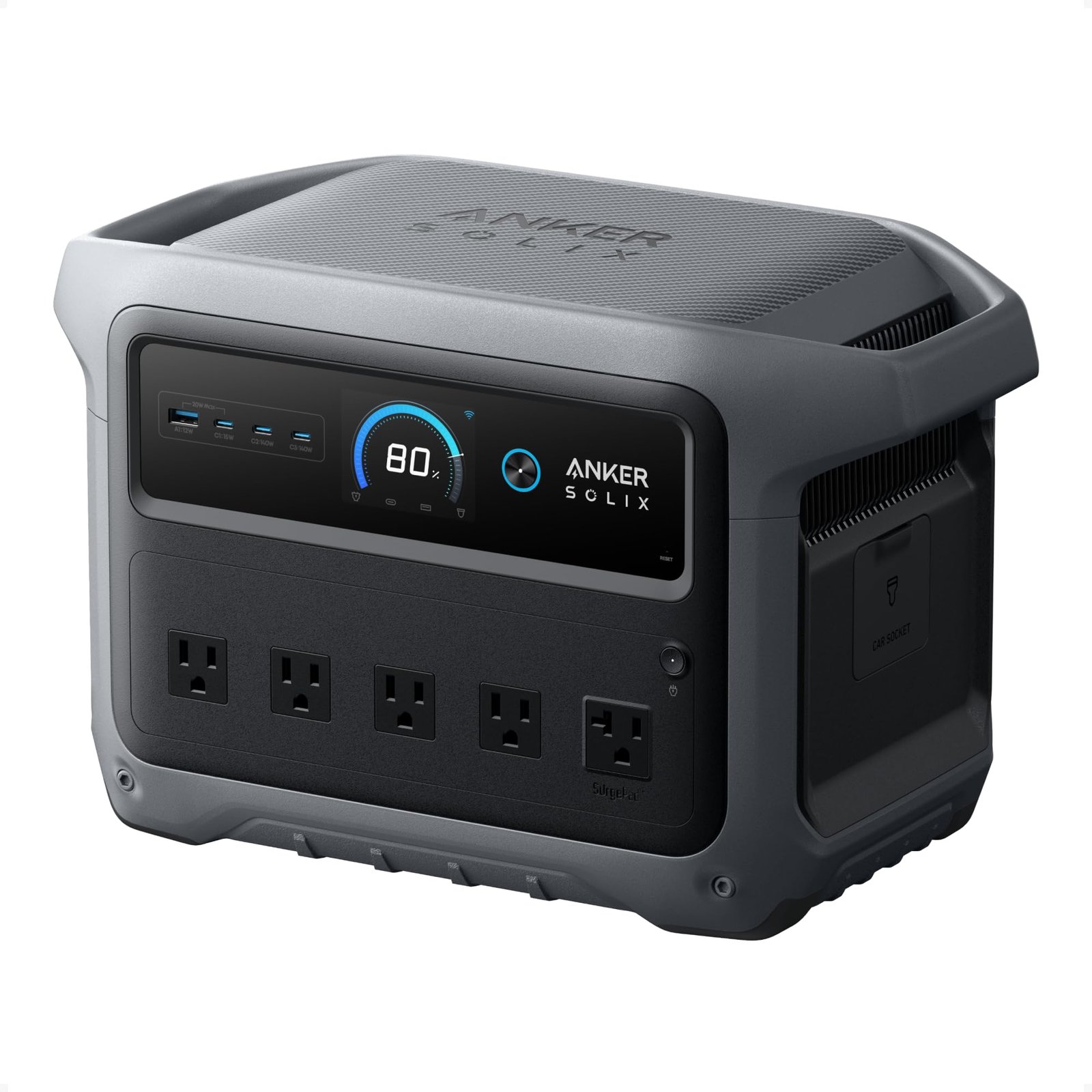
Anker SOLIX C1000 Gen
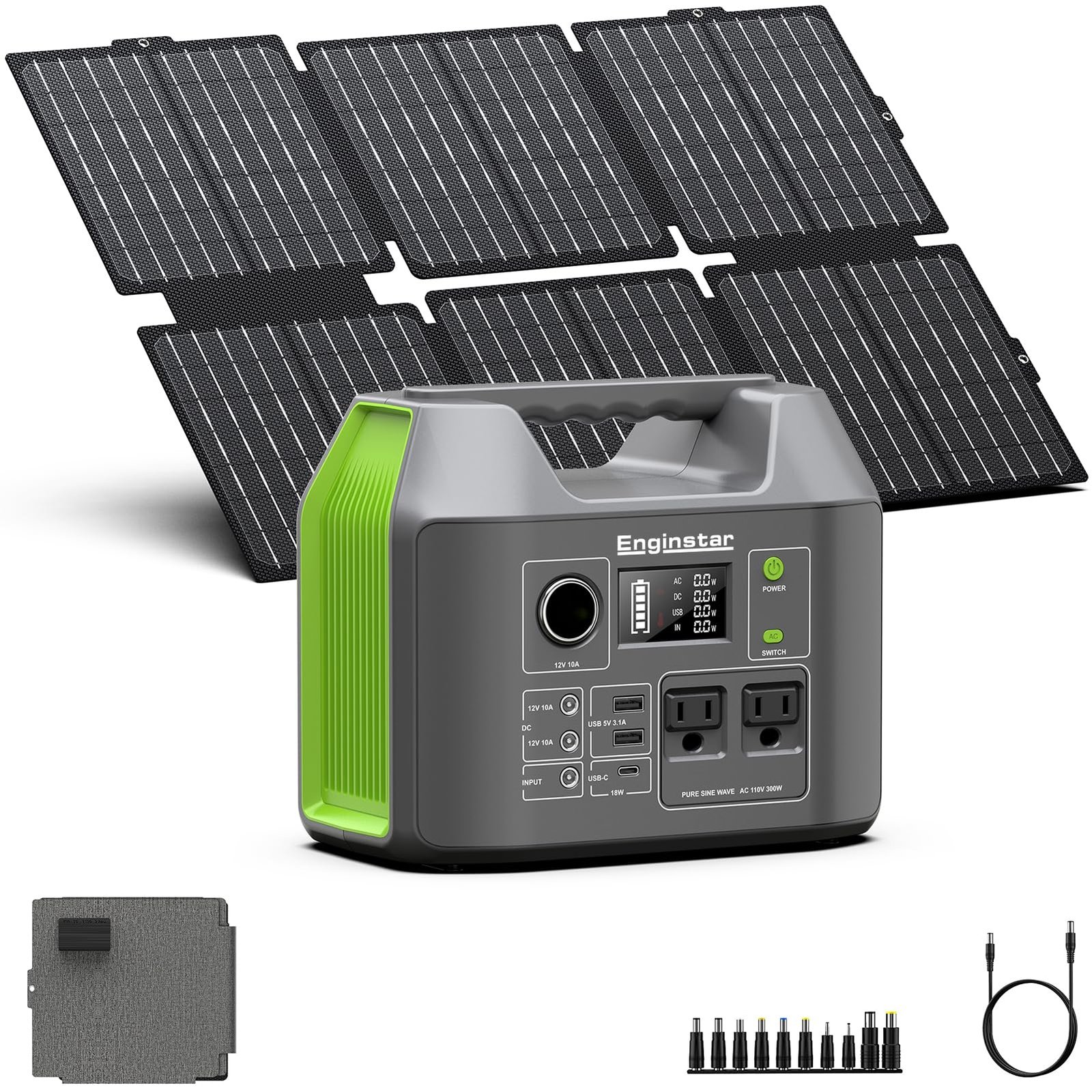
Portable Solar Generator
Introduction: Powering Your Life—One Charge at a Time
Imagine this: You’re deep in the woods during a weekend camping trip, and your laptop suddenly dies mid-project. Or worse—you’re stuck in a stormy neighborhood with no electricity, and your refrigerator is about to go bad. Moments like these make you realize how essential reliable power can be. Whether you’re an outdoor enthusiast, a digital nomad, or someone who just wants peace of mind during blackouts, portable power stations have become game-changers.
In this detailed comparison, we’re diving headfirst into two popular contenders in the portable power station market: the Anker SOLIX C1000 Gen and the Portable Solar Generator. Both promise clean, quiet energy on demand—but they couldn’t be more different in terms of power, portability, and price. By the end of this article, you’ll know exactly which one fits your lifestyle, budget, and energy needs.
We’ll break down everything from battery capacity and charging speed to build quality and real-world usability. Plus, we’ve included honest customer insights and practical advice so you can make a choice that actually works for you—not just what looks good on paper.
In-Depth Look: Anker SOLIX C1000 Gen
The Anker SOLIX C1000 Gen isn’t just another power station—it’s a premium piece of engineering designed for serious power users. Built by Anker, the brand behind countless charging accessories, this unit brings top-tier performance to the portable generator space. With a massive 1,024Wh capacity and a jaw-dropping 2,000W output (peaking at 3,000W), it’s built to handle everything from sensitive medical devices like CPAP machines to full-sized mini-fridges and even small window AC units.
One of its standout features is the HyperFlash charging technology, which lets you fully recharge the battery in under 49 minutes when plugged into a high-wattage wall charger. That’s faster than most gas generators start up! And if you’re off-grid, pair it with a compatible 600W solar array, and you can refill the battery in just 1.8 hours—making it ideal for extended RV trips or emergency preparedness.
What really sets the SOLIX C1000 apart is its smart integration. The Anker app allows you to monitor usage, set time-of-use (TOU) modes to avoid peak electricity rates, and even get alerts when your battery drops below a certain level. There’s also a near-instantaneous UPS backup mode that kicks in in under 10 milliseconds, meaning your laptop or CPAP won’t even blink during a grid switchover.
Physically, it’s built like a tank. Weighing in at 22 pounds but still compact enough to carry with ease, it comes with reinforced handles and a sleek industrial design. After 4,000 charge cycles, Anker guarantees the battery retains at least 80% of its original capacity—that’s over ten years of daily use if you drain and recharge it every day.
Pros:
- Blazing-fast recharge times—get back online in under 50 minutes
- Massive power output—handles high-wattage appliances effortlessly
- Smart app control—monitor and manage remotely via smartphone
- Durable long-term battery—InfiniPower tech ensures lasting performance
- Versatile charging options—wall, car, solar, or any combination
Cons:
- Higher price point—more expensive than entry-level models
- Not included with solar panel—you’ll need to buy separately for off-grid use
- Heavier than ultra-portables—less ideal for ultralight backpackers
Customer Reviews:
“I rarely write reviews but I felt compelled to do so for this unit. I live full time in a small camper van and have had many power stations over the years. Jackery, Bluetti, varying sizes capacities and outputs. This Anker unit is by far the best power station I have ever owned. It is absolutely fantastic. The 49 minute charge time was such a game changer for me. With the use of a small generator I can now power all of the AC appliances in my van for several days off of only an hour or so of gen.”
“Purchased the Anker SOLIX C1000 Gen 2 as my primary power solution for camping and emergency backup. Paired with a 200W solar setup, it has exceeded my expectations for both speed and reliability. Even under heavy AI coding workloads on my Dell Latitude 3550, it handled sustained loads without throttling or overheating.”
“Bought this on Black Friday so got a good deal. This is the first large power station I’ve had. I’ve used Anker products in the past with great success so I was hoping the same with this. So far it’s been great. Storm mode is a cool function. Charges fast and charges items fast. App is well done and functions well. Easier to move around than my generator and safer too.”
Best For:
If you’re serious about backup power—whether for home emergencies, remote work, van life, or off-grid adventures—the Anker SOLIX C1000 Gen delivers unmatched performance and reliability. Its combination of speed, intelligence, and rugged durability makes it worth the investment for anyone who depends on consistent, clean power.
In-Depth Look: Portable Solar Generator
Now let’s talk about the Portable Solar Generator—a no-frills, budget-friendly option that gets the job done without breaking the bank. Packed into a compact 6.5-pound body (plus a lightweight 4-pound solar panel), this unit offers 296Wh of storage and 300W of continuous AC output. It’s perfect for charging phones, powering small electronics, running mini-fridges, or keeping laptops alive during short outages.
Unlike the Anker, this model includes a built-in 60W monocrystalline solar panel with a 23% conversion efficiency—meaning it performs better in low-light conditions compared to cheaper polycrystalline panels. The panel folds neatly into a slim case (10.2 x 9.4 x 1.2 inches when folded), making it super easy to pack in your car or backpack.
The generator itself features pure sine wave AC outlets, which are crucial for protecting sensitive electronics like laptops and cameras from voltage spikes. It also has multiple output ports: two AC jacks, regulated DC outputs, USB-A, and USB-C—so you can plug in almost anything at once. Safety is prioritized too, thanks to an advanced battery management system that prevents overcharging, short circuits, and overloads.
Charging is flexible: plug it into a wall outlet (~3 hours), connect it to your car’s 12V socket (~5–6 hours), or harness sunlight through the included panel (~8+ hours depending on weather). While not as powerful as the Anker, it’s incredibly efficient for light-to-moderate use and shines in scenarios where weight and cost matter more than raw output.
Pros:
- Affordable entry point—great value for basic power needs
- Includes solar panel—ready to go straight out of the box
- Ultra-lightweight—easy to carry anywhere
- Pure sine wave output—safe for sensitive devices
- Multiple charging methods—wall, car, solar
Cons:
- Limited capacity—won’t run high-wattage appliances long
- Slower recharge times—up to 8 hours via solar alone
- No smart app—manual operation only
- Lower overall wattage—not suitable for tools or major appliances
Customer Reviews:
“Great plan B for power outages or road trips requiring charging phones and small appliances. Can be recharged in the wall outlet, solar or car charger. Time lasts according to how much is plugged in. Works well.”
“Used for a 63 quart cooler. Battery lasts 8–10 hours. Compact and works perfectly.”
“This EnginStar 300W power station has become my reliable companion for camping trips and emergency backup power. At 6.5 pounds and compact dimensions, it strikes an excellent balance between portability and capability that makes it genuinely useful for outdoor adventures. The pure sine wave AC outlets provide clean power that safely runs sensitive electronics like laptops and cameras without compatibility issues found in modified sine wave units. I’ve successfully powered my laptop for several hours while editing photos on location.”
Best For:
This unit is ideal for casual campers, weekend warriors, or urban dwellers looking for a simple, affordable backup for phones, tablets, and small gadgets. If you don’t need to run fridges, microwaves, or medical equipment, and you prioritize portability and ease of use, the Portable Solar Generator is a smart, wallet-friendly choice.
Head-to-Head Comparison
Performance & Power Delivery
The difference in power delivery is staggering. The Anker SOLIX C1000 Gen offers nearly four times the battery capacity (1,024Wh vs. 296Wh) and more than six times the maximum AC output (2,000W vs. 300W). This means the Anker can easily run a 700W mini-fridge for over an hour or keep a CPAP machine running indefinitely, while the Portable Solar Generator would struggle after just 30–45 minutes under similar load.
However, the Portable Solar Generator holds its own for light-duty tasks. It’s perfectly capable of charging a laptop twice, powering a router, or keeping your phone juiced during a weekend hike. But don’t expect it to handle anything beyond basic electronics without draining quickly.
Charging Speed & Flexibility
Here’s where the Anker truly shines. With HyperFlash technology, it recharges from zero to full in under 50 minutes using a 1,600W wall charger. Add in solar, and you can extend runtime indefinitely—ideal for off-grid living or frequent travelers. The Portable Solar Generator, by contrast, maxes out at 65W input, taking roughly three hours from a wall outlet and up to eight via its included 60W solar panel.
That said, the inclusion of the solar panel in the Portable Solar Generator gives it an edge in “all-in-one” convenience. You don’t need to purchase a separate panel—just unfold and go. The Anker requires you to source a compatible 600W array if you want solar charging, which adds cost and complexity.
Portability & Build Quality
At 22 pounds, the Anker is significantly heavier and bulkier than the Portable Solar Generator (which weighs just 6.5 pounds plus the panel). That makes the latter far easier to toss into a trunk, attach to a bike rack, or carry on a backpacking trip. The Anker, however, is designed for stationary or semi-permanent use—think RV, tiny home, or garage backup station.
Build quality differs too. The Anker uses reinforced handles, aviation-grade materials, and military-inspired durability testing. The Portable Solar Generator is solidly built but leans toward plastic-heavy construction, though it’s still robust enough for typical outdoor use.
Value for Money
Let’s be honest: the Portable Solar Generator wins hands-down on affordability. Priced around $400–$500, it’s accessible to nearly anyone looking to dip their toes into portable power. The Anker SOLIX C1000 Gen, while feature-rich, costs nearly $1,500–$1,800—a premium that reflects its professional-grade specs.
But value isn’t just about price—it’s about what you get. If you need serious power for critical devices or extended off-grid use, the Anker’s longevity, speed, and intelligence justify the cost. If you just need occasional backup for phones and small gear, the Portable Solar Generator delivers excellent bang for buck.
Smart Features & Usability
The Anker app transforms the experience—allowing remote monitoring, scheduling, energy-saving modes, and even firmware updates. You can set it to charge only during off-peak hours or automatically switch to solar when available. The Portable Solar Generator operates manually: plug, play, unplug. No bells, no whistles—just straightforward functionality.
FAQs
Q: Which one is better for camping?
A: It depends on your campsite. If you’re staying at a developed site with hookups or planning short trips with minimal power needs, the Portable Solar Generator is lightweight, cheap, and effective. But if you’re boondocking, working remotely from the woods, or need to run a fridge or heater, the Anker SOLIX C1000 Gen is the only realistic option.
Q: Can I charge both devices while using them?
A: Yes! Both units support pass-through charging—meaning you can plug them into a power source while simultaneously powering other devices. The Anker supports higher input rates (up to 1,600W), so it charges faster even under load.
Q: Is solar charging worth it?
A: Absolutely—if you plan to stay off-grid for days or weeks. However, the Portable Solar Generator’s 60W panel is slow; the Anker pairs better with larger arrays (like 300–600W) for faster solar replenishment. Consider your solar goals before choosing.
Q: Do either support expandable batteries?
A: The Anker SOLIX C1000 Gen does not currently support external battery packs, but its internal battery is huge. The Portable Solar Generator also lacks expansion options due to its compact design. Neither offers modularity, so choose based on initial capacity needs.
Q: Which one has better safety features?
A: Both include overcharge, short-circuit, and temperature protection. But the Anker goes further with intelligent load balancing, UPS backup for medical devices, and real-time diagnostics via its app—making it safer for high-stakes situations.
Q: Should I buy the Anker if I already have a solar panel?
A: Not necessarily. The Anker’s solar compatibility requires a specific 60V input range and high-wattage panels. If you already own a compatible setup, great—but otherwise, the Portable Solar Generator’s included panel offers instant solar readiness at a fraction of the cost.
Final Verdict: Which One Should You Choose?
After thoroughly comparing the Anker SOLIX C1000 Gen and the Portable Solar Generator, the answer ultimately hinges on your priorities. If you need serious power, rapid recharge, and smart management for emergencies, RVs, tiny homes, or professional off-grid work—go with the Anker SOLIX C1000 Gen. It’s a premium tool built for longevity, performance, and peace of mind.
On the other hand, if you’re a casual camper, urban prepper, or someone who just wants a reliable backup for phones, laptops, and small gadgets—and you care about portability and budget—then the Portable Solar Generator is your best bet. It’s affordable, includes solar, and gets the job done without fuss.
There’s no outright “winner”—only the right fit. Think about how often you’ll use it, what devices you need to power, and whether you’re willing to invest in future-proof technology. Both are solid choices, but they serve very different lifestyles.
Prices and availability subject to change. Affiliate links support our independent reviews.