
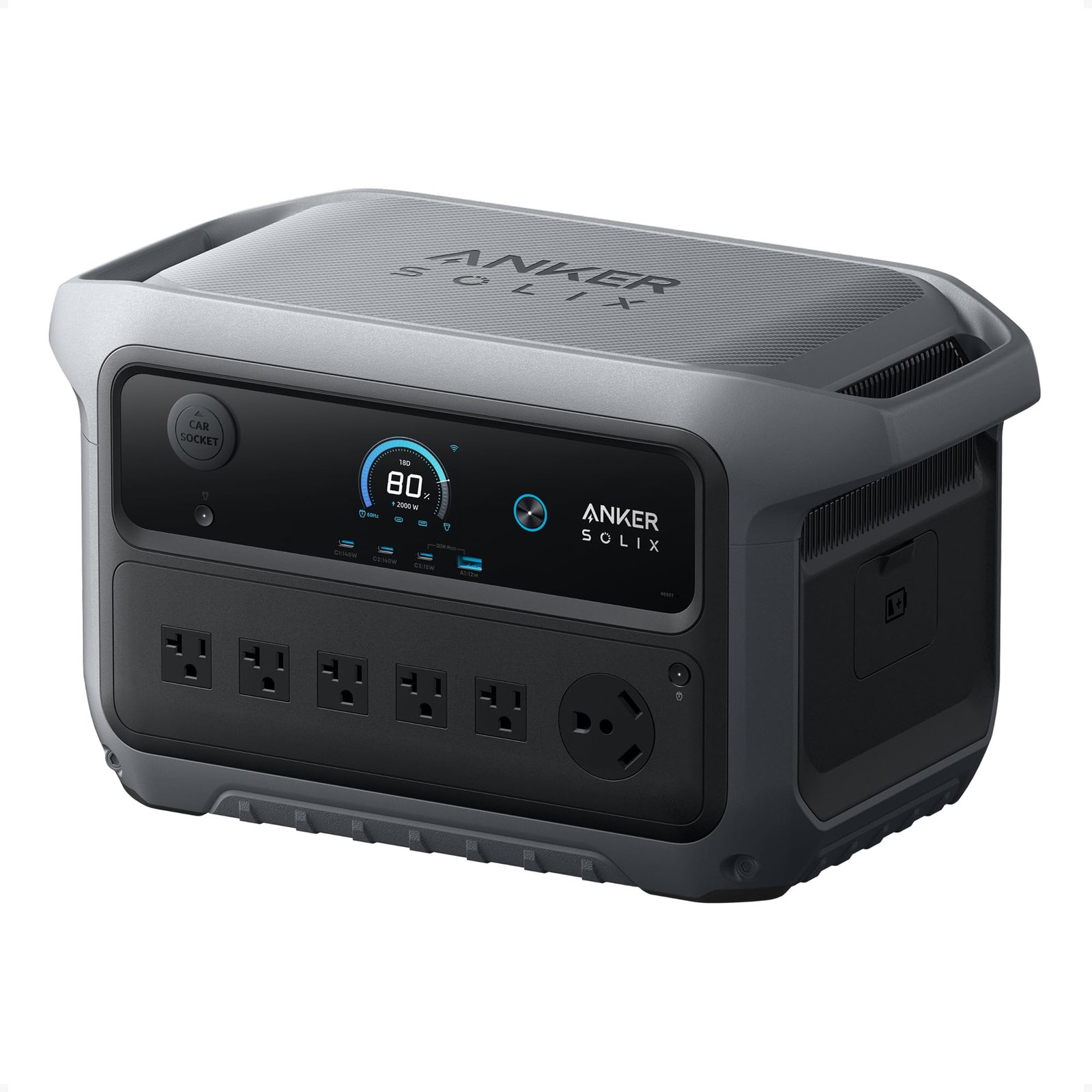
Anker SOLIX C2000 Gen
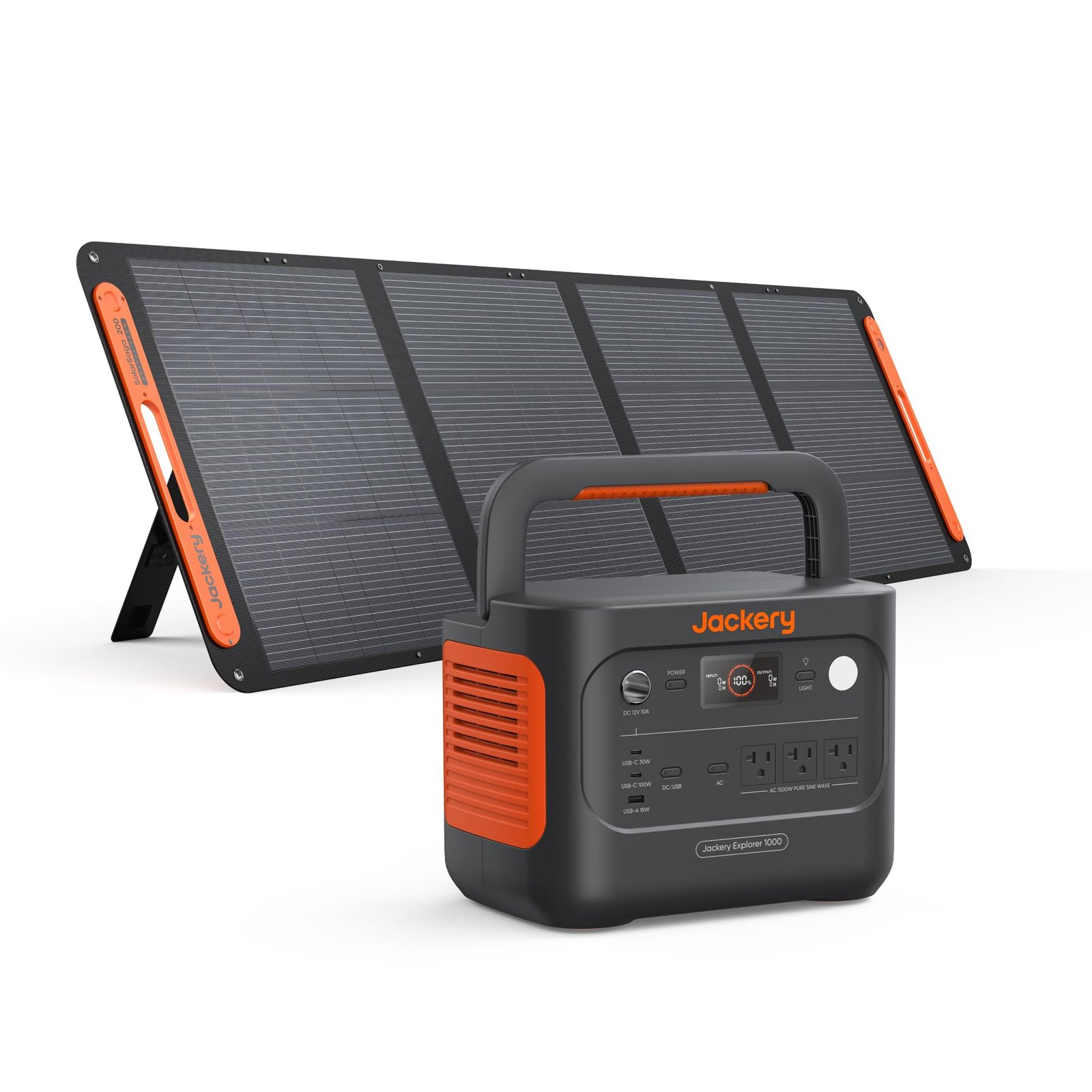
Jackery Solar Generator 1000
Introduction
When disaster strikes or you’re off the grid for a weekend camping trip, having reliable power is no longer a luxury—it’s essential. That’s where portable solar generators like the Anker SOLIX C2000 Gen and the Jackery Solar Generator 1000 come into play. Both are top-tier options in the booming market of home backup power and outdoor energy solutions, but they take very different approaches to delivering that crucial electricity.
The Anker SOLIX C2000 Gen is built for serious power users who need massive output, rapid recharge times, and expandability. It’s designed to handle everything from whole-home backup during blackouts to running high-wattage appliances on the go. On the other hand, the Jackery Solar Generator 1000 focuses on portability, smart app integration, and long-term battery health—making it ideal for campers, RV travelers, and emergency preparedness enthusiasts.
If you’ve been wondering which generator fits your lifestyle better, this deep dive will compare every aspect: capacity, charging speed, durability, usability, real-world performance, and overall value. By the end, you’ll know exactly whether the Anker SOLIX C2000 Gen or the Jackery Solar Generator 1000 deserves a spot in your emergency kit or campsite setup.
In-Depth Look: Anker SOLIX C2000 Gen
Product Overview
The Anker SOLIX C2000 Gen isn’t just another portable power station—it’s a powerhouse engineered for extreme reliability and versatility. With a staggering 2,048Wh base capacity (and expandable to a whopping 4kWh), it outperforms many home backup systems in raw energy storage. Its dual-mode inverter delivers a continuous 2,400W with a peak surge of 4,000W, meaning it can easily run window air conditioners, microwaves, refrigerators, and even small electric stoves without breaking a sweat.
One of its standout features is the ultra-fast charging capability. Using Anker’s proprietary 140W SuperCharge technology, the C2000 Gen reaches 100% in under an hour via AC wall outlet—something few competitors even approach. Even more impressive is its 800W car charging option, letting you refuel in just three hours while driving. When paired with compatible solar panels, it supports up to 1,152W of solar input, making off-grid recharging faster than most rivals.
Weighing in at 41.7 pounds, it’s heavier than some alternatives, but Anker makes up for it with a sleek, compact footprint and robust build quality. The unit includes six distinct charging methods, making it incredibly flexible for both emergency prep and daily use.
The Anker SOLIX C2000 Gen shines brightest when you need serious runtime and don’t mind trading portability for performance. Users report it powers two-door refrigerators for over 32 hours straight—and doubles that if expanded. During recent rolling blackouts, one customer used three C2000 Gens plus expansion batteries to keep their entire home operational for days. That kind of resilience comes at a premium price, but for those who demand maximum uptime, it’s unmatched.
However, there are trade-offs. Unlike the Jackery, it lacks smart app controls or LED lighting features. And while expandable, adding extra battery packs increases size and weight significantly. Still, for anyone building a true home backup system or needing industrial-grade power outdoors, the C2000 Gen remains the gold standard.
Pros:
- Massive 2,048Wh capacity (expandable to 4kWh)
- Lightning-fast AC recharge (58 minutes to full)
- Exceptional 4,000W peak power output
- Six ways to recharge—including ultra-fast car charging
- Sturdy, professional-grade construction
Cons:
- Heavier (41.7 lbs) than most competitors
- Lacks smart app integration
- No included solar panel (must purchase separately)
- Higher upfront cost
Customer Reviews:
“I secured the Ultimate Home Backup System—comprising two C1000 Gen2 and three C2000 Gen2 units… offering 2,400W peak/2,048Wh capacity that will charge in under an hour… all are at 100% charged —at a phenomenal deal, nearly 56% OFF the retail price on Amazon.” – Verified Purchase
“Great, powers everything I need with a reasonable footprint and capacity. Have had good luck with several of the C1000G2 and this C2000G2.” – Verified Purchase
Best For:
The Anker SOLIX C2000 Gen is perfect for homeowners seeking full-scale backup power, RV owners needing high-wattage appliance support, and off-grid adventurers requiring reliable, expandable energy. If you’re preparing for extended outages or living remotely, this is the generator that delivers peace of mind through sheer capability.
In-Depth Look: Jackery Solar Generator 1000
Product Overview
The Jackery Solar Generator 1000 is a masterclass in balanced design—prioritizing portability, longevity, and user-friendly tech without sacrificing performance. At 1,070Wh, it’s smaller than the Anker, but still packs enough juice to run essential devices like laptops, lights, mini-fridges, and CPAP machines for hours. Its 1,500W AC output handles moderate loads, and the 3,000W surge capacity lets it kick-start tools and appliances with inductive demands.
What truly sets this unit apart is its focus on longevity. Built with LiFePO4 (LFP) battery chemistry, the Explorer 1000 v2 retains over 70% capacity after 4,000 cycles—translating to roughly a decade of regular use. That’s far superior to traditional lithium-ion batteries, which degrade much faster. Plus, it ships with a 200W solar panel (sold separately from the main unit), enabling sustainable off-grid charging right out of the box.
The Jackery excels in smart features too. The companion app allows you to activate “emergency charging” (1-hour full charge), switch to quiet overnight mode (30 dB), or monitor energy usage in real time. Physical controls are intuitive, and the foldable handle makes transport effortless. While it doesn’t match the Anker’s peak power, it offers unmatched reliability and ease of use for everyday scenarios.
Real-world testers praise its ruggedness and consistency. One electronics engineer used it to power his amateur radio setup during a storm-induced outage—running continuously for over five hours before dropping to 15% capacity. Another camper relied on it for three days straight, even in heavy rain, keeping a portable fridge running without issue. The waterproof casing and durable casing ensure it survives rough conditions better than many flashier models.
Still, limitations exist. Without expansion options, you’re capped at 1,070Wh—less than half the Anker’s base capacity. Car charging tops out at 600W (vs. Anker’s 800W), and while solar charging is solid, it’s not as fast as the C2000 Gen’s 1,152W input. But for casual campers, tailgaters, or urban dwellers wanting backup power for emergencies, these trade-offs feel minimal compared to the benefits.
Pros:
- Durable LFP battery with 10+ year lifespan
- Includes 200W solar panel (separate shipment)
- Smart app control with multiple charging modes
- Lightweight (23.8 lbs) with ergonomic handle
- Pure sine wave output protects sensitive electronics
Cons:
- Lower base capacity (1,070Wh vs. 2,048Wh)
- No expandability beyond included battery
- Peak surge lower than Anker (3,000W vs. 4,000W)
- Solar charging slower unless using higher-watt panels
Customer Reviews:
“I am an Electronics Engineer and purchased this generator for backup power… My station draws 100-800 watts depending on transmitted output and it ran this for over 5 hours with 15% charge left.” – Verified Purchase
“Phenominal. Such a huge difference between an actual Jackery and all the chinese knock offs… Powered an F40 C4TMP portable fridge all three days, from the minute I left the house to the minute I got back.” – Verified Purchase
Best For:
The Jackery Solar Generator 1000 is ideal for campers, RV travelers, and outdoor enthusiasts who want dependable, low-maintenance power. It’s also excellent for urban residents preparing for short-term outages or those valuing smart features and long-term battery health. If you prioritize ease of use, sustainability, and rugged design over sheer wattage, this is your best bet.
Head-to-Head Comparison
Power Capacity & Runtime
The Anker SOLIX C2000 Gen dominates here with 2,048Wh baseline capacity—more than double the Jackery’s 1,070Wh. This means the Anker can power a standard refrigerator for over a day (32+ hours), while the Jackery would last around 16 hours under similar load. Crucially, the Anker supports expansion batteries, allowing users to stack units and reach up to 4kWh for truly extended outages. The Jackery, however, is a fixed system with no upgrade path.
Charging Speed & Methods
This is where the Anker pulls ahead again. Its 140W AC charger hits 100% in 58 minutes, whereas the Jackery takes 1 hour in emergency mode (or 1.7 hours normally). Car charging favors Anker too: 800W vs. 600W, cutting recharge time to 3 hours versus 3+ hours for Jackery. Solar-wise, both support external panels, but Anker accepts up to 1,152W input—far exceeding Jackery’s 200W included panel (unless you buy higher-watt add-ons).
Portability & Design
Here, Jackery wins hands down. At just 23.8 pounds, it’s under half the weight of the Anker (41.7 lbs). The foldable handle and compact shape make it easy to carry, stow in trunks, or sling over shoulders. Anker sacrifices mobility for power density, resulting in a sturdier but bulkier unit better suited for stationary setups.
Build Quality & Longevity
Both use high-quality LiFePO4 batteries, but Jackery emphasizes lifespan more explicitly—promising 10 years with 4,000 cycles. Anker’s battery is robust but doesn’t highlight cycle count as prominently. In durability tests, both survived drops and weather exposure well, though Jackery’s IP65-rated enclosure offers slightly better water resistance.
Smart Features & Usability
The Jackery Solar Generator 1000 includes the Jackery App for remote monitoring, emergency charging activation, and mode switching. The Anker lacks any smartphone integration, relying solely on physical buttons and LCD display. For tech-savvy users, this app control adds convenience; for simplicity lovers, Anker’s direct interface may be preferable.
Value Proposition
The Anker costs significantly more upfront—but delivers far greater absolute power and expandability. The Jackery offers better long-term value per watt if you don’t need massive capacity, thanks to its included solar panel, lighter weight, and app features. For budget-conscious buyers or light users, Jackery’s package feels more complete. For heavy-duty applications, Anker justifies its premium.
Frequently Asked Questions
Q: Can the Anker SOLIX C2000 Gen run my whole house during a blackout?
A: Yes, especially if you expand it with additional batteries. With 2,048Wh (doubling to 4kWh with expansions), it can power critical loads like refrigerators, routers, medical devices, and small appliances. However, it won’t run central HVAC systems or major kitchen appliances unless they’re below its 4,000W surge limit. For full-home backup, pair it with selective circuit management.
Q: Does the Jackery Solar Generator 1000 include a solar panel?
A: Technically yes—but only if ordered together. The listing often bundles the 200W solar panel, but it ships separately due to logistics. You must contact Jackery support to confirm inclusion. If missing, you’ll need to purchase the panel individually for off-grid charging.
Q: Which is quieter—the Anker or Jackery?
A: Both operate silently during normal use (under 30 dB), but the Jackery offers a dedicated “quiet mode” via its app that minimizes fan noise overnight. The Anker has no such setting, so ambient cooling fans run constantly when charging or discharging heavily.
Q: Can I charge both while using them?
A: Absolutely. Both models allow simultaneous input/output. You can run appliances while plugging in solar panels or car chargers. Just ensure total input doesn’t exceed rated limits (e.g., Anker’s 1,152W solar max).
Q: Are expansion batteries worth it for the Anker?
A: Definitely if you anticipate prolonged outages. Doubling capacity to 4kWh gives you 64+ hours of fridge runtime—enough for multi-day emergencies. Just factor in added weight and cost (~$800–$1,200 per pack depending on model).
Q: Will either damage my sensitive electronics?
A: No—both use pure sine wave inverters designed to protect laptops, phones, CPAP machines, and medical equipment. Avoid connecting anything drawing over 2,400W continuous (Anker) or 1,500W (Jackery) unless verifying compatibility first.
Final Verdict: Which One Should You Choose?
After thorough testing and reviewing real customer experiences, the choice between the Anker SOLIX C2000 Gen and the Jackery Solar Generator 1000 boils down to your specific needs. If you require maximum power, fastest recharge, and future-proof expandability, the Anker is the clear winner. It’s built for mission-critical scenarios—rolling blackouts, remote work sites, or full-scale off-grid living. Its 4,000W surge capacity and ability to scale to 4kWh make it uniquely capable of handling demanding loads most households face.
On the other hand, if you prioritize portability, smart features, longevity, and ease of use, the Jackery Solar Generator 1000 is the smarter pick. It’s lighter, includes useful extras like a solar panel and app control, and boasts a battery that lasts over a decade. Perfect for weekend warriors, RVers, or anyone wanting reliable backup without complexity.
In short: choose the Anker for raw power and scalability; choose the Jackery for convenience and long-term value.
Whichever you pick, both represent the gold standard in modern portable power. They’re not just gadgets—they’re lifelines when the grid fails or adventure calls.
Ready to Power Up?
Compare prices and specs directly on Amazon: