
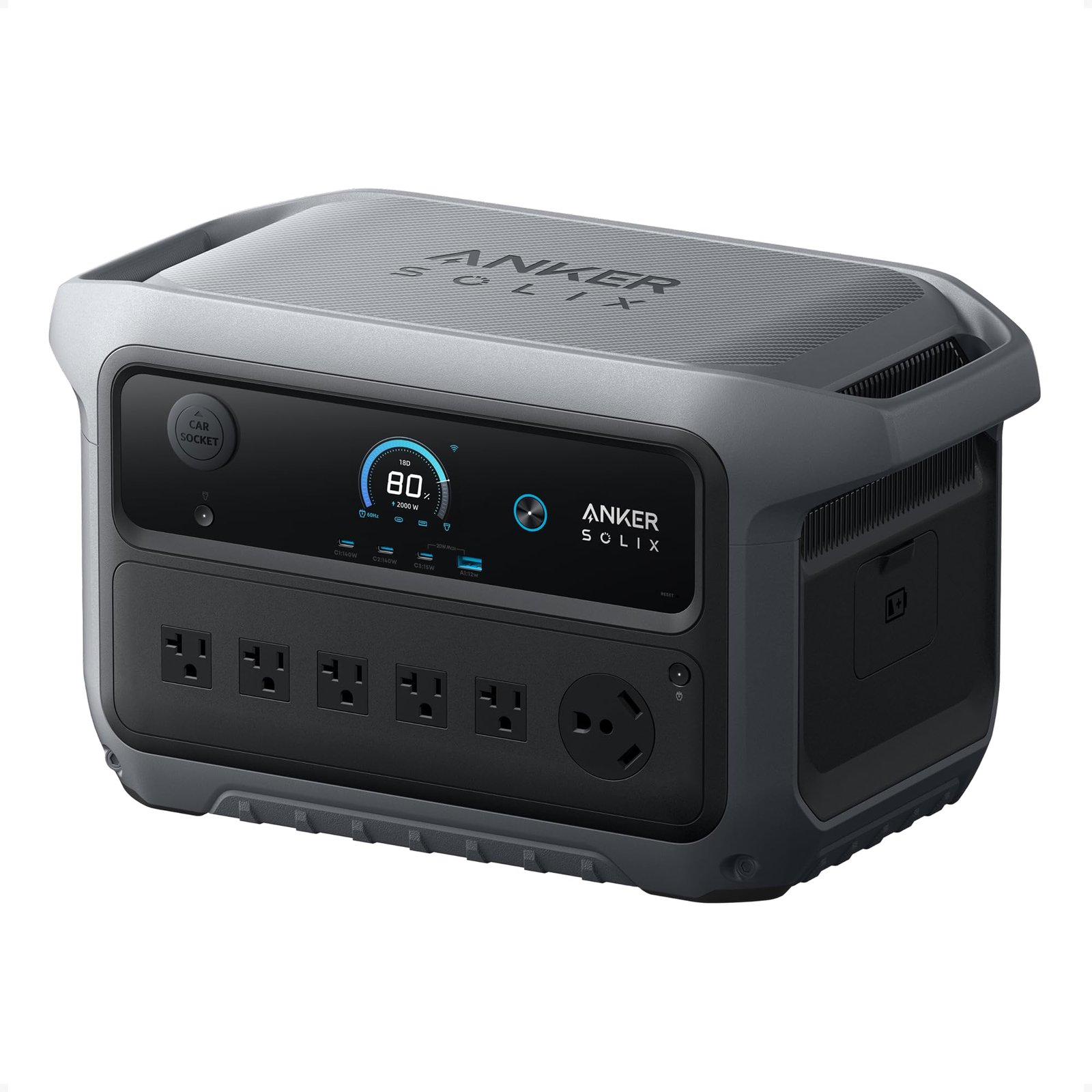
Anker SOLIX C2000 Gen
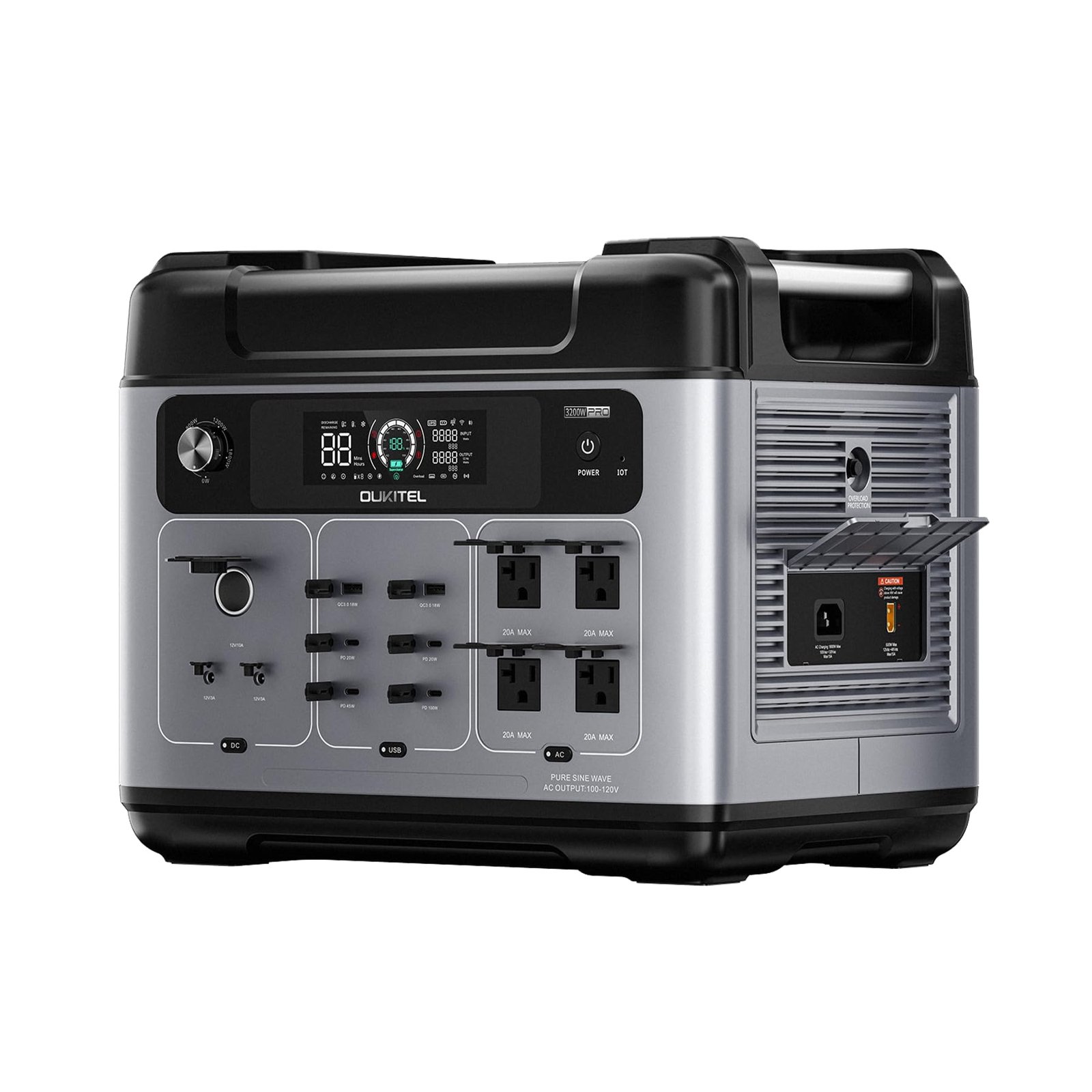
OUKITEL P2001 Pro 3200W/2048Wh
Introduction: Finding Your Perfect Power Partner
Imagine this: you’re camping in the middle of nowhere, or maybe you’re dealing with a sudden blackout at home. The lights go out, your phone is about to die, and you need something powerful enough to keep your essentials running—but also compact and reliable enough to handle whatever comes your way. That’s where portable power stations like the Anker SOLIX C2000 Gen and OUKITEL P2001 Pro 3200W/2048Wh come into play.
Both of these devices promise serious power output, impressive battery life, and versatility for both outdoor adventures and emergency preparedness. But they’re not exactly twins—each brings its own strengths, quirks, and ideal use cases. So how do you choose between them?
In this deep dive, we’ll compare every key aspect—from raw performance and charging speed to design, connectivity, and real-world usability—so you can make an informed decision based on your needs, not just specs on a page. Whether you’re powering a small RV setup, keeping your fridge alive during outages, or just want peace of mind that your gadgets never go dark, read on to find out which one fits your lifestyle best.
Quick Comparison Table
In-Depth Look: Anker SOLIX C2000 Gen
The Anker SOLIX C2000 Gen is more than just another portable power station—it’s a statement of engineering precision wrapped in practicality. Launched in late 2025 as the second generation of its popular C-series line, this device brings serious upgrades over previous models, especially when it comes to efficiency, portability, and expandability.
At its core lies a massive 2,048Wh lithium iron phosphate (LiFePO4) battery, which not only offers long cycle life but also delivers stable voltage even under heavy loads. What really sets it apart is its ultra-low standby consumption: just 9 watts. That means if you plug in a dual-door refrigerator, you could theoretically run it continuously for over a full day—and up to 64 hours if you pair it with the optional expansion battery (which takes total capacity to a staggering 4kWh).
Charging is equally impressive. Using the included 800W ultra-fast alternator charger, you can get from empty to full in just three hours—that’s eight times faster than a standard cigarette lighter socket. And with AC wall charging, it hits 100% in under an hour. Solar charging isn’t built-in, but the compatibility with Anker’s solar panels makes off-grid recharging feasible.
Design-wise, the C2000 Gen weighs in at 41.7 pounds and measures roughly 18×10×9 inches—making it notably smaller and lighter than many competitors in its class. It feels rugged, with reinforced corners and a matte finish that resists scuffs. The handles are well-positioned, and while it’s still heavy enough to require care when lifting, it’s far easier to maneuver than most high-capacity units.
Pros:
- Lightweight and compact for its power class—ideal for travel and limited storage.
- Exceptionally fast charging, especially via car or AC.
- Expandable capacity allows future-proofing for larger energy needs.
- Ultra-low standby drain maximizes runtime during outages or camping trips.
- Robust build quality with a premium feel and reliable components.
Cons:
- No smart app control—you’re stuck with physical buttons and basic digital displays.
- Lacks combined solar + AC charging, limiting off-grid flexibility compared to some rivals.
- Higher upfront cost, though justified by longevity and performance.
Real Customer Feedback:
“I secured the Ultimate Home Backup System—comprising two C1000 Gen2 and three C2000 Gen2 units… Here it is 4 months later and all are at 100% charged —at a phenomenal deal, nearly 56% OFF the retail price on Amazon.”
“The build feels really sturdy, kind of like a serious piece of gear rather than a gadget. It charges crazy fast and runs just about anything I’ve tried… Took it camping last weekend and it kept our fan and lights going with plenty of power left the next morning.”
Who Should Buy the Anker SOLIX C2000 Gen?
If you value speed, reliability, and future scalability, this is your pick. It’s perfect for homeowners preparing for blackouts, frequent campers who need robust off-grid power, or anyone who wants a no-compromise backup system. The ability to expand capacity later means you won’t outgrow it quickly—even as your energy demands grow.
In-Depth Look: OUKITEL P2001 Pro 3200W/2048Wh
The OUKITEL P2001 Pro 3200W/2048Wh enters the scene like a powerhouse designed for versatility and intelligent management. While it shares the same base battery chemistry and capacity as the Anker model, OUKITEL has leaned heavily into smart technology, seamless integration, and uninterrupted operation.
This unit boasts a 3,200W rated output—more than enough to handle high-draw appliances like microwaves, electric kettles, hair dryers, and even small window air conditioners. Its peak output matches the rated power, meaning there’s no artificial cap during surges, unlike some competitors that inflate peak numbers without sustained delivery.
The standout feature here is the built-in EPS (Emergency Power Supply). In the event of a grid failure, the P2001 Pro switches to battery power in less than 0.01 seconds, ensuring zero interruption to sensitive electronics like routers, medical devices, or gaming consoles. This makes it ideal for home offices, clinics, or any scenario where continuity matters.
Charging is flexible and adaptive. With AC input alone, it reaches full capacity in 80 minutes, but what truly shines is its support for simultaneous solar and AC charging—delivering up to 2,800W combined input. This lets you top off the battery in just 50 minutes when using compatible solar panels alongside wall power. The intelligent current adjustment prevents overloads and protects both the station and connected devices.
Connectivity is where OUKITEL really differentiates itself. Through the dedicated mobile app (via Bluetooth or Wi-Fi), you can monitor real-time power usage, set charging schedules, control individual outlets remotely, and receive low-battery alerts—all from your smartphone. The app interface is intuitive, though occasional sync delays have been noted by early adopters.
Weighing 55.1 pounds, the P2001 Pro is noticeably heavier than the Anker model. At first glance, that might seem like a drawback, but the solid construction and wide stance actually enhance stability—especially important when running high-wattage tools or appliances. The included accessories are comprehensive: AC, car, and solar cables, plus a two-year customer service guarantee (a rarity in this market).
Pros:
- Superior rated power (3,200W) with true surge handling.
- EPS technology ensures near-instantaneous backup during outages.
- Smart app control for remote monitoring and automation.
- Combined solar + AC charging for maximum off-grid efficiency.
- Longest-lasting LiFePO4 battery with up to 15 years of expected life.
Cons:
- Heavier and bulkier than the Anker, making transport trickier.
- No expandable battery option limits future growth.
- Separate shipping for the unit and solar panels adds logistical complexity.
- Limited customer reviews available, raising questions about long-term reliability.
Real Customer Feedback:
“Effective for preparation at home and use by a large number of people in offices and local governments. You can use most electrical appliances with an output of 2000W…”
Who Should Buy the OUKITEL P2001 Pro 3200W/2048Wh?
If you prioritize intelligent control, instant backup, and high continuous power, this model suits professionals, remote workers, or households needing reliable emergency support. Its app integration and EPS feature make it a standout for tech-savvy users who want full oversight and minimal downtime. Ideal for those who already invest in solar setups and want seamless hybrid charging.
Head-to-Head Comparison
Performance Under Load
When it comes to raw power delivery, the OUKITEL P2001 Pro 3200W/2048Wh holds a clear edge with its 3,200W continuous rating versus the Anker’s 2,400W. Both can handle most household appliances, but the OUKITEL’s higher baseline means better performance with demanding tools like circular saws or space heaters. However, the Anker compensates with a 4,000W peak burst, which may be critical for motor startups or A/C compressors that briefly draw extra juice.
Charging Speed & Flexibility
The Anker SOLIX C2000 Gen wins hands down in pure charging velocity: 58 minutes via AC, 3 hours via car. The OUKITEL is respectable at 80 minutes with AC, but lacks standalone car charging optimization. Where OUKITEL excels is in hybrid charging—combining solar and AC inputs up to 2,800W—giving it an advantage for off-grid purists who rely on renewable sources.
Portability & Design
This is a decisive win for the Anker SOLIX C2000 Gen. At 41.7 lbs, it’s nearly 25% lighter than the OUKITEL’s 55.1 lbs. Its compact footprint also means easier storage in tight spaces or vehicle trunks. The OUKITEL, while well-built, feels more like a stationary generator disguised as a portable unit—great for fixed locations, less ideal for frequent transport.
Smart Features & Connectivity
Here, the OUKITEL P2001 Pro 3200W/2048Wh pulls ahead significantly. Bluetooth/Wi-Fi app control, remote scheduling, real-time analytics, and EPS monitoring aren’t just nice-to-haves—they’re game-changers for managing energy use efficiently. The Anker relies solely on physical interfaces, which works fine but lacks modern convenience.
Longevity & Expandability
Both use premium LiFePO4 cells, but OUKITEL claims 15 years of life vs. Anker’s implied 10+. That said, the Anker’s expandable battery slot allows doubling capacity to 4kWh—something the OUKITEL cannot match. For users planning long-term growth, Anker offers unmatched adaptability.
Value Proposition
The Anker tends to offer better initial value due to lighter weight and faster charging, especially during flash sales. OUKITEL justifies its higher price with smarter features and superior power specs, appealing to those willing to pay more for advanced functionality.
Frequently Asked Questions
Q: Can I charge either of these while using them?
A: Yes! Both support pass-through charging, allowing you to power devices while simultaneously replenishing the battery—though always avoid exceeding safe limits. The Anker supports up to 800W car charging; the OUKITEL allows combined solar + AC up to 2,800W.
Q: Which one works better for RVs or van life?
A: The Anker SOLIX C2000 Gen is generally preferred for mobile setups due to its lighter weight and compact size. However, if you’re parked in one spot and value instant backup (like for a mini-fridge or laptop), the OUKITEL’s EPS and higher wattage may be worth the trade-off.
Q: Do these support solar panel connections?
A: Both do—but differently. The Anker requires separate solar controllers and doesn’t combine solar with AC charging. The OUKITEL P2001 Pro 3200W/2048Wh natively supports simultaneous solar + AC input, making off-grid setups simpler and faster.
Q: Is the OUKITEL app reliable?
A: Most users report smooth operation, but some note occasional connection drops or delayed updates. Always keep the app updated and ensure strong Bluetooth/Wi-Fi signals near the unit.
Q: How long will each battery last before replacement?
A: Both claim exceptional longevity—OUKITEL touts up to 15 years or 4,000 cycles, while Anker’s LiFePO4 cells typically exceed 3,500 cycles. Actual lifespan depends on usage patterns, depth of discharge, and environmental conditions.
Q: Which one is safer for indoor use during outages?
A: Neither emits harmful fumes, but the OUKITEL’s EPS feature gives it an edge for critical applications. If you’re powering medical equipment or servers, its sub-0.01-second switch ensures no data loss or equipment shutdown.
Final Verdict: Which One Should You Choose?
After weighing all factors—power, portability, intelligence, and long-term usability—the right choice ultimately depends on your lifestyle and priorities.
Choose the Anker SOLIX C2000 Gen if you want a lightweight, fast-charging, expandable power station that punches above its weight class. It’s ideal for travelers, campers, and homeowners who value convenience, durability, and future-proofing through modular upgrades. Its lower standby draw and compact form make it exceptionally versatile.
Opt for the OUKITEL P2001 Pro 3200W/2048Wh if you need maximum continuous power, instant backup capability, and smart remote management. Perfect for tech-forward users, professionals, or anyone needing uninterrupted power for sensitive electronics. Its hybrid charging and app integration deliver unmatched control in off-grid scenarios.
In short: Anker for mobility and simplicity; OUKITEL for power and intelligence.
Both products represent top-tier portable power solutions—your decision should reflect whether you value agility and expandability (Anker) or raw power and smart control (OUKITEL).