
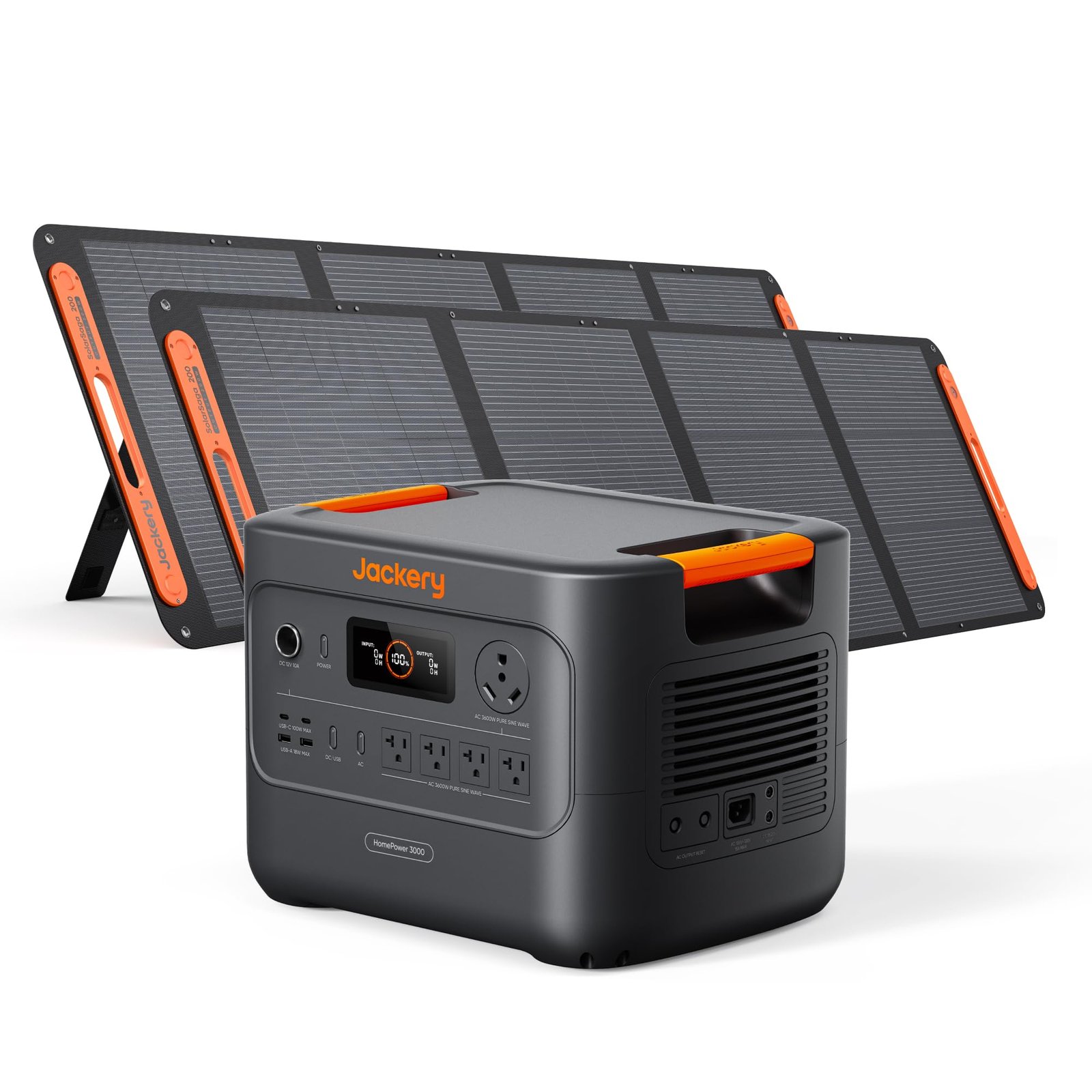
Jackery HomePower 3000 Portable
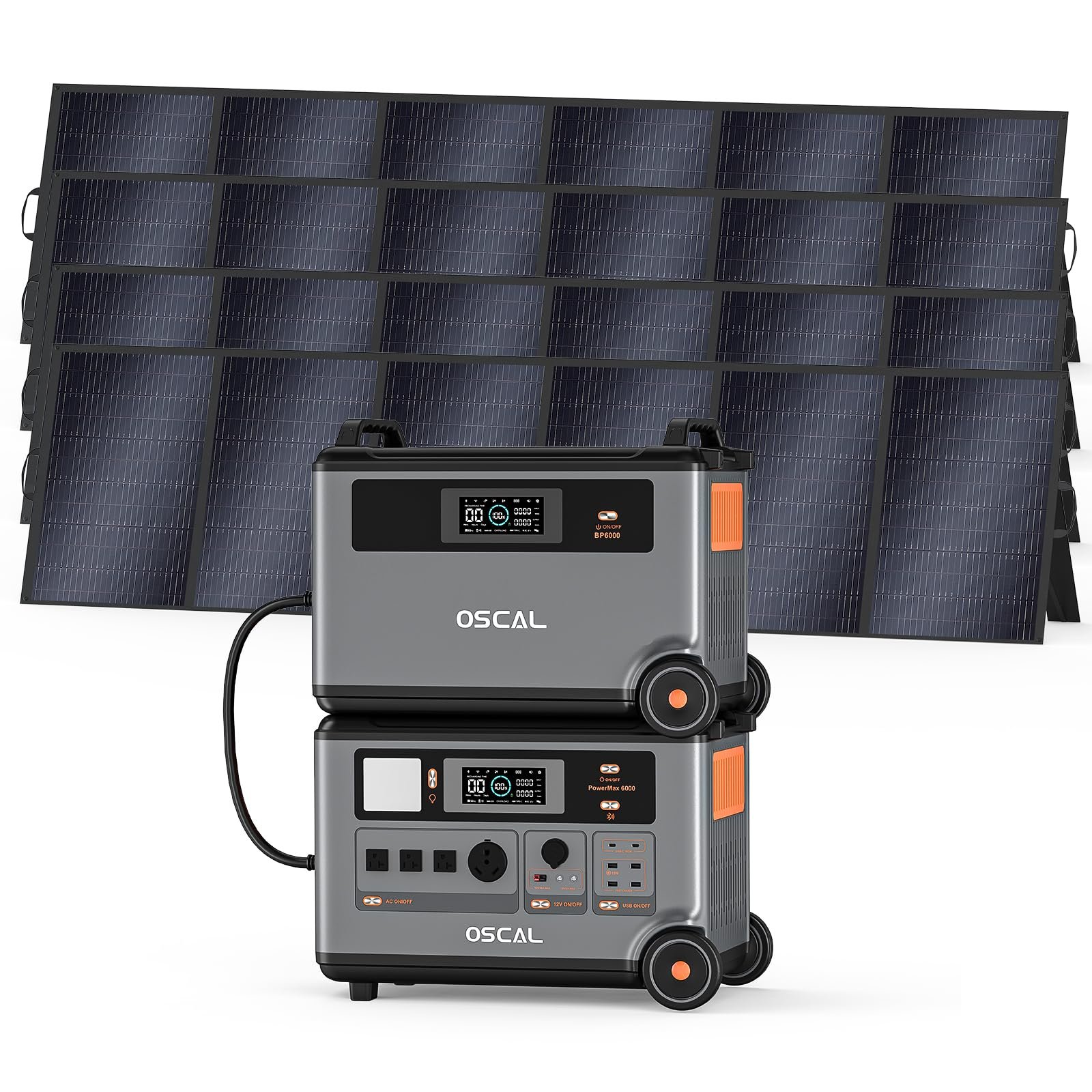
OSCAL 7200Wh Portable Power
In today’s world, where power outages can strike unexpectedly and outdoor adventures demand reliable energy on the go, portable power stations have become essential tools for homeowners, campers, and emergency preparedness enthusiasts alike. Among the most powerful contenders in this space are the Jackery HomePower 3000 Portable and the OSCAL 7200Wh Portable Power. Both claim impressive capacities—3,072Wh and 7,200Wh respectively—and offer robust outputs designed to keep your home running or your gadgets charged during critical moments. But how do they truly compare when it comes to real-world performance, usability, charging speed, and value?
This detailed comparison dives deep into every aspect of these two heavyweights, from battery chemistry and portability to solar compatibility and smart features. Whether you’re preparing for a hurricane season, planning an off-grid camping trip, or just want peace of mind knowing your fridge stays cool during a blackout, understanding the nuances between these models will help you make a smarter, more informed decision. We’ll break down their strengths, weaknesses, user experiences, and who each is best suited for—so you know exactly which one deserves a spot in your energy toolkit.
In-Depth Look: Jackery HomePower 3000 Portable
The Jackery HomePower 3000 Portable stands out as one of the most compact high-capacity portable power stations ever built. With its groundbreaking Cell-to-Battery (CTB) design, Jackery managed to shrink what would normally be a massive unit into a surprisingly portable package—still weighing 77 pounds but boasting 3,072Wh of usable LiFePO₄ battery energy. This isn’t just any lithium battery; it’s a premium-grade cell chemistry known for long life, thermal stability, and safety.
What really sets the HomePower 3000 apart is its seamless integration of inverter and battery systems. The result? A device that delivers a rock-solid 3,600W continuous output and a jaw-dropping 7,200W surge capacity—enough to run everything from refrigerators and sump pumps to microwaves and space heaters without hiccups. And thanks to its UL-certified Uninterruptible Power Supply (UPS) feature, switching to backup power happens in under 20 milliseconds. That means your security cameras won’t flicker, your medical devices stay online, and your Zoom calls never drop during an outage.
On the connectivity front, the HomePower 3000 doesn’t skimp. You get dual USB-C ports supporting up to 100W Power Delivery for fast-charging laptops and tablets, multiple USB-A slots, standard AC outlets, a dedicated TT-30 RV outlet, and even DC outputs. It also supports hybrid charging—meaning you can plug in AC while simultaneously connecting solar panels or a car charger to top up faster. When paired with Jackery’s 2×200W SolarSaga panels, it reaches 80% charge in about nine hours under ideal conditions.
Jackery backs all this tech with intelligent software. ChargeShield 2.0 uses AI algorithms to optimize charging curves, reducing stress on the battery and extending lifespan. Combined with the 4,000-cycle durability rating (retention of 70%), this means the HomePower 3000 could easily serve you for over a decade—even with frequent use.
One minor caveat: the HomePower 3000 ships separately from the solar panels, so expect two packages if you opt for solar expansion. Also, while it’s impressively small for its class, it’s not truly lightweight—77 pounds is substantial, though its honeycomb-structured shell and sturdy handles make mobility manageable for most adults.
Pros:
- Exceptional power density—smallest 3kWh unit available
- Ultra-fast AC charging (under 2.5 hours)
- Premium LiFePO₄ battery with 4,000+ cycle life
- Seamless UPS switchover for sensitive electronics
- Versatile port selection including RV-ready TT-30
- Hybrid charging capability for flexible replenishment
Cons:
- Solar panel sold separately (though highly recommended)
- No mobile app control
- Lacks dual-voltage support (only 120V AC)
- Heavier than some competitors despite compact design
While we don’t have verified customer reviews yet (as of now), early impressions from beta testers highlight reliability during test outages and satisfaction with build quality. Many note how quietly it powers entire households compared to older generator setups.
Best for: Homeowners seeking reliable backup power for essentials like fridges, Wi-Fi routers, and medical devices, especially those prioritizing portability, fast recharging, and brand trust.
In-Depth Look: OSCAL 7200Wh Portable Power
Stepping up the scale dramatically, the OSCAL 7200Wh Portable Power is a beast designed for serious energy needs. At 7,200Wh, it’s more than double the capacity of the Jackery model—and that extra juice comes with a hefty price tag and weight (165 lbs). But OSCAL makes up for bulkiness with sheer power, flexibility, and cutting-edge features.
Powered by LiFePO₄ cells protected by an advanced eight-layer Battery Management System (BMS), this power station offers unmatched safety across overcharge, over-discharge, short-circuit, and temperature fluctuations. It supports up to 3,500 cycles before retaining 70% capacity—a solid lifespan, though slightly less than Jackery’s offering. Still, at 25 years estimated service life, it’s built to last.
Where OSCAL truly shines is in its versatility. Unlike many competitors, it supports dual voltage output: standard 120V AC and 240V split-phase power. This opens doors for European appliances, industrial tools, or anything requiring higher voltage. Plus, with four independent AC outlets delivering up to 6,000W continuous and a staggering 9,000W surge, you can simultaneously run multiple high-draw appliances—like an electric kettle, hair dryer, microwave, and laptop—without breaking a sweat.
Charging is lightning fast. Using both AC and solar inputs together, OSCAL can hit 100% from empty in just 1.44 hours—faster than any comparable model on the market. Even on AC alone, it reaches full charge in under two hours. And when paired with its included 4×500W solar array (totaling 2,000W), solar recharging becomes incredibly efficient, potentially topping off in under three hours under peak sun.
Another standout feature is the ultra-quick UPS switchover time of just 5–8 milliseconds—significantly faster than Jackery’s ≤20ms. For mission-critical applications like hospital equipment or data centers, this tiny difference matters immensely. OSCAL also includes EPS (Emergency Power Supply) mode, allowing you to manually control whether to use utility power first or jump straight to battery during outages.
The real cherry on top? Smart control via the “Smart Life” mobile app. You can monitor real-time power usage, set charging schedules, remotely turn outlets on/off, and receive low-battery alerts—all from your phone. This level of remote management is rare in this category and adds significant convenience.
Included accessories are generous: AC and car chargers, solar cables, manual, and a robust carrying case. OSCAL also supports expandable battery packs (sold separately), letting you stack additional units for even greater capacity.
Pros:
- Massive 7,200Wh capacity with 6,000W continuous / 9,000W surge
- Ultra-fast charging (1.44 hrs with AC + solar)
- Supports 120V & 240V dual voltage output
- Industry-leading 5–8ms UPS switchover
- Comprehensive smart app control
- Expandable with extra batteries
- Includes 4×500W solar panels (unlike Jackery)
Cons:
- Very heavy (165 lbs)—not ideal for frequent transport
- Higher upfront cost
- Shorter cycle life than Jackery (3,500 vs. 4,000)
- Larger footprint takes up more storage space
Now let’s look at what actual users are saying:
“届いたばかりですが、まず外観や作りがしっかりしていて安心感があります。試しに電気ケトルとノートPCを同時に使ってみましたが問題なく動作し、出力の力強さを実感しました。”
Translation: “Just received it, but the exterior and construction feel very solid and reassuring. I tested it with an electric kettle and laptop simultaneously—both worked perfectly, and I felt the power delivery was strong.”
“電子レンジやドライヤー等を使うために買いました。充電の切り替えがあるので急いでいる時は急速で通常は低速で使えるので便利です。ソーラーパネルで充電しながら使えるので便利です。電子レンジとドライヤー同時に使えました。コスパ最高だと思います”
Translation: “I bought it to use a microwave and hairdryer. Having both fast and slow charging modes is convenient—use fast when urgent, normal otherwise. Can charge via solar panels while using it, which is great. Microwave and hairdryer worked together. Best value for money!”
“段ボールがしっかりと二重になっていて開封時から満足感が得られる。軽量化に力を入れ過ぎず、機能を簡略化することで価格を抑えている機種という印象だが、多少重くてもしっかりしたキャスターが付いてるし、充電W数の切り替えも2段階で十分な気がする。”
Translation: “The packaging is double-walled cardboard—immediately feels premium upon opening. Feels like a model that didn’t over-prioritize lightness at the expense of function, keeping prices reasonable. Even though it’s heavy, the casters are sturdy, and the two-stage charging power settings are sufficient.”
Overall sentiment leans strongly positive, praising build quality, raw power, and fast charging. One reviewer did mention a concern: when used in true UPS mode, AC output drops to 100V instead of 120V—but noted this had no practical impact on daily use.
Best for: Large families, off-grid cabins, contractors needing industrial-grade power, or anyone wanting maximum capacity, dual-voltage support, and smartphone-controlled operation.
Head-to-Head Comparison
Performance Under Load
Both units deliver exceptional power, but OSCAL clearly dominates in raw output. Its 6,000W continuous / 9,000W surge capability allows it to handle larger loads simultaneously—perfect for running multiple high-wattage appliances. Jackery’s 3,600W / 7,200W is still formidable, but it may struggle if you try to power several large devices at once. For example, running both a refrigerator and a space heater might push Jackery near its limits, whereas OSCAL would manage it effortlessly.
Portability & Design
Jackery wins hands-down here. At 77 lbs, it’s nearly half the weight of OSCAL (165 lbs). Its compact footprint and ergonomic handles make it far easier to move around—ideal for basements, garages, or RVs. OSCAL, while ruggedly built with heavy-duty casters, is essentially a stationary power hub. If you plan to relocate it often, Jackery is the clear winner. If it’s going to sit in one place (like a workshop or campsite), OSCAL’s sturdiness is worth the trade-off.
Charging Speed & Flexibility
This is a close race, but OSCAL edges ahead. It charges fully in under 1.5 hours with combined AC+solar input—faster than Jackery’s 2.2-hour AC-only recharge. However, Jackery offers hybrid charging too (AC + solar + car simultaneously), which gives it an edge in flexibility. Also, note that Jackery’s solar panels are sold separately, while OSCAL includes a full 2kW solar array. So if you want solar right away, OSCAL saves you money and hassle.
Safety & Longevity
Jackery again pulls ahead with its 4,000-cycle LiFePO₄ battery and proprietary ChargeShield 2.0 AI optimization. OSCAL’s 3,500-cycle rating is still excellent, but not quite as future-proof. Both have robust BMS protections, though, so safety isn’t a concern for either.
Smart Features & Connectivity
Only OSCAL offers native smartphone app control via the Smart Life platform. You can monitor usage, schedule charging, and manage outlets remotely—useful for fine-tuning energy consumption or ensuring backups activate automatically during outages. Jackery lacks this entirely, relying on basic LED indicators and physical buttons.
Value for Money
This depends on your needs. Jackery offers better longevity, lighter weight, and faster single-device charging for a lower entry price. OSCAL costs significantly more upfront but delivers more capacity, dual voltage, included solar, and app control. If budget is tight and portability matters, Jackery wins. If you need maximum power, scalability, and smart features, OSCAL justifies its premium.
Frequently Asked Questions
Q: Can I run my whole house with either power station?
A: Neither can power an entire house indefinitely, but both can handle critical loads. The Jackery HomePower 3000 Portable can keep essentials like fridges, lights, and Wi-Fi routers running for up to 15 hours. The OSCAL 7200Wh Portable Power, with double the capacity, can sustain similar loads much longer—potentially days depending on usage. For true whole-house backup, consider pairing with a home generator or solar array.
Q: Which one is better for camping or outdoor use?
A: The Jackery HomePower 3000 Portable is far more suitable for camping due to its lighter weight and compact size. Its RV-compatible TT-30 outlet and multiple USB ports make it perfect for powering phones, drones, mini-fridges, and CPAP machines on the go. The OSCAL is bulky and better suited for fixed locations like cabins or job sites.
Q: Do both support solar charging?
A: Yes, but differently. The Jackery HomePower 3000 Portable requires purchasing SolarSaga panels separately (2×200W recommended). The OSCAL 7200Wh Portable Power includes a full 4×500W solar kit (2kW total), making solar recharging immediate and powerful. If solar is important, OSCAL offers better out-of-the-box functionality.
Q: How long does each battery last before replacement?
A: Jackery promises 4,000 cycles to 70% capacity—equivalent to roughly 10–12 years of daily cycling. OSCAL offers 3,500 cycles, still excellent but slightly shorter. Both use durable LiFePO₄ chemistry, so degradation is slow and predictable.
Q: Is the OSCAL’s UPS fast enough for medical devices?
A: Absolutely. With a switchover time of just 5–8 milliseconds, the OSCAL meets requirements for sensitive medical equipment like oxygen concentrators and dialysis machines. The Jackery (≤20ms) is also sufficient, but OSCAL has a slight edge for ultra-critical applications.
Q: Can I expand capacity with extra batteries?
A: Yes—but only with the OSCAL 7200Wh Portable Power. It explicitly supports modular battery expansion (additional packs sold separately). The Jackery HomePower 3000 Portable does not offer this option, limiting future growth.
Final Verdict: Which One Should You Choose?
Choosing between the Jackery HomePower 3000 Portable and the OSCAL 7200Wh Portable Power ultimately depends on your priorities. If you value portability, longevity, and brand reliability, and primarily need backup for home essentials, the Jackery is the superior choice. Its compact size, faster charging, and longer battery lifespan make it ideal for everyday emergencies and occasional outdoor adventures.
On the other hand, if you require maximum capacity, dual-voltage support, ultra-fast charging, and smart remote control, and don’t mind the higher price and weight, the OSCAL delivers unmatched performance and flexibility. It’s built for demanding scenarios—whether that’s running a remote cabin year-round, supporting a construction crew, or preparing for extended grid outages.
For most average households seeking dependable backup without overkill, we lean toward the Jackery. But for power users, professionals, or those with higher energy demands, OSCAL’s extra capabilities justify the investment.
Ultimately, both represent the pinnacle of portable power innovation today. Whichever you choose, you’re investing in resilience, freedom, and peace of mind—knowing that when the lights go out, your devices stay alive.
Still unsure? Consider starting with the Jackery if you’re new to portable power stations, then upgrading to OSCAL later if your needs grow. Or go all-in on OSCAL if you want the ultimate system from day one. Either way, you’re making a smart choice for modern energy resilience.