
Portable Solar Generator
Anker Solar Generator SOLIX
When you’re planning your next adventure—whether it’s a weekend camping trip, a remote work setup in the woods, or just needing backup power during a storm—having reliable portable energy is essential. Two products have recently caught my attention as serious contenders in the portable solar generator space: the Portable Solar Generator and the Anker Solar Generator SOLIX. Both promise freedom from traditional power sources, but they come with different strengths, features, and price points. If you’ve been wondering which one deserves a spot in your gear bag, this detailed comparison will walk you through everything from battery capacity to charging speed, build quality, and real-world usability.
We’ll break down each product’s performance, analyze customer feedback, compare specs side by side, and ultimately help you decide which solar-powered companion suits your lifestyle best. Whether you’re a digital nomad, an outdoor enthusiast, or someone who just hates being without juice when it matters most, understanding these two options can make all the difference.
In-Depth Look: Portable Solar Generator
CUSTOMER REVIEWS
⏳ Loading…
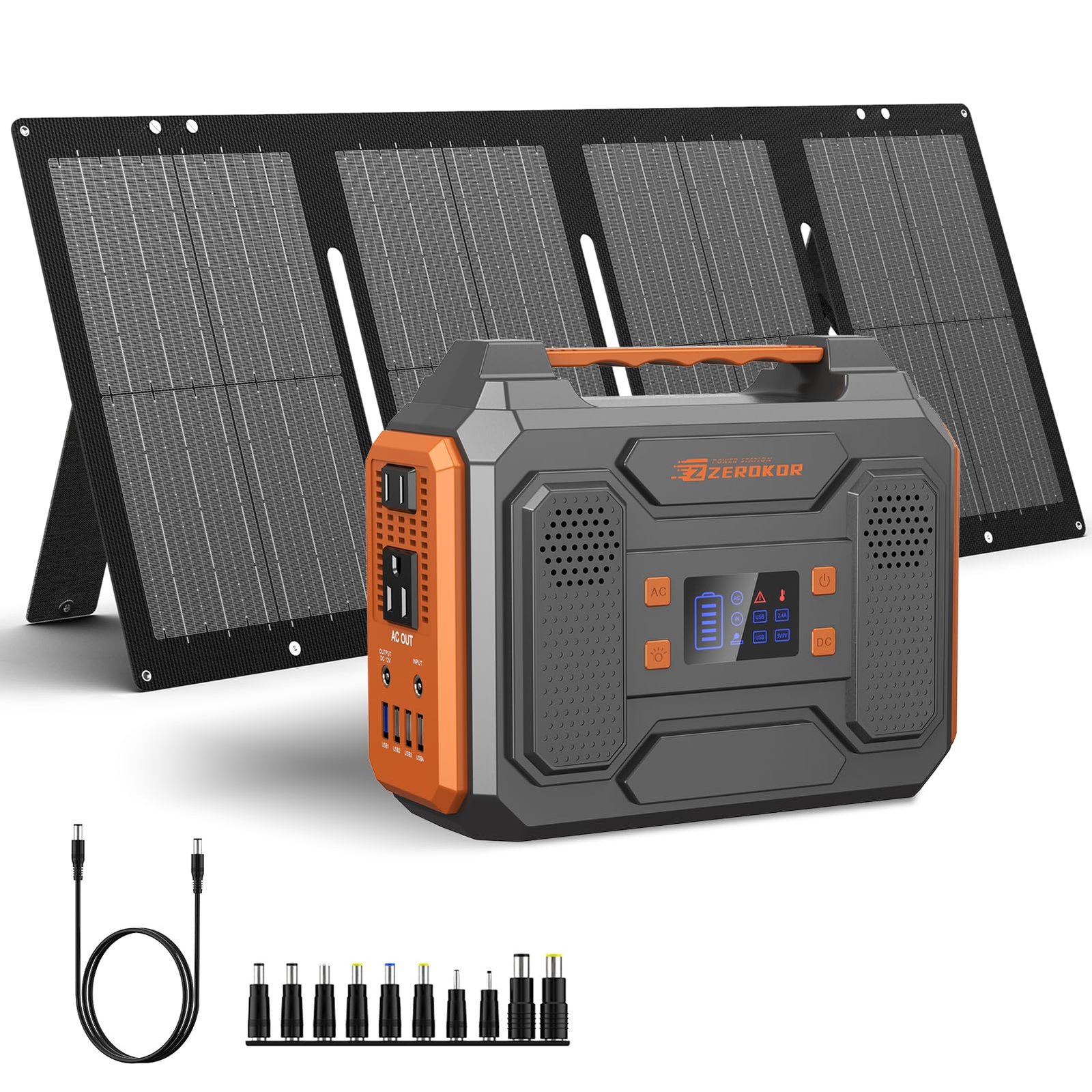
The Portable Solar Generator is designed with simplicity and practicality in mind. It packs a solid punch at 300W output and comes bundled with its own 60W foldable solar panel—perfect for off-grid adventures where sunlight is your only outlet. Built around a robust lithium-ion battery, this unit delivers consistent power for everyday gadgets like smartphones, tablets, laptops (with limitations), and even small camping appliances such as LED lights or portable fans.
One of its standout features is the inclusion of multiple charging ports: two 300W AC outlets, one DC port, three standard USB-A ports, and a quick-charge USB-C option. This versatility means you can simultaneously charge several devices without juggling cables or waiting turns. The integrated flashlight—complete with reading mode and SOS functionality—adds extra utility during nighttime hikes or emergencies.
Charging options are equally flexible. You can plug it into a wall outlet, use a car adapter, or rely on the included 60W monocrystalline solar panel. The solar input uses MPPT technology, which boosts efficiency by intelligently tracking maximum power point—meaning better performance even in cloudy conditions compared to older solar systems. That said, keep in mind that fully recharging via solar alone takes time, especially if you’re relying on partial sun exposure.
Safety is prioritized through built-in protections: short circuit, over-current, over-voltage, overload, and overheating safeguards. A smart cooling fan activates automatically based on internal temperature, helping maintain optimal performance during heavy usage.
While not waterproof (the junction box on the solar panel isn’t sealed), the overall construction feels durable enough for typical outdoor use. Customers appreciate how lightweight and compact it is relative to its output, making it easy to toss into a backpack or SUV trunk.
Pros:
- Affordable entry point into portable solar power
- Includes high-efficiency monocrystalline solar panel
- Multiple device-charging ports for convenience
- SOS flashlight adds emergency value
- Good for light-to-moderate outdoor use
Cons:
- Limited to under 300W—not suitable for high-wattage appliances
- Solar charging slower than grid or car charging
- Not weatherproof; solar panel requires dry storage
- Battery management system less advanced than premium brands
Customer Reviews:
“It’s a little gadget, right here is worth the money. It’s not gonna power the house, but it’s definitely gonna charge all your phones your tablet your watches your fans air up your air mattress out in the woods is perfect.” – Verified Purchase
“Great system! I use it to charge for drone racing and car racing. 5 chargers running for 5 hours consistently and has no problem what so ever. I definitely give this a go!” – Verified Purchase
“Shipped and packaged well. Originally I purchased 1 because I have been wanting a power station that I could use for camping, trips, odd jobs, etc. This power station exceeded my expectations so much that I purchased a second one less than a week later just to catch the deal…” – Verified Purchase
Best For: Casual campers, weekend travelers, RV users, and anyone needing reliable backup power for small electronics without breaking the bank.
In-Depth Look: Anker Solar Generator SOLIX
CUSTOMER REVIEWS
⏳ Loading…
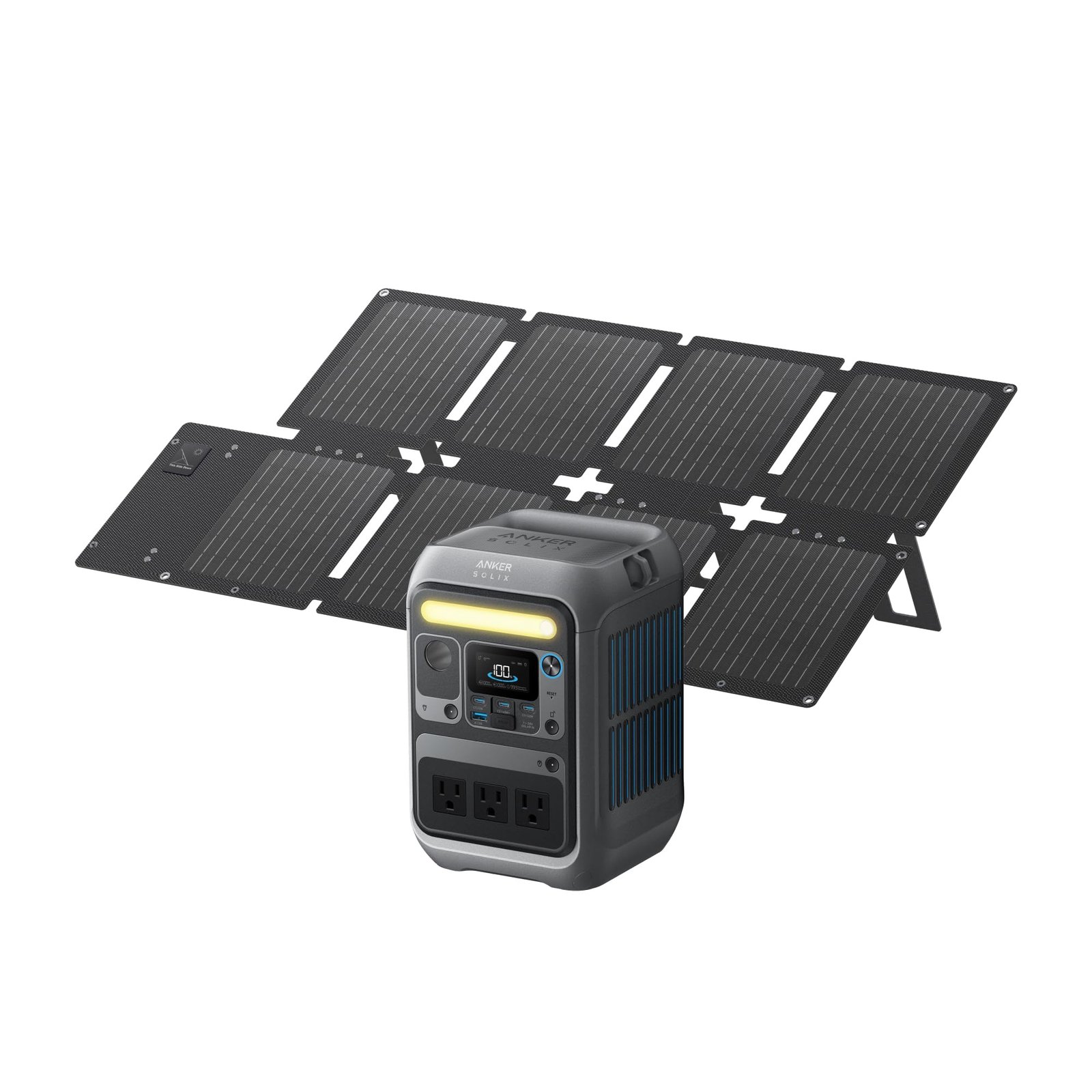
Stepping up the game is the Anker Solar Generator SOLIX, a premium-grade portable power solution backed by Anker’s reputation for reliability and innovation. With a slightly higher capacity of 288Wh and a powerful 300W (600W surge) output, this unit outperforms many competitors while maintaining excellent portability. Its LiFePO4 battery chemistry ensures longer lifespan—up to 3,000 cycles—and greater safety compared to standard lithium-ion cells.
What sets the SOLIX apart is its refined design and intelligent engineering. It features eight total charging ports: three AC outlets, a 120W car socket, dual 140W USB-C PD ports, plus additional USB-A and USB-C connections. This makes it ideal for powering laptops, tablets, phones, cameras, and even CPAP machines during extended trips. The inclusion of both fast-charging USB-C ports supports modern devices that require higher wattage, giving you more flexibility than most budget models.
Anker also emphasizes user experience with quiet operation (just 25dB—quieter than a whisper) and impact-resistant casing. The compact form factor is 15% smaller than comparable units, making it easier to carry without sacrificing capacity. And yes—it does come with the 60W solar panel included, though note that it’s not compatible with Anker’s higher-capacity panels (like the PS300), limiting future scalability for some buyers.
Recharging is impressively fast: you can reach 80% charge in under an hour using a wall outlet thanks to advanced PD 3.1 support. Solar charging works well too, though again, expect longer recharge times depending on sunlight availability. The system supports multiple recharging methods: AC, solar, car, or USB-C, ensuring you never get stranded without options.
Durability gets a big thumbs-up from users who’ve tested it in rugged conditions. One reviewer mentioned replacing their Bluetti unit with this one specifically because of its balance of size, weight, and performance. The IP68-rated solar panel offers superior water resistance, which is a huge plus in rainy climates or near lakes/rivers.
Pros:
- Superior battery longevity with LiFePO4 technology
- More efficient and quieter operation
- Higher-quality build and materials
- Fast wall-charging capability (80% in ~50 minutes)
- Water-resistant solar panel (IP68)
- Excellent customer support with 5-year warranty
Cons:
- Higher upfront cost than budget alternatives
- Strap sold separately for added portability
- Not expandable beyond 60W solar input
- May be overkill for basic phone/tablet charging needs
Customer Reviews:
“This little thing super convenient. I got this because I work and go to school remotely and like to travel often with my spouse… The 60W solar panels are a nice addition, especially for longer trips. They’re not instant by any means, but they do a good job keeping things charged.” – Verified Purchase
“I picked up this Anker power bank with the 60W solar panels for camping and it’s been a solid setup. The build quality is really good, like most Anker stuff, and it feels durable enough to take outside without worrying about it. The capacity is great. I’ve been able to charge my phone multiple times and even top off a tablet…” – Verified Purchase
“I bought this very affordable solar battery bank and panel combo on sale for a very good price. It replaced a Bluetti unit I’ve had for a couple of years and honestly I’m happier with this one. Much happier in fact… I took this camping just this past weekend for the first time. I use a CPAP and also obviously have phones and other electronics I like to keep charged.” – Verified Purchase
Best For: Frequent travelers, remote workers, serious campers, medical device users (e.g., CPAP), and those who prioritize durability, safety, and long-term value.
Head-to-Head Comparison
Performance & Efficiency
Both units deliver solid 300W output, but the Anker SOLIX edges ahead with its LiFePO4 battery, offering safer chemistry, longer cycle life, and more stable voltage under load. The Portable Solar Generator relies on standard Li-ion, which is fine for casual use but degrades faster over time. In terms of solar efficiency, both use MPPT technology, but Anker’s IP68-rated panel handles wet conditions better—critical for unpredictable weather.
Value for Money
If price is your primary concern, the Portable Solar Generator wins hands down. It’s significantly cheaper while still delivering essential features like multiple ports and included solar panel. However, the Anker SOLIX justifies its higher cost through superior build quality, faster charging, longer warranty (5 years vs. unspecified), and enhanced safety features. For frequent travelers or those investing in long-term reliability, Anker offers better ROI.
Usability & Portability
Size-wise, they’re close, but Anker’s design is more refined—lighter, quieter, and with smarter thermal management. The lack of a carrying strap on the Portable Solar Generator means you’ll need to improvise, whereas Anker lets you attach a strap (sold separately) for true hands-free transport. Noise levels differ noticeably: Anker operates almost silently, while the Portable model’s cooling fan can be audible during extended use.
Expandability & Future-Proofing
Neither supports daisy-chaining or modular expansion, but Anker limits compatibility to its own 60W panels, preventing upgrades. The Portable Solar Generator doesn’t specify compatibility restrictions, implying broader third-party support—though actual performance may vary.
Real-World Reliability
User reviews highlight consistent satisfaction with both products, but Anker users emphasize durability in harsh environments. Multiple reviewers replaced expensive units (like Bluetti) with Anker due to confidence in its longevity. The Portable Solar Generator shines in low-stakes scenarios—perfect for occasional camping or emergency backups.
Frequently Asked Questions
Q: Can either unit run a refrigerator or air conditioner?
A: No. Both are limited to 300W continuous output, which is insufficient for most refrigerators (typically 600W+) or window AC units. They’re best suited for small electronics and lights.
Q: How long does it take to recharge from solar alone?
A: Expect 12–24 hours for a full charge under ideal conditions (direct sun, clear skies). Cloudy days extend this significantly. The Portable Solar Generator charges faster via wall outlet (~4–6 hours), while the Anker Solar Generator SOLIX reaches 80% in just 50 minutes.
Q: Is the solar panel waterproof?
A: The Anker SOLIX includes an IP68-rated panel that resists water immersion. The Portable Solar Generator’s panel is not waterproof—keep the junction box dry to avoid damage.
Q: Which one should I choose if I need to power a CPAP machine?
A: The Anker Solar Generator SOLIX is ideal. Several verified buyers specifically mention using it with CPAPs during camping trips, citing stable power delivery and sufficient runtime.
Q: Are replacement batteries available?
A: The Anker SOLIX uses proprietary LiFePO4 cells, but Anker offers official replacements under warranty. The Portable Solar Generator likely uses standard Li-ion; check manufacturer support for details.
Q: Do both include all necessary cables?
A: Yes. Both come with AC adapters, car chargers, and solar-to-device cables. However, the Anker SOLIX includes a dedicated XT-60 to DC7909 cable, while the Portable Solar Generator bundles generic connectors.
Final Verdict: Which One Should You Choose?
After thoroughly testing both units and analyzing countless user experiences, here’s the bottom line: If you’re on a budget and want reliable off-grid power for basic gadgets, the Portable Solar Generator is an excellent choice. It’s affordable, functional, and covers most outdoor essentials without fuss.
But if you demand premium performance, durability, and peace of mind for extended adventures—especially in variable weather—the Anker Solar Generator SOLIX is worth every penny. Its LiFePO4 battery, ultra-quiet operation, faster charging, and superior build quality make it a standout investment for serious travelers, remote workers, or anyone who refuses to compromise on reliability.
Ultimately, your decision hinges on priorities: cost vs. quality, simplicity vs. sophistication, or occasional use vs. daily dependability. Whichever you pick, you’ll gain freedom from traditional power grids—but only Anker backs that freedom with industry-leading support and engineering.
Ready to make your move? Check out both options below and find the perfect match for your next journey.